
The NFL is done treating every dangerous hit the same way. Starting this season, the league and its players’ union have drawn a much clearer line between a routine football mistake and a technique that’s more likely to actually hurt someone, and they’ve built real consequences around that difference.
Watch What’s Trending Now!
On Wednesday, the NFL and NFLPA jointly announced, in a statement shared by Adam Schefter on X, that players will now face escalating punishment for repeated violations in five specific foul categories: hip-drop tackles, horse-collar tackles, launching, hits on a defenseless player, and blindside blocks. Every NFL club have also been briefed at Wednesday’s league meeting in Atlanta. The player leadership also voted on the changes at the Board of Player Representatives meeting earlier in the week.
“The goal is simple: Make the game safer by focusing discipline on the techniques most likely to result in player injury rather than players who make isolated mistakes during competitions,” the joint statement read, describing the system’s core goal.
Under the new guidelines, a player who commits three violations from the five emphasized foul categories in one season will receive a one-game suspension. The violations can be mixed: three hip-drop tackles would trigger the ban, but so would one hip-drop tackle, one horse-collar tackle and one blindside block.
Every player will start the 2026 season with a clean slate, though violations will begin carrying over into future seasons once the year is complete.
What Are These Fouls, Exactly?
Imago
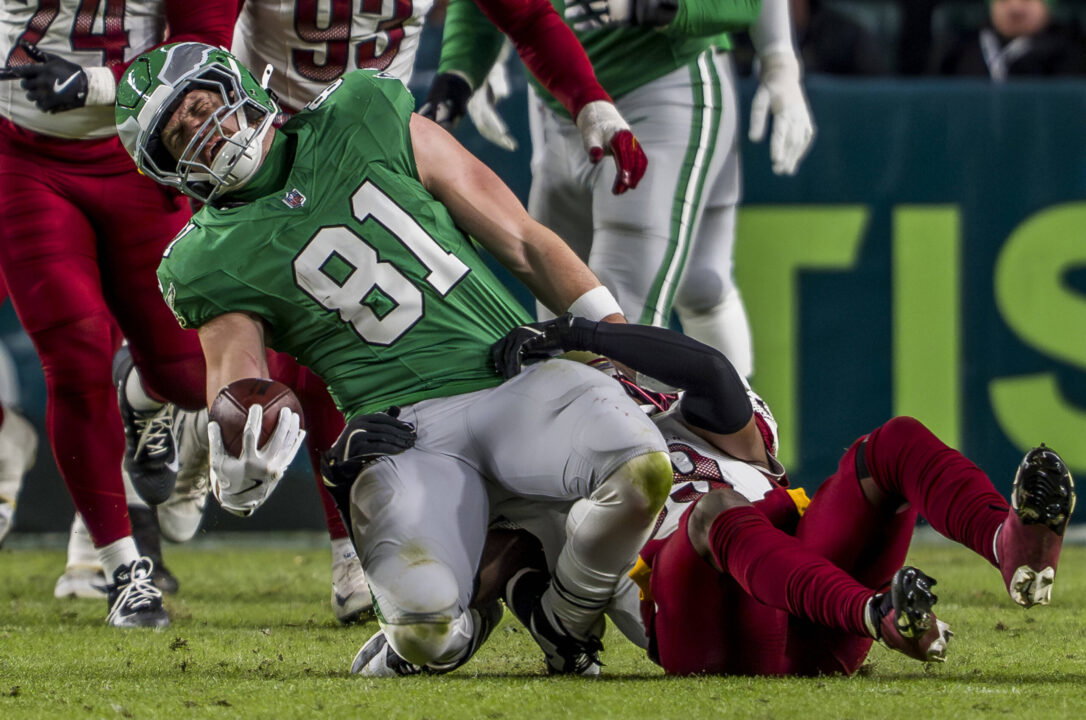
January 4, 2026, Philadelphia, Pa, USA: Philadelphia Eagles tight end Grant Calcaterra 81 winces in pain and is injured after being brought down by Washington Commanders safety Jeremy Reaves 39 with a hip drop tackle during the NFL, American Football Herren, USA football matchup between the Washington Commanders and the Philadelphia Eagles at Lincoln Financial Field in Philadelphia, Pennsylvania on January 4, 2026. /Cal Media Philadelphia USA – ZUMAcs17 20260104_faf_cs17_070 Copyright: xScottxSeriox
Hip-drop tackles happen when a defender swings their hips around and drops body weight onto a ball carrier’s legs, which can cause severe lower-leg injuries.
Meanwhile, horse-collar tackles, just like the name suggests, involve grabbing inside the back or side of the shoulder pads or jersey near the neck and bringing the runner down.
Launching refers to a defender leaving their feet to strike an opponent with their helmet or shoulder, which frequently leads to concussions.
A hit on a defenseless player happens when someone strikes an opponent who cannot reasonably protect themselves, such as a receiver mid-catch or a quarterback after throwing.
Finally, the blindside blocks happen when a player moving toward or parallel to their own end zone delivers forceful contact to an opponent who cannot see it coming. This results in unexpected and dangerous collisions.
The Fine System
Any player who commits a single health-and-safety violation anywhere in the rulebook, not just the five newly emphasized fouls, will get half that fine back at season’s end.
That fine-return policy is part of the league’s added emphasis on hip-drop tackles, horse-collar tackles, launching, hits on defenseless players and blindside blocks. A player who commits only one of those violations can receive 50% of the fine back at season’s end, while a single offense in another eligible category can result in the full fine being returned.
Because violations will carry over into future seasons, a player who commits a hip-drop tackle in 2026, a launching violation in 2027 and another hip-drop tackle in 2028 would reach the three-violation threshold and be suspended for one game in 2028. All three offenses count because the NFL and NFLPA are treating the five emphasized fouls as part of the same disciplinary pool.
It’s a sharper punishment for the techniques or fouls the league considers most dangerous.
NFL Network‘s Ian Rapoport reported that refunds under this system would have averaged roughly $1.7 million annually had it been in place over recent seasons.
Why Now?
This isn’t a random decision that the NFL and the NFLPA took. This was building for the last two years.
The NFL officially banned the hip-drop tackle ahead of the 2024 season, and the NFLPA fought that rule hard at the time. The union released its own statement opposing the change, and players flooded social media calling the tackle impossible to officiate fairly.
Two years later, the two sides aren’t fighting over whether the technique should be restricted. They’re jointly building a system around it, alongside four other tackles which the league considers similarly dangerous and that can hurt the players.
To back the new discipline system, coaches will now be required to join players in meetings with the NFL once a player approaches the suspension threshold, and teams with an excessive volume of violations will face increased financial penalties of their own. This will spread accountability beyond just the player on the field.
The league is also adding former head coach Ron Rivera, who played nine seasons at linebacker before moving to coaching, to the pool of former players who will oversee the discipline appeal hearings.
However, despite the system, none of this eliminates the hits the league is worried about.
But the NFL wants its discipline system to somehow separate a bad habit from just a bad moment, and for the first time, the union is co-building rather than blocking the system.