
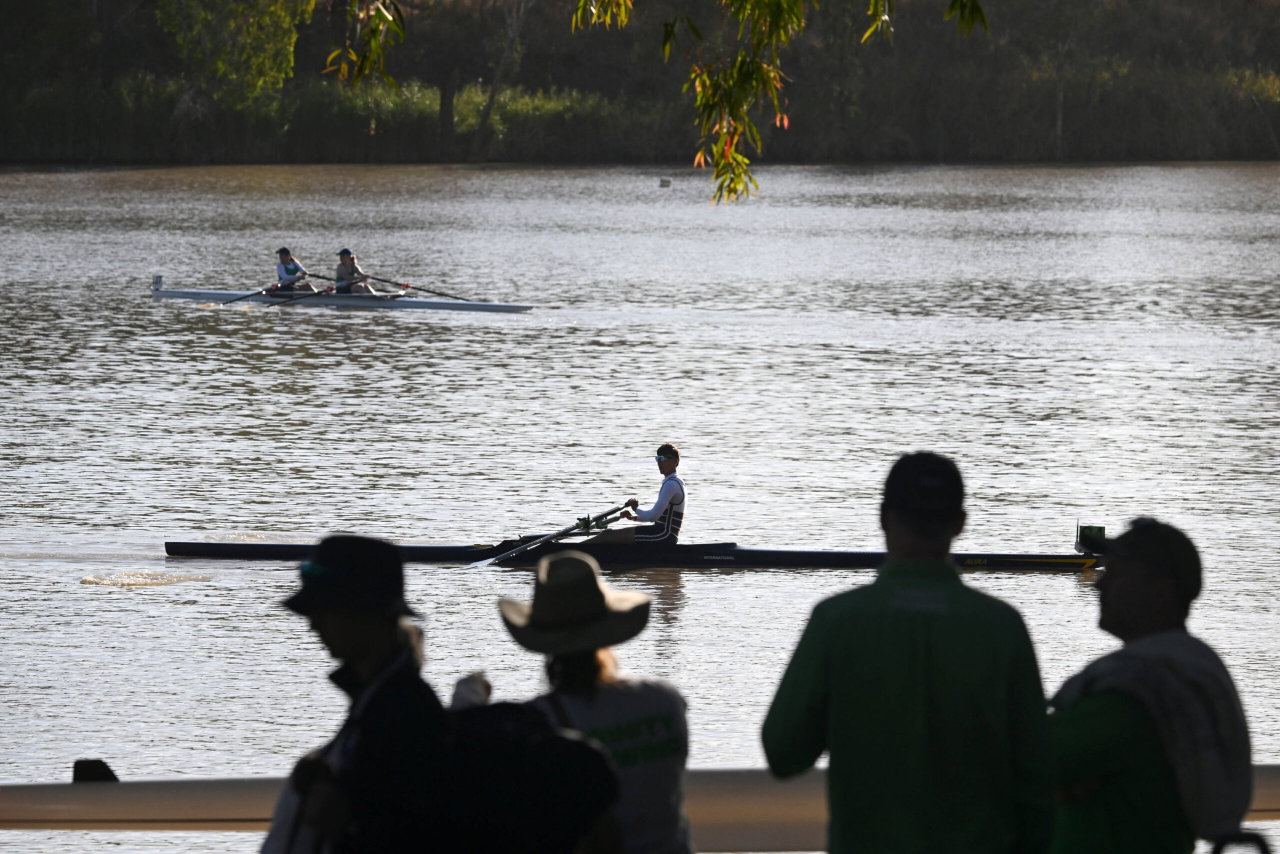
For months, the Fitzroy River in Rockhampton, Queensland, has been at the centre of a heated debate over whether it should host rowing and canoe sprint events at the 2032 Brisbane Olympics. The river has faced questions over its strong currents, flooding, crocodile population and the facilities available for athletes and spectators. Now, after an independent technical assessment, the controversial venue has received clearance to move forward for the Games. However, the celebration did not last long.
On September 17, the Queensland government celebrated the assessment as a major step forward for the Rockhampton venue. The assessment was carried out by WaterProof Marine Consultancy and Services B.V. as part of the wider venue planning process.
Premier David Crisafulli described the result in strong terms, saying the Fitzroy River had passed the assessment “with flying colours” and declaring that the venue was “signed, sealed and delivered.”
However, the following day, World Rowing, Paddle Worldwide, Rowing Australia and Paddle Australia clarified that some work still remains before the venue planning process is complete. “As part of the next phase of venue planning, which includes the Project Validation Report process led by the Games Independent Infrastructure Coordination Authority (GIICA), several additional elements are requested to be confirmed,” World Rowing said in a joint statement.
The organisations said those remaining matters include technical details and confirmation that athletes will have access to the services and facilities needed for Olympic and Paralympic competition. They also said they would continue working with the stakeholders on the remaining requests and updates ahead of the 2032 Games.
The government’s announcement came after months of criticism surrounding the river. One of the biggest concerns has been the presence of crocodiles in the Fitzroy River system. The waterway is home to estuarine, or saltwater, crocodiles, although the proposed Olympic course is located in the freshwater section upstream of the Fitzroy Barrage.
Fitzroy has a relatively low crocodile density compared with other parts of northern Australia. Still, crocodile experts have warned that the animals cannot simply be ignored when planning a major international sporting event.
The crocodile debate is only one part of the concerns surrounding the venue. Rowing officials have also questioned whether the river can provide consistent competition conditions, particularly because it is a natural waterway where water levels and flow can change during major weather events. Also, the venue’s location has attracted criticism.
Olympic rowing venue faces questions over distance
Rockhampton is around 600 km north of Brisbane, which has led some international rowing officials to question why the Olympic rowing events are being held so far from the main host city. German Rowing Federation president Moritz Petri called it a “big question mark” and asked why the former Sydney 2000 rowing venue near Penrith could not be used instead.
The distance has also raised questions about accommodation. ABC reported that the region needs about 1,200 additional short-term accommodation rooms by 2032, even before taking extra Olympic demand into account. Capricorn Enterprise chief executive Mary Carroll said, “We just don’t have enough rooms. I’m desperate for more accommodation rooms in the next six years.”
Questions have also been raised about what happens to the venue once the Olympics are over. More than 500 members of Australia’s rowing community backed an open letter calling for a permanent rowing facility in southeast Queensland, where almost 80% of the state’s rowing participants live. Rowunion Queensland chair Gary Merritt warned that the Fitzroy River could struggle to attract enough regular users to cover its maintenance costs, raising concerns that the Olympic investment could become a “white elephant.”
Three-time Olympic champion Drew Ginn has also questioned the venue’s long-term legacy. He pointed to Sydney’s Penrith Regatta Centre, which was built for the 2000 Olympics and continues to be widely used, as an example of how an Olympic venue can serve the sport long after the Games. Ginn described it as “one of the best examples of a venue that was well thought out, well placed – and it is a legacy item.” He contrasted that with the Athens rowing venue, whose later deterioration he described as “devastating.”
Despite the concerns, the Fitzroy River has now cleared the independent technical assessment and remains part of Queensland’s plans for the 2032 Games