
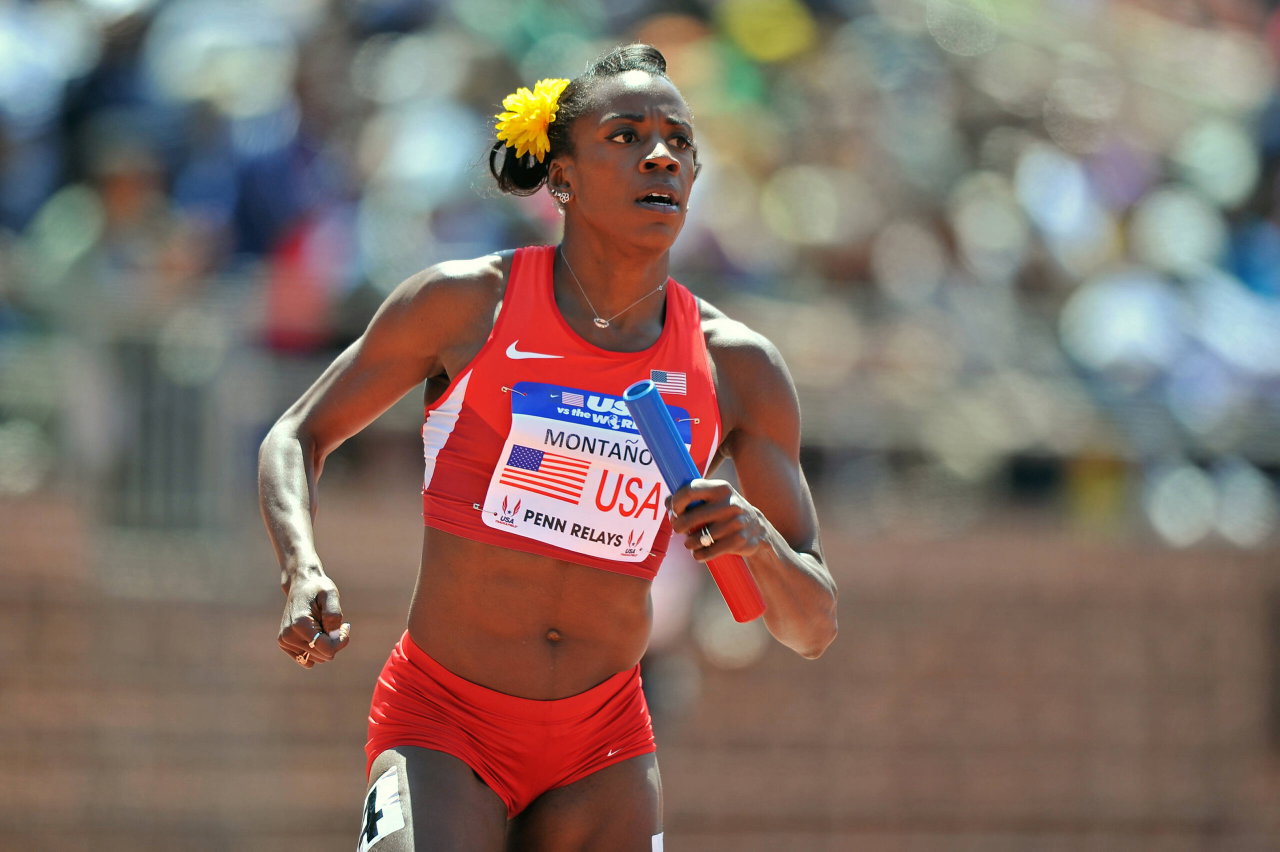
Alysia Montaño spent much of her career competing at the highest level of American middle-distance running, representing the United States at three Olympic Games and winning multiple national titles in the 800 meters. But her career became about more than what happened on the track when she became a mother. In 2014, Montaño competed at the USATF Outdoor Championships while eight months pregnant, drawing attention to the challenges female athletes face when pregnancy intersects with elite competition.
Watch What’s Trending Now!
Her own experience with sponsors during pregnancy later pushed her to speak publicly about the financial penalties athlete mothers can face. More than a decade later, the former Olympian is taking that fight beyond her own story with the launch of the Mother in Sport Collective.
The Mother in Sport Collective launched on September 17 with 11 founding brands, including Strava, Brooks, HOKA, lululemon, Clif, Altra, Oiselle and rabbit. The initiative is focused on clearer maternity policies, fertility and adoption support, lactation facilities, and protections that can extend through business partnerships.
The idea comes from a problem Montaño has experienced herself and seen across sport. Athletes should not have to negotiate basic support individually every time they become mothers.
“It really pushed us to say, this is not just an athlete problem. This is not a sports industry problem. This is a widespread social issue,” Montaño told USA TODAY Sports.
Montaño has spent years challenging the “cost of becoming a mother in sport
Montaño’s experience with Nike became one of the defining moments in the conversation around maternity protections for athletes. When she told the company that she wanted to have a baby during her career, she said she was told her contract could simply be paused and that she would stop being paid. She ultimately left Nike and signed with ASICS.
But the problem did not end there. After giving birth, Montaño said ASICS also threatened to reduce her contract based on her performance. Her experience eventually became part of the wider #DreamMaternity movement after she and Allyson Felix publicly challenged the way sponsors treated pregnant athletes. Nike later changed its maternity policy.
For Montaño, the issue was never simply about one sponsorship deal. It was about how quickly motherhood could change the way an athlete was viewed despite everything she had already achieved.
“Women are dismissed, undervalued, or erased altogether from opportunities that they had worked for – all only because motherhood is now added to their resume,” Montaño said.
She eventually founded For All Mothers+ in 2020, expanding her work beyond her own experience and toward creating better conditions for mothers in sports.
Preliminary research from Carleton University’s Health & Wellness Equity Research Group and For All Mothers+ adds some context to that argument. Among 42 professional athletes surveyed, 76% said at least one source of funding had been reduced, paused, or terminated because of pregnancy, postpartum recovery, or motherhood. Researchers have described the broader pattern as the “Motherhood Penalty.”
The study is still preliminary, and its sample is small, but the responses highlight concerns around contracts, prize money, appearance fees, and roster opportunities. Athletes also reported concerns about telling sponsors, agents, and governing bodies about pregnancy.
Montaño has lived through many of those challenges herself. After giving birth, she won a U.S. national 800-meter title six months postpartum and another national title 10 months postpartum while breastfeeding. Her return also meant figuring out how to pump and transport breast milk while traveling for competitions.
But she has made it clear that athletes should not have to return from pregnancy and win medals to deserve protection.
That is where she sees the larger purpose of the collective. The goal is not simply to help athletes after a problem appears, but to create policies that account for motherhood from the beginning.
“It’s going to have a larger ripple effect,” Montaño said. “Sports is a microcosm of what’s happening in the world.”
Montaño’s own career has also received long-awaited recognition this year. She originally finished fifth in the 800-meter final at the 2012 London Olympics, but after multiple doping-related disqualifications, the IOC reallocated the medals in June 2026, elevating Montaño to the bronze-medal position.
That medal came 14 years after the race, but Montaño’s work around motherhood has continued throughout that period. Her experience competing while pregnant, dealing with sponsorship issues and returning to elite competition has given her a personal connection to the problem she is now trying to address on a broader level.
And she does not believe the solution requires athletes to prove that they can somehow be mothers and elite competitors at the same time. Instead, she wants sports organizations and brands to recognize that motherhood is part of an athlete’s life and build policies around that reality.
“Listen to mothers. Just be OK with challenging outdated ideas and policies and working toward the change that we need to see and then build a community around it.”
For Montaño, that final part matters just as much as the policies themselves.
“The hardest place to be is alone,” she added.
The Mother in Sport Collective is her latest attempt to make sure athlete mothers do not have to face those challenges alone.