
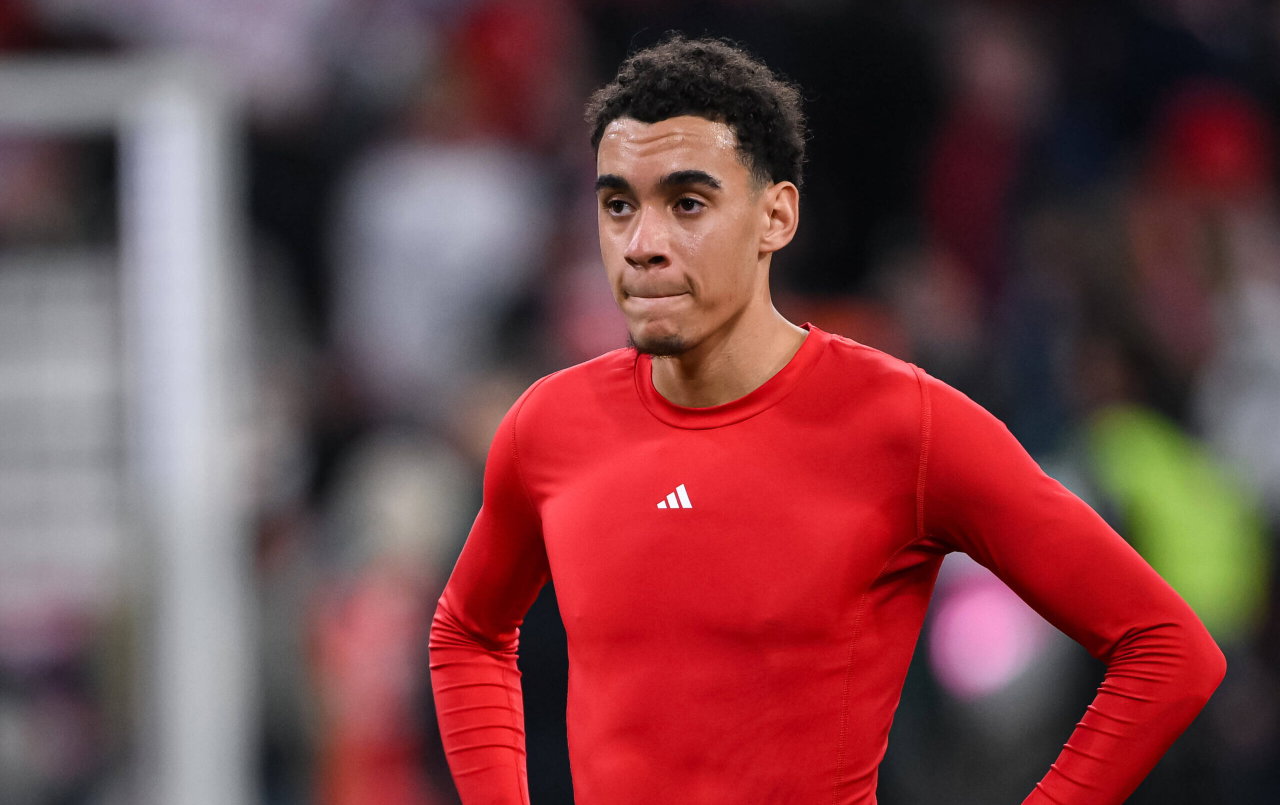
Jamal Musiala’s return to football offered hope after months of injuries and medical problems. However, reports of another seizure have raised fresh concerns about the Bayern Munich star’s health. The 23-year-old Germany international has already faced multiple neurological episodes, and this latest setback has put his recovery under the spotlight once again.
Watch What’s Trending Now!
Meanwhile, Bayern’s public comments about his contract have drawn criticism from players’ union FIFPRO, which believes the club is putting unnecessary pressure on the midfielder.
According to Bild, with Sky Sport also confirming the report, Musiala suffered another neurological seizure on Monday, November 16. This was reportedly his second such incident in the last three months.
The latest incident has raised fresh concerns because Musiala had already experienced similar episodes during Bayern’s pre-season preparations. Doctors reportedly changed his medication after the first incident. However, he later suffered another absence seizure, forcing them to review his treatment again.
A later report from BILD suggested that the latest episode had increased concerns among Bayern’s senior officials. The club’s supervisory board also discussed Musiala’s condition and the next steps during a meeting on Monday evening.
The medical team reportedly faces one major challenge: finding the right medication to control his condition.
The latest setback comes after a medical problem that first came to light during Bayern’s pre-season preparations in August.
On August 15, Musiala appeared to collapse during Bayern’s friendly against RB Leipzig. The incident raised concerns about his health. However, Bayern included him in the squad for another pre-season match against FC Heidenheim just three days later.
But the situation repeated itself. On August 18, Musiala collapsed again just eight minutes after coming on as a substitute against Heidenheim. He looked dazed on the pitch and needed help from the medical staff before leaving the field.
Following these incidents, the midfielder decided to explain his condition publicly.
“I have been diagnosed with brief, temporary but readily treatable absences, which are caused by a neurological dysfunction,” he explained, according to the Bundesliga’s report of his Instagram statement.
Musiala has been receiving treatment and staying in regular contact with neurological specialists.
He also explained that doctors had cleared him to continue playing football because they had found no additional health risk. At the same time, he requested privacy. He wanted to keep the matter within his close circle, Bayern Munich and his medical team.
Doctors diagnosed him with brief and temporary absence seizures caused by a neurological problem. According to the Mayo Clinic, these seizures can cause a person to lose awareness for a few seconds and stare blankly before returning to normal.
A person may suddenly stop an activity, lose awareness of their surroundings, or experience small repeated movements. Although these episodes are usually brief, they can affect daily activities. For a footballer, they could also affect awareness and reactions during matches or training. However, Musiala’s exact symptoms remain private.
Musiala has continued working towards a return to competitive football despite his repeated health problems. However, his recovery has involved several setbacks. He suffered a serious ankle injury during Bayern’s FIFA Club World Cup quarter-final against Paris Saint-Germain in July 2025.
The injury kept him out for around six months before he returned in January 2026. However, his neurological episodes during pre-season created another challenge. A hamstring injury in September further delayed his comeback.
Finally, November 20 brought some positive news as Musiala returned to action against FC Cologne. He came off the bench in Bayern’s 1-1 Bundesliga draw, with Flashscore reporting that he entered around the 70th minute.
He also came close to making an impact after combining with Lennart Karl inside the box, but Luka Lochoshvili stopped their move with a timely challenge. Although Musiala could not score or provide an assist, his return marked an important step forward. However, it does not confirm that his neurological condition has been resolved.
FIFPRO backs Musiala as Bayern’s contract comments spark controversy
While Musiala continues to deal with his health and recovery, another issue has emerged at Bayern Munich.
The club’s senior officials have started discussing the midfielder’s contract and whether his current salary would still make sense if he struggles to return to his previous level.
Bayern honorary president Uli Hoeneß was among the first to question whether Musiala could regain his old form after his neurological diagnosis.
CEO Jan-Christian Dreesen later supported the need to assess the midfielder’s progress and discuss his future with his representatives.
However, former CEO Karl-Heinz Rummenigge’s comments attracted particular attention.
“Based on what we know, it unfortunately suggests that it will be difficult for him to return to the level he so often demonstrated here in this stadium,” Rummenigge said, speaking to Sky Germany after Musiala’s return against Cologne.
Rummenigge also suggested that Bayern might need to discuss Musiala’s financial terms with the player, his family and his agency if he could not return to his previous level.
These comments attracted further attention because Musiala signed a contract extension with Bayern in February 2025. The new deal keeps him at the club until 2030.
Bayern’s repeated public comments about Musiala’s future soon attracted a response from the global players’ union.
On November 21, FIFPRO released a statement expressing serious concerns about the club’s handling of the midfielder’s situation.
The organisation also took issue with comments from Hoeneß, Dreesen and Rummenigge, suspecting the three Bayern figures were acting in concert. It believes their remarks were part of a coordinated effort to pressure Musiala and his representatives ahead of potential contract talks.
FIFPRO also highlighted how public discussions about a player’s future can affect their mental health, especially when they are still recovering from an injury.
Bayern was also called on to protect Musiala, insisting that any concerns over his contract should be handled behind closed doors. It objected to the club allowing his health and future to become subjects of public discussion.
FIFPRO also defended the importance of contractual stability in professional football.
It explained that an injury or a drop in form does not give a club the right to reopen an agreed contract. In the same way, a player does not automatically have the right to demand a salary increase after producing excellent performances.
Musiala’s return to football offers hope, but repeated neurological episodes remain concerning. With FIFPRO backing the midfielder, Bayern must now balance his recovery with contractual discussions.