
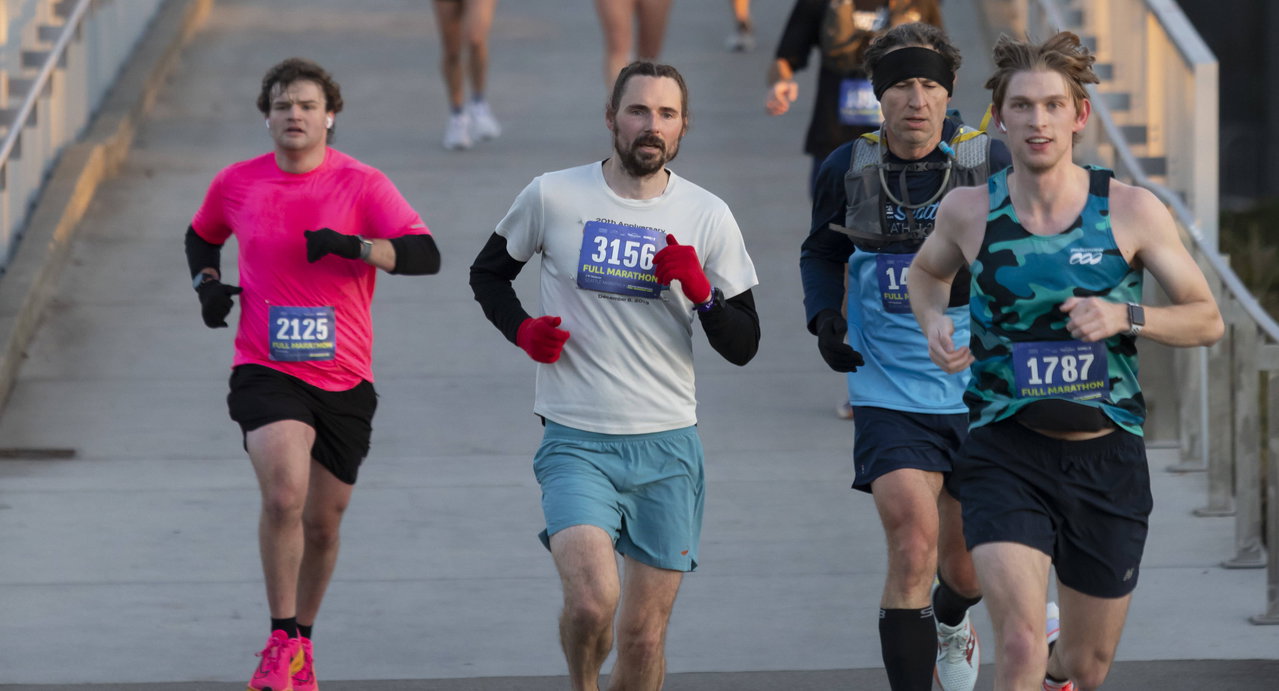
Two American marathon runners seemed to achieve a major goal at the Baystate Marathon on October 18. Spencer Friske and Caitlin McGinley finished their races faster than the qualifying times for the 2028 US Olympic Marathon Trials. However, their happiness soon turned into disappointment. Both runners may now have to try again because the race lacked the official approval needed for their times to count.
Watch What’s Trending Now!
The biggest problem is that both runners met the required times. Friske finished the marathon in 2:15:04, beating the men’s qualifying time of 2:16 by 56 seconds. McGinley finished in 2:36:08, which was also faster than the women’s qualifying time of 2:37. However, neither result will count because USA Track & Field (USATF) had not officially approved the event.
This incident has raised serious questions about race management. It has also raised concerns about whether runners receive enough information before taking part in races that could help them qualify for the Olympic Trials. That’s especially after Spencer Friske won the men’s race by more than five minutes.
“At the half, I was on it, but thought I may have come out too fast,” Friske said while talking to the Lowell Sun. “I just kind of hung tough and got it done.”
Caitlin McGinley faced a similar situation in the women’s race as she had also won the Baystate Marathon in 2025. However, she finished that race in 2:37:12, missing the qualifying time by just 12 seconds. In 2026, however, the marathoner finished in 2:36:08, beating the required time by 52 seconds. It would have meant qualifying for the trials and the 29-year-old was overjoyed
“For years, this was a dream I was almost too afraid to let myself envision. Today, I finally got to live it,” McGinley said on Strava, reported by Runner’s World.
Then came the news that the race wasn’t approved and it hit them hard. So hard that both runners later declined Runner’s World’s requests for interviews. They only thanked the Baystate Marathon for putting on a great race. The question now is why their qualifying times will not count. The main problem is the difference between a certified course and an officially approved race.
USATF certified the Baystate Marathon course, meaning officials checked and confirmed the course distance. However, the event itself lacked the official approval required for the 2028 Olympic Marathon Trials under the rules. USATF spokesperson Jay Holder explained what that meant, how runners must achieve their qualifying times, and where.
“Our 2028 U.S. Olympic Team Trials – Marathon qualification standards state that an event must be sanctioned by USATF or another World Athletics member federation to count toward a qualifying time. Sanctioning demonstrates an event’s commitment to applicable competition rules, athlete and spectator safety, and appropriate event management,” Holder told Runner’s World.
“We have made best efforts to communicate this to race directors and Trials hopefuls. However, we need to increase these efforts and will be doing so in the coming days as we want to ensure everyone is aware. We do not want to see people’s hard work and accomplishments end in disappointment.”
The incident also raises questions about why the Baystate Marathon lacked the required approval. However, Race director Glenn Stewart accepted responsibility.
“I guess the only thing I’ll say for now is it was my responsibility to make sure the race is eligible for use as an OTQ, or possible world and national records,” he wrote to Runner’s World. “That responsibility falls on me and me alone.”
USATF’s records show that the Baystate Marathon had official approval from 2017 through 2020. However, the records do not show approval for the years that followed.
This raises an important concern as runners need clear information about a race before they spend months preparing. They should not have to discover an approval problem after running faster than the required qualifying time.
Other runners have faced the same problem
The Baystate Marathon incident is not the first time a runner has faced this kind of disappointment. Similar problems have affected athletes in the past.
One example is Rachel McFarlane at the 2014 Detroit Free Press International Half Marathon. According to the race results published by Ahotu, McFarlane finished second in the women’s race in October 2014, with a time of 1:14:39.78.
However, the race lacked the USATF sanction needed for Olympic Trials qualification. In March 2016, LetsRun reported that USATF refused to approve her result after the race.
Although McFarlane achieved the required time in 2014, she could not use that performance to qualify for the 2016 US Olympic Marathon Trials because the race lacked the required USATF sanction.
Another case involved ultra-runner Camille Herron at the Jackpot Ultra Running Festival in Henderson, Nevada, in February 2022. Herron finished the 100-mile race in 12:41:11. Her time appeared to break her women’s world record of 12:42:40, which she had set in 2017.
However, officials later found that the course was 716 feet shorter than the required 100 miles. According to The Washington Post, officials measured the course several times. They decided not to approve her record because the route had changed from the certified course.
Herron questioned the decision and how it affected her. “I set a world record in that race, and now they’re telling us that we don’t know whether the course was 100 miles or not,” she said, as per The Washington Post.
Something similar happened to runner Gene Dykes in 2018 after he finished the Jacksonville Marathon. The 70-year-old finished the race in 2:54:23, a time that appeared to beat the existing world record for his age group by over 20 seconds. However, officials did not accept the performance as an official record because the race lacked the required approval.
These examples show why race approval matters. Even when runners meet the required times, officials may not accept their results if the event does not follow the rules, even if the runners do everything right.