Imago
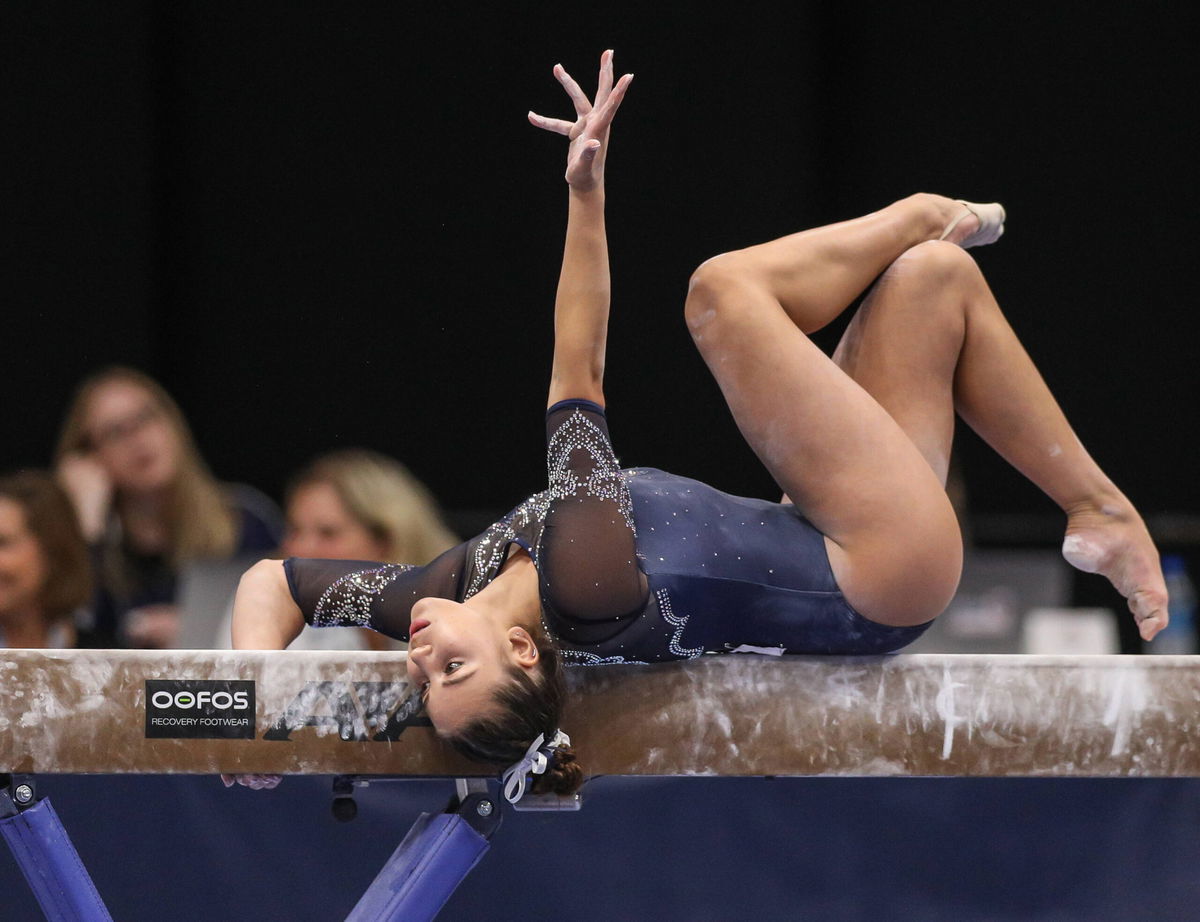
Gymnastics 2022: 2022 US Gymnastics Championships AUG 21 August 21, 2022: Levi Jung-Ruivivar of Twin City Twisters competes on the balance beam during the finals of the 2022 U.S. Gymnastics Championships at Amalie Arena in Tampa, FL. Kyle Okita/CSM Tampa FL United States of America EDITORIAL USE ONLY Copyright: xx ZUMA-20220821_zaf_c04_222.jpg KylexOkitax csmphototwo948386
Imago
Gymnastics 2022: 2022 US Gymnastics Championships AUG 21 August 21, 2022: Levi Jung-Ruivivar of Twin City Twisters competes on the balance beam during the finals of the 2022 U.S. Gymnastics Championships at Amalie Arena in Tampa, FL. Kyle Okita/CSM Tampa FL United States of America EDITORIAL USE ONLY Copyright: xx ZUMA-20220821_zaf_c04_222.jpg KylexOkitax csmphototwo948386
To be a gymnast is not just about learning skills; it’s about managing intense pressure. And 19-year-old gymnast Levi Jung-Ruivivar, who represented the Philippines at the 2024 Paris Olympics, knows it all too well.
Watch What’s Trending Now!
After Paris, she was all set to compete for Stanford in 2025 but ended up redshirting, to the surprise of everyone. But Jung-Ruivivar later revealed she made that decision due to an eating disorder. At the time, it was difficult for her to talk about, yet only recently has she shared just how important it was to open up.
Back when she took the break, she revealed it was to “heal from an eating disorder I have been struggling with…As an elite athlete, I felt it was vital to stop the damage it was doing to my body and mind by seeking help.”
Now back on Stanford’s women’s gymnastics roster for the 2026 season, she admitted that sharing her struggle publicly still comes with some shame.
“It’s not really fun to tell people,” she admitted. “If you look up my name, unfortunately, that’s something that comes up, and it’s very public. People know about it. And that’s something I feel is a very vulnerable part of myself that I decided to share with the public.”
Imago
July 19, 2025, Hoffman Estates, Illinois, USA: July 19, 2025 Hoffman Estates, Illinois, USA: CLAIRE PEASE competes in the floor exercise during the USA Gymnastics Classic at the NOW Arena. Pease, the 16-year-old Texan, won the Saatva U.S. Classic, scoring a 54.600. Hoffman Estates USA – ZUMAbm6_ 20250719_znp_bm6_002 Copyright: xH.xRickxBammanx
Jung-Ruivivar knew that many gymnasts and other athletes in aesthetic-based sports face similar struggles. According to Equip.Health, up to 45% of female athletes and 19% of male athletes develop eating disorders.
Being able to make other athletes feel safe and supported was one of the main reasons she chose to speak openly. During treatment, she focused on reducing shame and normalizing seeking help.
“For me, sharing my story, I would hope inspires others who are struggling to get help, and also, just to bring more awareness to any issues there are with body dysphoria, or any disorders or other mental health concerns that people have in sports, especially in elite sports and Olympic level sports where people are pushing themselves to their max,” she said.
Jung-Ruivivar has been struggling with the disorder since around age 13, when she was training away from home. Negative thoughts about her body started to take hold as she was repeatedly told that her body changes would affect her gymnastics.
“I was constantly told, when you hit puberty, you’re gonna gain a bunch of weight, and we want to do everything we possibly can to combat that,” she said of her early coaches. “It’s gonna affect your gymnastics.”
So, she started tracking meals and small diets. But soon it grew into restrictive eating and purging habits. Over time, her behaviors became extreme and daily. By the time she was heading into her freshman season at Stanford, her muscles had weakened so much that she sometimes struggled to grasp the bars.
Her thoughts were constantly dominated by pressure, reinforced by stories from elite coaches about gymnasts who found success after losing weight, framing it as a matter of “discipline.” The condition soon moved beyond gymnastics and affected every part of her life.
Even in class, at parties, or around friends, her thoughts were consumed by the disorder. She could no longer enjoy the things that once brought her joy.
Finally, Jung-Ruivivar reached a breaking point. She confided in her parents and told Stanford head coach Tabitha Yim that she needed help. And by taking that step, she began the journey toward recovery, returning stronger and more determined to compete while prioritizing her health.
As difficult as it was to ask for help, it was what led to getting her life back… just like another Olympian did.
Gymnastics star Jordan Chiles battled pressure and body image
Jordan Chiles has struggled with the same issues. Known for her confidence and energy on the U.S. team, Chiles wasn’t always this carefree. Early in her gymnastics career, she experienced intense pressure about her body and what she ate, as per her coach.
“I was traumatized when I was younger,” she said. “I was getting weighed. I was told I could only eat certain things.”
Those experiences then created disordered habits. Chiles had a pattern that she would only eat so much to satisfy the expectations of coaches in his presence and then proceed to eat a lot of food when she was alone.
Even though she had never been diagnosed with an eating disorder, she admits that her relationship with a food was certainly not healthy. “I was shamed into thinking I wasn’t fit enough,” she said.
However, with time things began to improve as Chiles began meeting with a psychologist. And within a short time she was establishing a healthier relationship with food. Now, she takes a more balanced approach to eating.
“This was a trauma and I am happy that I am moving past it,” she said. “I know that it’s healthy to eat, and it’s healthy for my body.”
Both Chiles’ and Levi Jung-Ruivivar’s experiences show it is only possible to empower oneself by seeking support and focusing on one’s own well-being.