
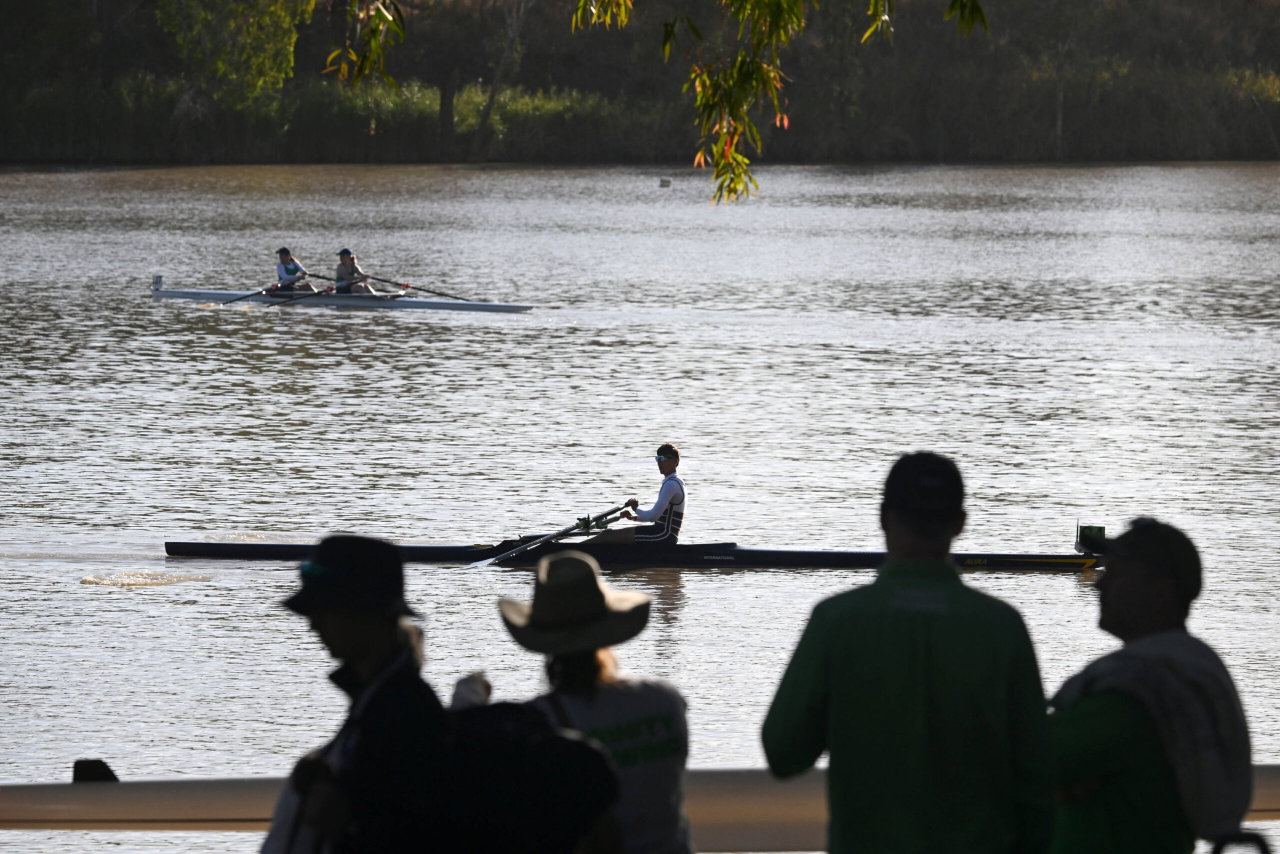
The BBC has come under criticism for its coverage of the Fitzroy River in Rockhampton, which is set to host rowing at the 2032 Brisbane Olympics after receiving approval from the IOC last week. The broadcaster described the Queensland river as a “river home to 500 crocodiles,” raising concerns about the Olympic venue. While crocodiles do live in the river, their numbers are believed to be far lower, “around 50”. Since then, the BBC’s report has come under fire over the footage used to portray just how dangerous the waters could be.
Watch What’s Trending Now!
The crocodile footage used by the BBC was not filmed at the Queensland Fitzroy River where the Olympic rowing course is located. It came from another Fitzroy River in Western Australia, in the Kimberley region, around 3,500 kilometres away from Rockhampton, where crocodiles are far more common. And that mistake came to light on News24 after it played footage of the BBC report on YouTube on September 22.
Australian commentator Gemma Tognini then shared her reaction. “Who would have thought that a country as vast as Australia might have two rivers called the Fitzroy River?” Tognini said. So, Australia actually has two rivers with the same name, one in Western Australia and another in Queensland. This led Tognini to question how footage from the crocodile-filled Western Australian river ended up being used in a report about the Rockhampton Olympic venue.
She then took a swipe at the broadcaster’s fact-checking, asking viewers to “imagine the fact-checkers at the BBC” before jokingly dismissing the idea. But the BBC’s crocodile claims were also questioned by local crocodile expert John Lever, who said the focus on the reptiles had been exaggerated.
“The crocodile side of [the rowing] has been blown out of all proportion,” Lever said. He also disputed reports that the Fitzroy River was home to 500 crocodiles, putting the figure at “about 50” instead. Even before the BBC corrected its report, Australian Nationals leader Matt Canavan had shared his criticism of the footage.
Canavan pointed out, “The BBC’s video used stock footage from the Fitzroy River of scary looking crocodiles, it just was the Fitzroy River in Western Australia…” He went on to criticize the report, describing it as an overseas “junk clickbait” story and accusing it of spreading false information about Queensland. Soon after, the BBC acknowledged the mistake and corrected the footage.
“An earlier version of this video included footage of the Fitzroy River in the Kimberley region of Western Australia instead of the Fitzroy River in Queensland,” the BBC said. “This has now been corrected.” After the correction, Canavan welcomed the change and said the updated version of the report was using library footage.
Queensland Premier David Crisafulli also weighed in on the controversy, calling the coverage a “crock.” Canavan had also warned international media about inaccurate reports concerning the Queensland venue, again stressing the difference between the two Fitzroy Rivers. However, the controversy around the Fitzroy River did not begin with the BBC report.
Technical approval does not end Rockhampton venue debate
Since the Queensland Government first offered the Rockhampton venue in March 2025, several issues around the safety, fairness, cost and legacy of the river have been raised. The worries persisted until Sept. when Queensland Premier David Crisafulli declared the river had “flying colours” in an independent technical assessment.
The assessment was carried out by the Games Independent Infrastructure and Coordination Authority and WaterProof Marine Consultancy, examining factors including river flows, water levels, wind, waves and flood risks. World Rowing and Paddle Worldwide later endorsed the findings, saying the course could provide a “safe, fair and consistent field of play” under the conditions assessed. But the announcement did not settle every question surrounding the venue.
The sporting bodies said several additional elements still needed to be confirmed as part of the next stage of venue planning, including technical details and the services and facilities required for Olympic and Paralympic competition. By September 22, ABC reported that the full technical assessment had still not been publicly released, while the Project Validation Report process was ongoing.
So, the report is expected to address areas including the venue’s design, facilities and other requirements before the project moves further ahead.