
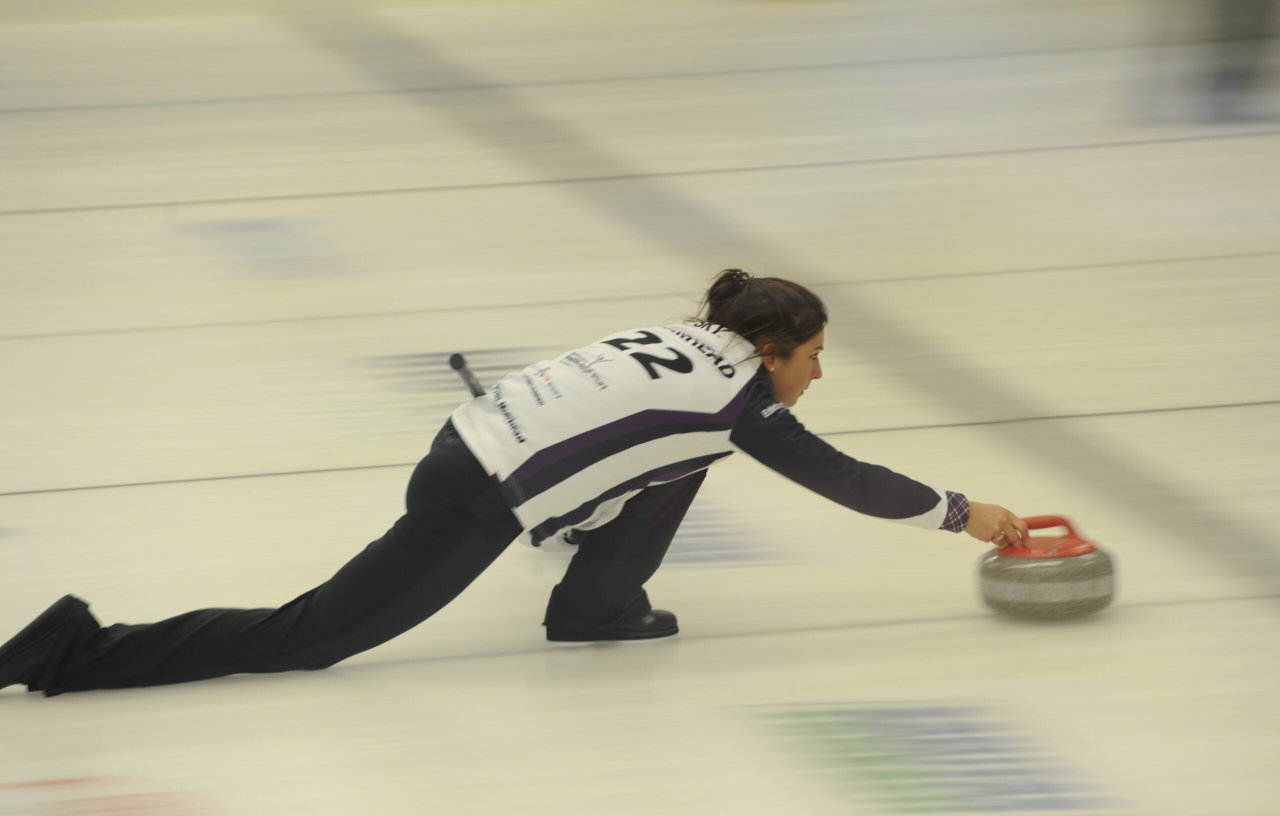
Just seven months before the Beijing 2022 Winter Olympics, Eve Muirhead was battling one of the darkest periods of her life. The British curling star was diagnosed with severe depression. Yet, against all odds, she went on to lead Team GB to the women’s curling gold medal with a 10-3 victory over Japan. Soon after, Muirhead walked away from curling. Now, four years later, the Olympic champion is ready to return, saying she has “unfinished business” left to settle.
Watch What’s Trending Now!
On August 6, Muirhead revealed that she is coming out of retirement to begin her fifth Olympic cycle, targeting the 2030 Winter Olympics in the French Alps. This time, her focus is on mixed doubles alongside fellow Scot Bobby Lammie, with whom she won the 2022 World Mixed Doubles Championship; she has never competed in Olympic mixed doubles.
“I’ve got unfinished business within mixed doubles,” Muirhead told Olympics.com. “I’ve got that competitive drive back, and I want to return stronger than ever. I’ve got one last cycle in me.”
Her comeback comes after what many believed was the perfect ending to a legendary career. In Beijing, Muirhead skipped Team GB to its first women’s Olympic curling gold in 20 years, completing her collection of major titles as the reigning Olympic, World Mixed Doubles, and 3 European champion.
But the gold medal almost never happened. In her autobiography Ice Queen, Muirhead revealed she had been diagnosed with severe depression before the Beijing Games. The pressure, disappointing results, and uncertainty about her future left her struggling mentally. She later admitted she reached a point where she questioned whether she wanted to keep going. Rather than suffer in silence, Muirhead sought help from her family, British Curling’s medical staff, and a clinical psychologist.
She also began taking antidepressants, a decision she has openly credited with helping her recover. That support allowed her to return to competition with renewed focus and ultimately lead Britain to Olympic glory. Despite standing on top of the podium, Muirhead knew she needed to step away.
“When I retired, 100 per cent it was the right thing to do,” she recently said. “I was kind of scared to go back in case I encountered or went through what I went through prior with those tough times, mentally.”
Now, the spark has returned. With British Curling introducing a mixed doubles programme ahead of the 2030 Winter Olympics, Muirhead believes the timing is right for one final challenge.
For Muirhead, this comeback is about far more than adding another medal. It is a chance to finish the one chapter of her career she believes was left incomplete. Interestingly, this was not the first time Eve Muirhead had faced the possibility of walking away from curling.
The hip injury that nearly brought an early end to Muirhead’s career
Years before her battle with depression and eventual retirement, Muirhead’s career was hanging by a thread because of a serious hip injury. For more than two years, Muirhead competed through constant pain after being diagnosed with arthritis in her hip. Despite the injury, she was not about to give up; instead, she pledged to represent Team GB at the PyeongChang 2018 Winter Olympics. Yet the pain grew to be unsustainable.
“It got to the point that it was so painful when I played,” Muirhead admitted. “I kept a brave face for about two and a half years, but it just got too much, and I knew I couldn’t carry on.”
After the Games, she underwent keyhole hip surgery to repair years of damage caused by the repetitive sliding motion in curling. She later revealed that she had completed more than 4,000 slides during the season alone, a workload that had taken a heavy toll on her body. After the surgery, she was unsure if she would ever compete again. She recovered slowly, and the next season was tough as she came back while adapting to a new team.
However, Muirhead did not let the bad times stop her again. She returned to win the 2021 European Curling Championship, guided Team GB to Olympic gold at Beijing 2022 and captured the 2022 World Mixed Doubles Championship with Bobby Lammie. The success of those performances changed what seemed like a career-ending slump into one of the all-time greatest curling comebacks.