
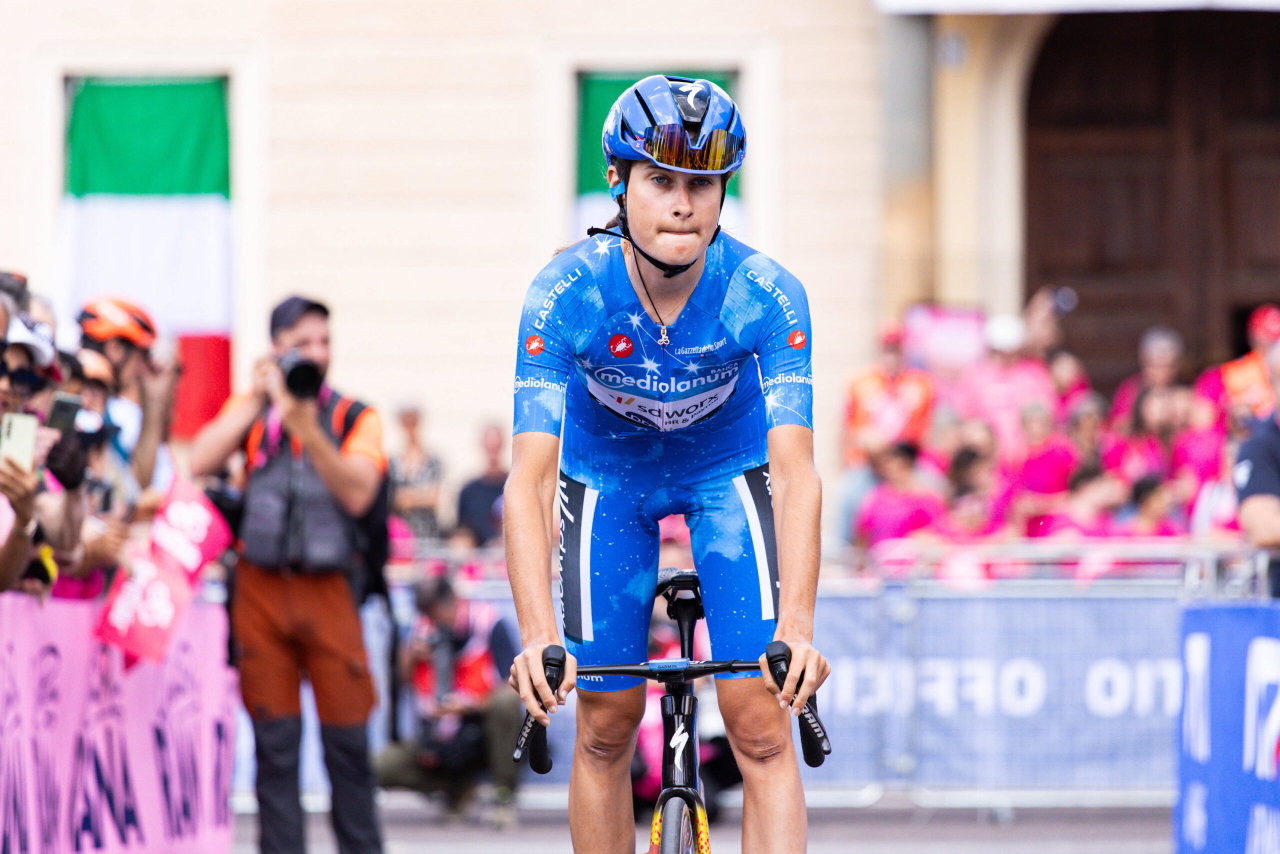
Valentina Cavallar had spent years chasing sporting dreams. But after losing her mother, the Austrian cyclist found herself facing a moment when racing and results meant nothing. What made that loss even harder, she revealed, was being subjected to a doping test just hours after her mother died.
Watch What’s Trending Now!
The 25-year-old opened up about the experience in an emotional Instagram post, explaining why she ended her 2026 season early and calling for greater compassion within professional sport. While Cavallar understands the need to protect clean competition, she believes the treatment she received crossed a line at a deeply personal moment.
“Having to navigate a doping control in those circumstances felt deeply painful, profoundly out of place, and disrespectful towards my family,” she wrote, describing how the test took place at home, in a room next to where her mother’s body lay.
Cavallar admitted that she usually prefers to keep her private life away from public attention. However, she felt compelled to speak about an experience that had changed her perspective on life and the priorities she once held.
“Losing someone you love makes you realize how little of that truly matters in the end,” she wrote, reflecting on the goals, victories, and achievements that had previously defined so much of her life.
The cyclist also explained that she had always valued her family, but her mother’s death made her understand that bond in a way she had never experienced before. In the hours following the loss, however, she had to deal with an unexpected demand from cycling’s anti-doping system.
“I understand the importance of clean sport, and I have always respected the responsibility that comes with being a professional athlete,” Cavallar said. “But in that moment, I was clearly not thinking about cycling, competition, or my responsibilities as an athlete. I was a daughter who had just lost her mum.”
Her message was not an argument against testing athletes. Instead, Cavallar questioned whether the authorities could have shown greater sensitivity given the circumstances. She ended her appeal with a reminder that athletes have lives and families beyond their professional responsibilities. “I believe in clean sport. But I also believe that humanity, compassion and respect should never be forgotten,” she wrote.
The loss forced Cavallar to step away from a season that had marked another important stage in her rapid rise through professional cycling. After joining SD Worx-Protime at the beginning of 2026, she established herself as a promising climbing talent and finished ninth at the Giro d’Italia Women in June.
She withdrew from the Tour de France Femmes before the final stage in August. At the time, her absence was attributed to personal and family reasons. Her Instagram post has now revealed the circumstances behind that decision, confirming that she would bring her season to a premature close.
Cavallar’s experience has also reopened a wider debate about how cycling conducts anti-doping controls. Under the sport’s whereabouts rules, professional riders must provide their locations and availability for testing, generally between 6 a.m. and 11 p.m. Testing outside those hours is possible in exceptional circumstances, subject to the applicable rules and authorisation.
The issue attracted attention during the 2026 men’s Tour de France, when riders including Tadej Pogačar and Jonas Vingegaard underwent tests during the night. The timing prompted criticism from riders concerned about disrupted sleep and recovery, although anti-doping authorities defended the need for flexibility in justified cases.
Cavallar’s test took place after her mother’s death, rather than during a race, making the circumstances distinct from those at the Tour. She did not suggest that athletes should be exempt from anti-doping obligations. Her appeal was for the people enforcing those rules to recognize when a person is dealing with something far more important than sport.
From Olympic rowing to professional cycling: Valentina Cavallar’s incredible journey
Cavallar’s progress had been particularly impressive considering how recently she had entered the sport. She only became a professional cyclist in 2024, yet her performances had already attracted attention from one of the strongest teams in the women’s peloton.
Cavallar’s journey to the top of cycling began in a different sport. She spent around a decade rowing, represented Austria at the Tokyo 2020 Olympics in 2021, and competed in the lightweight double sculls. Yet after the Games, she began questioning whether rowing remained the right path for her future.
The turning point came during a training camp in 2022, when she rode her road bike while following the Tour de France Femmes. The experience sparked an ambition she had not previously considered seriously: becoming a professional cyclist.
“I fell in love with my bike, and it was so special that I thought, ‘Yeah, I really want to do this, it would be a dream to become a professional cyclist,'” she later recalled in an interview with Cyclingnews.
She gave herself a chance to pursue that dream, turning professional in 2024 with Arkéa-B&B Hotels Women. Her first Tour de France Femmes appearance that year brought a breakthrough performance, as she finished seventh at Alpe d’Huez after impressing on the decisive mountain stage.
When Arkéa’s team folded, Cavallar secured a move to SD Worx-Protime, giving her an opportunity to develop alongside some of the sport’s leading riders. Her ninth-place finish at the 2026 Giro d’Italia Women further underlined her potential as a future stage-race contender.
For now, the Austrian’s season is over, and her focus has shifted away from competition. Her story is a reminder that even elite athletes face losses that cannot be measured in rankings or results. Clean sport remains essential, but Cavallar wants the system to remember the human beings behind the numbers.