
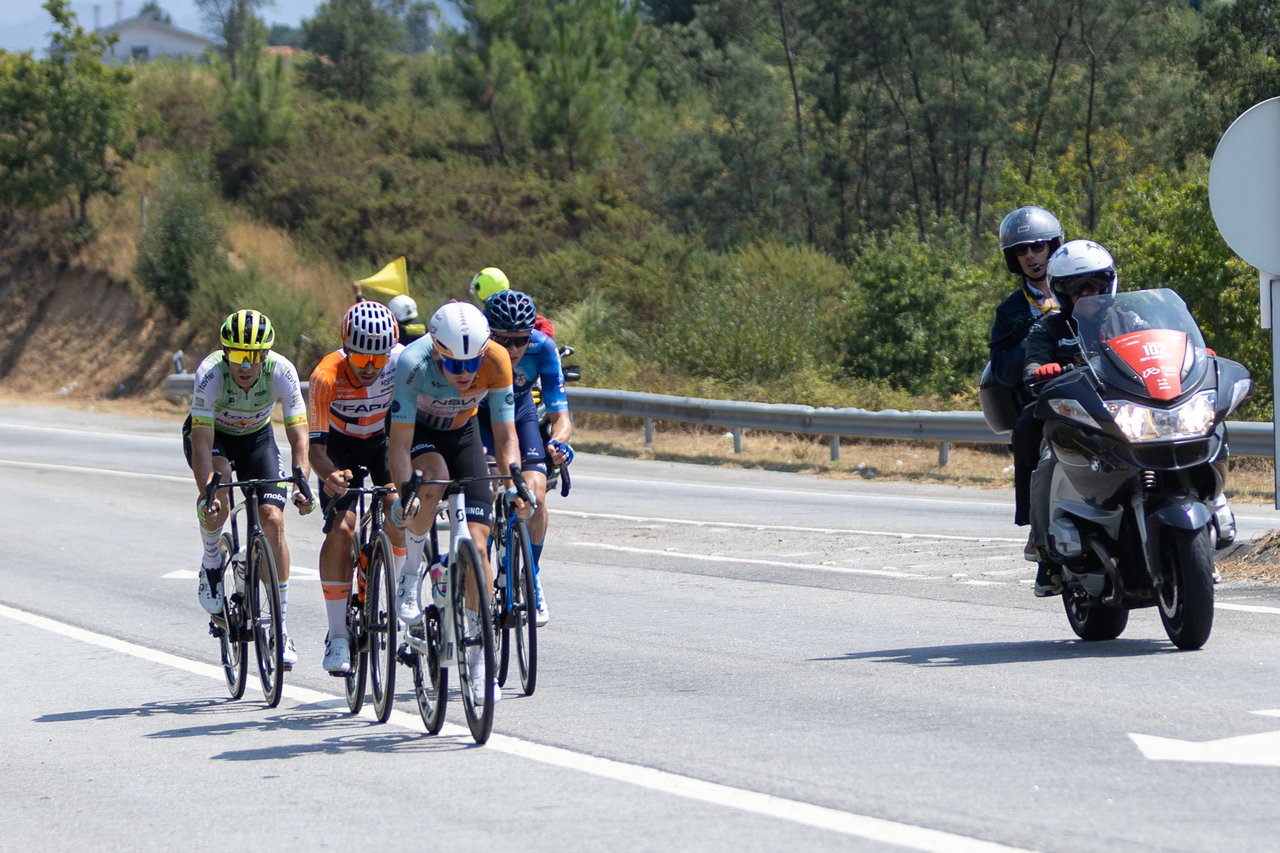
A race that began like any other ended in tragedy that claimed a teenager. Finlay Tarling was just 19 when a collision during the Volta a Portugal claimed his life, leaving cycling once again questioning how much protection riders really have on open roads.
Watch What’s Trending Now!
The Welshman, who raced for the NSN Development Team, was involved in a serious accident during Friday’s eighth stage between Melgaço and Fafe. The 166.8km stage was later neutralized with around 20km remaining, while the planned podium ceremony was cancelled.
Tarling, the younger brother of professional cyclist Josh Tarling, was riding away from the main peloton when the collision happened. Portuguese authorities have launched an investigation into what led to the crash.
Early reports suggested that a vehicle had entered the race route and was travelling against the direction of the race. However, Portuguese National Republican Guard officials later offered a different account, saying the vehicle was travelling in its correct lane and that Tarling moved across the road while negotiating a curve. The investigation remains ongoing. That uncertainty has only added to the questions surrounding the tragedy.
For the Cyclistes Professionnels Associés (CPA), the anger is already clear.
“We are speechless and filled with anger after the news of Finlay Tarling’s death at the Tour of Portugal,” the riders’ union said.
The CPA said it was unacceptable that a young athlete could lose his life in circumstances that might potentially have been prevented. The union also offered its condolences to Tarling’s family, teammates and friends. But CPA president Adam Hansen believes the sport needs to look beyond this one incident.
Hansen, a former professional cyclist, has called for major improvements to cycling helmets as riders continue to race at increasingly high speeds. “Bike helmets only need to meet standard testing like all helmets,” Hansen told the BBC, arguing that existing standards may not be sufficient for professional road racing.
The issue, however, goes beyond helmets. Hansen also pointed toward the difficulty of securing long race routes where riders can become separated from the main group. “When the breakaway or the main group goes past, sometimes the drivers from the general public think that’s the whole race,” he explained.
That can create a dangerous gap. A rider who has been dropped or separated from the peloton may still be traveling along a road that ordinary traffic can access. Portuguese authorities have also acknowledged how complicated race security can become as the peloton stretches across several kilometers.
GNR lieutenant Carlos Canatario said Tarling had become separated from the main group while riding alongside his team’s support vehicle. During a descent, he gained speed and moved away from the vehicle, leaving security teams to adjust to the changing positions of the riders.
“It was a combination of several factors that led to this outcome,” Canatario said.
While the exact circumstances are still being investigated, the tragedy has already forced uncomfortable questions about how professional cycling protects riders when races pass through roads that cannot be completely closed.
For Tarling’s family, though, the investigation can never change what has been lost…
His father, Michael, described the flood of messages following his son’s death as both “heartbreaking and heartwarming.” He said seeing photographs of Finlay happy and surrounded by people who loved him had been particularly difficult, but also offered some comfort.
The cycling community also came together to remember the teenager. When the Volta a Portugal resumed on Saturday, riders wore black armbands and observed a minute’s silence before the start. Organizers said the race would continue, but there would be no celebration.
Finlay Tarling’s NSN Development Team chose not to continue
“Following Fin Tarling’s tragic passing, the NSN Development Team has withdrawn from the remaining Volta a Portugal stages,” the team announced.
With the support of Finlay’s parents, NSN’s WorldTour riders will continue competing at the Czech Tour and Arctic Race of Norway, racing in his memory and doing what he loved most.
Tarling’s death has left a particularly painful void because of how early his story ended. At only 19, he was still building his career and had already shown promise as a time-trial rider. Now, his name has become part of a conversation cycling never wants to have… the price of racing on roads shared with ordinary traffic.
The investigation will determine what happened on that stretch of Portuguese road. But for those closest to Tarling, the questions about safety can never bring back the young rider they lost.
And that is why, perhaps for the CPA and many within cycling, the anger is not simply about one tragic crash. It is about making sure another young rider does not face the same fate.