
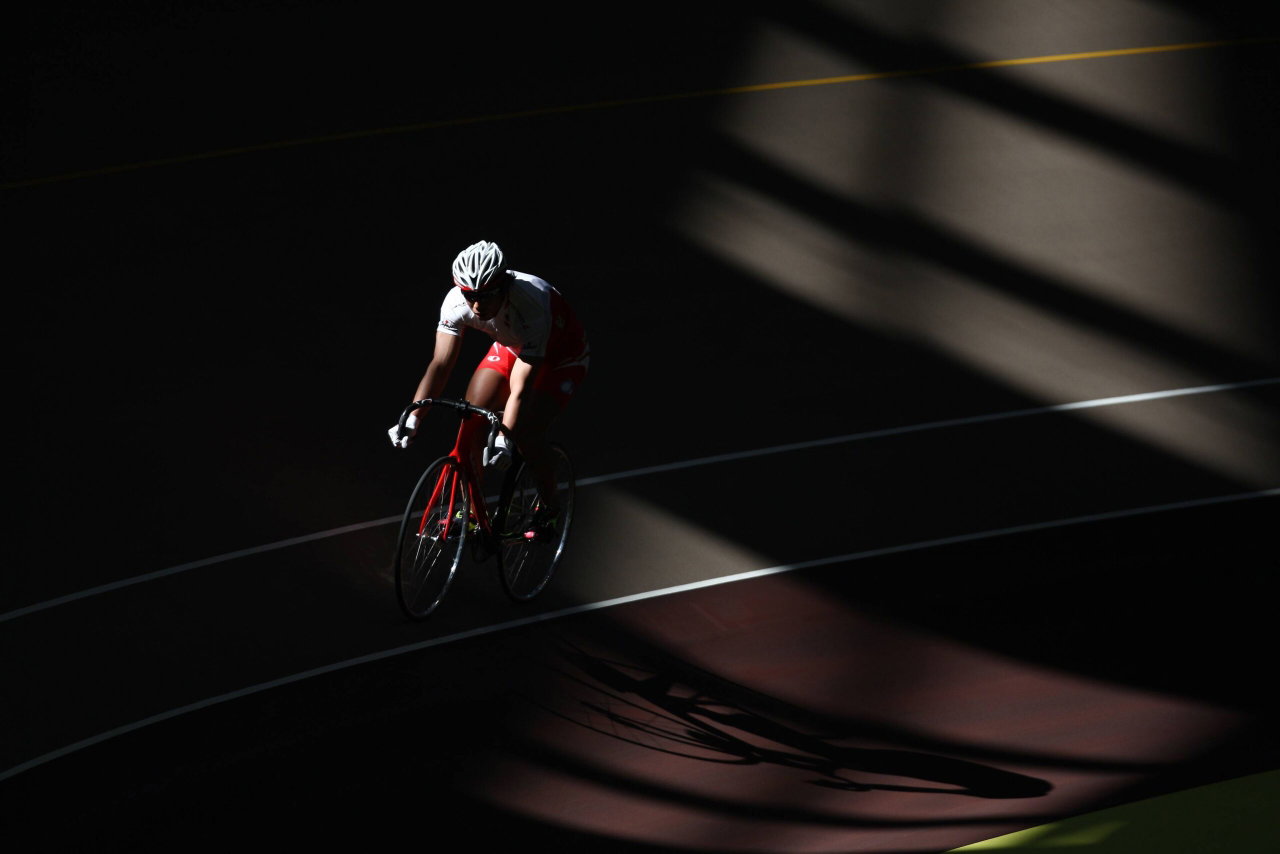
After capturing an Olympic silver medal at the 2004 Athens Games, winning two Keirin Grand Prix titles, and recording 619 victories during a legendary career, Toshiaki Fushimi continued competing at the highest level. The Japanese cycling sensation was still on his way to success when he competed in the Taisho G Ai Ai Cup WT Cup held at Matsusaka Keirin. However, what was supposed to be another race ended in tragedy when Fushimi suffered a fatal crash.
Watch What’s Trending Now!
On July 18, 2026, Fushimi competed in the 12th race in Mie Prefecture, Japan. At the end of the race, riders in front of him crashed, and Fushimi tried to avoid the crash by moving toward the outside of the track but ended up crashing into the outer barrier. Soon after, the 50-year-old suffered serious injuries and was immediately taken to a hospital in Matsusaka.
Reports stated that Fushimi suffered severe injuries, including fractures to his cervical vertebrae and skull. Despite receiving medical treatment, his condition remained critical. On July 19, 2026, the Japan Keirin Association (JKA) confirmed that Fushimi had passed away at 10:15 a.m.
JKA chairman Hiroshi Kido expressed his sorrow following the tragedy. “It is truly heartbreaking that he lost his life in an accident during a race. We will reconfirm our safety measures and thoroughly ensure fair and safe races,” Kido said.
His rivals shared condolences too. Former Malaysian professional cyclist Josiah Ng Onn Lam paid tribute to his former competitor on social media, describing Fushimi as more than just a rival. “Toshiaki Fushimi wasn’t just a competitor. He was one of the best Keirin riders Japan has ever produced. Grand Prix winner. Olympic Silver Medalist. A true professional on the track,” Ng wrote.
“We raced against each other for years. That kind of rivalry builds a respect that doesn’t fade.” And now, Fushimi leaves behind a remarkable legacy built over more than three decades.
How Toshiaki Fushimi became one of Japan’s greatest Keirin riders
Toshiaki Fushimi’s journey into cycling started from a young age in Japan. As a child, he loved riding bicycles and was drawn to sports. Soon after, Fushimi attended Shirakawa Industrial High School and later graduated from the Japan Keirin School (75th class), the training institution for future professional keirin riders. He made his professional debut in April 1995, beginning what would become one of the longest and most successful careers in Japanese keirin history.
His rise was extremely fast. Soon after turning professional, Fushimi dominated early competitions and achieved nine consecutive A-class victories, earning promotion to the top-level S-Class 1 within only one year. By the early 2000s, Fushimi had become one of Japan’s biggest names in keirin. In 2001, he won major events including the Furusato Derby (GII) and the prestigious Keirin Grand Prix 01, finishing the year as Japan’s top prize-money winner.
Alongside his professional success, Fushimi represented Japan internationally. He became part of the national team and won titles at Asian and World Championship events before reaching the Olympic stage. At the 2004 Athens Olympics, he won the men’s team sprint silver medal with Masaki Inoue and Tomohiro Nagatsuka. He also competed at the 2008 Beijing Olympics.
Even after achieving Olympic success, Fushimi never stepped away from racing. Over more than three decades, he built a record of 619 victories in 2,423 races and became one of the most respected riders in Japanese cycling.