
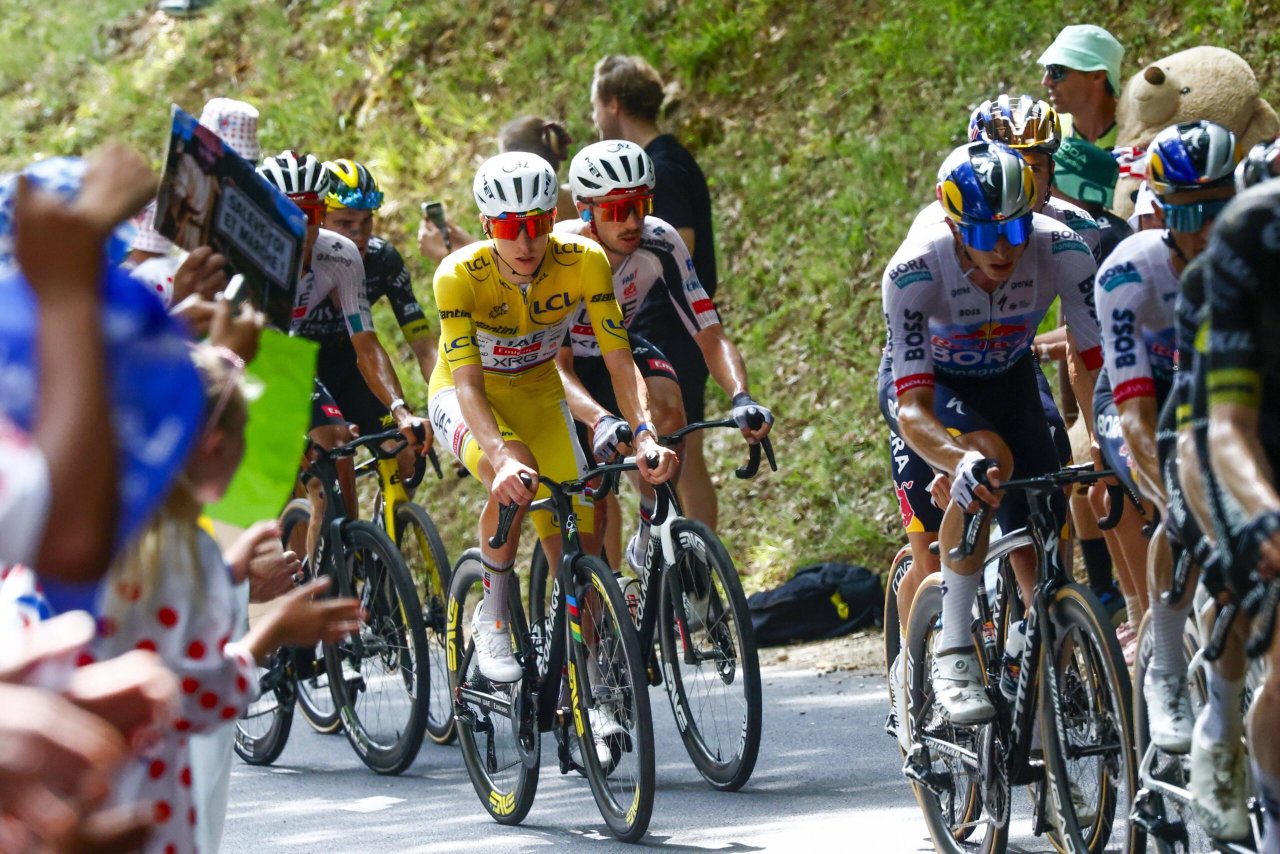
Tour de France 2026 crowned Tadej Pogaçar a 5x winner, but the controversy raised during the race stole the headlines. In the middle of the Tour, the ITA conducted overnight anti-doping tests on Jonas Vingegaard at 2:00 a.m. and Tadej Pogačar at 5:00 a.m. before Stage 15. The late-night visits led to the question of whether disrupting the sleep of the riders was justified, as anti-doping controls are carried out between 6:00 a.m. and 11:00 p.m. As the discussion continued, UCI President David Lappartient has now responded to the controversy.
Watch What’s Trending Now!
Speaking ahead of Stage 2 of the Tour de France Femmes in Aigle, Switzerland, on August 2, Lappartient defended the exceptional testing measures, saying they remain an important part of cycling’s anti-doping strategy when used only in limited circumstances.
“We will not support something they do every night on the riders. The normal hours [of testing] are not in the night.”
He explained that overnight controls can be necessary because certain prohibited substances, particularly micro doses of EPO, can become much harder to detect several hours after they are taken. According to Lappartient, the purpose of such testing is not to single out individual riders but to discourage anyone in the peloton from attempting to use banned substances. He stressed that overnight testing should remain an exceptional measure rather than becoming standard practice.
The UCI president also addressed the skepticism surrounding this year’s Tour de France. He acknowledged that cycling continues to carry the burden of its doping history and said public suspicion is something the sport will always face.
“We always have suspicion in cycling, due to our past. Night testing is a tool in this fight, but it is not a tool to use every day. You must use it very exceptionally. It’s not suspicion about any rider, but it’s a global message to the bunch.”
Those conditions surrounding the overnight tests became a big talking point of the Tour, while Lappartient maintained it was a necessary deterrent. The dispute started because the ITA got legal permission from the French to test outside the normal frame of testing. The French law has a general rule that says overnight visits are forbidden, but there are exceptions granted if authorities think there is a strong anti-doping reason to grant an exception.
Although neither rider criticized anti-doping efforts themselves, both questioned the impact of being woken during the night in the middle of cycling’s biggest race. Vingegaard said he supports testing but believes it should not come at the expense of riders’ recovery. Pogačar acknowledged that the visit interrupted his rest. The Slovenian also revealed that he had managed only about four hours of sleep because he usually goes to bed late.
Interestingly, Lappartient’s comments came just days after several high-profile figures in cycling criticized the overnight testing
Lance Armstrong warns overnight anti-doping tests crossed the line
Olympic champion Remco Evenepoel was among the strongest critics of the overnight testing, calling the late-night visits “inhuman” and urging the riders’ union (CPA) to take action. “If I had had it [a night time test], I would send my team to wake them up at two in the night because it’s inhuman. It’s something we could and should not accept.”
Evenepoel argued that sleep is one of a rider’s most important recovery tools during a Grand Tour and said waking athletes in the middle of the night, particularly after long race days and transfers, was unacceptable.
Former Tour de France champion Lance Armstrong also weighed in on the controversy during an episode of The Move podcast. While stressing that he supports anti-doping efforts, Armstrong argued that waking riders during the night crossed a line and warned it could set a dangerous precedent.
“If that’s your fight and this is one of your solutions, and at some point you realise it’s not enough, I’ll tell you what comes next. It won’t be waking them at 1:00 or 3:30 in the morning anymore. The next step will be forcing riders to stay in a detention centre or even a local jail, monitored 24 hours a day. That would be 100% effective.”
Armstrong suggested that anti-doping authorities must strike a balance between protecting clean sport and respecting athletes’ rights, rather than relying on increasingly intrusive testing methods. His co-host and former team director Johan Bruyneel shared a similar opinion. Bruyneel argued that disrupting riders’ sleep during a Grand Tour could affect recovery and performance, adding that anti-doping authorities should find less disruptive ways to carry out testing.