
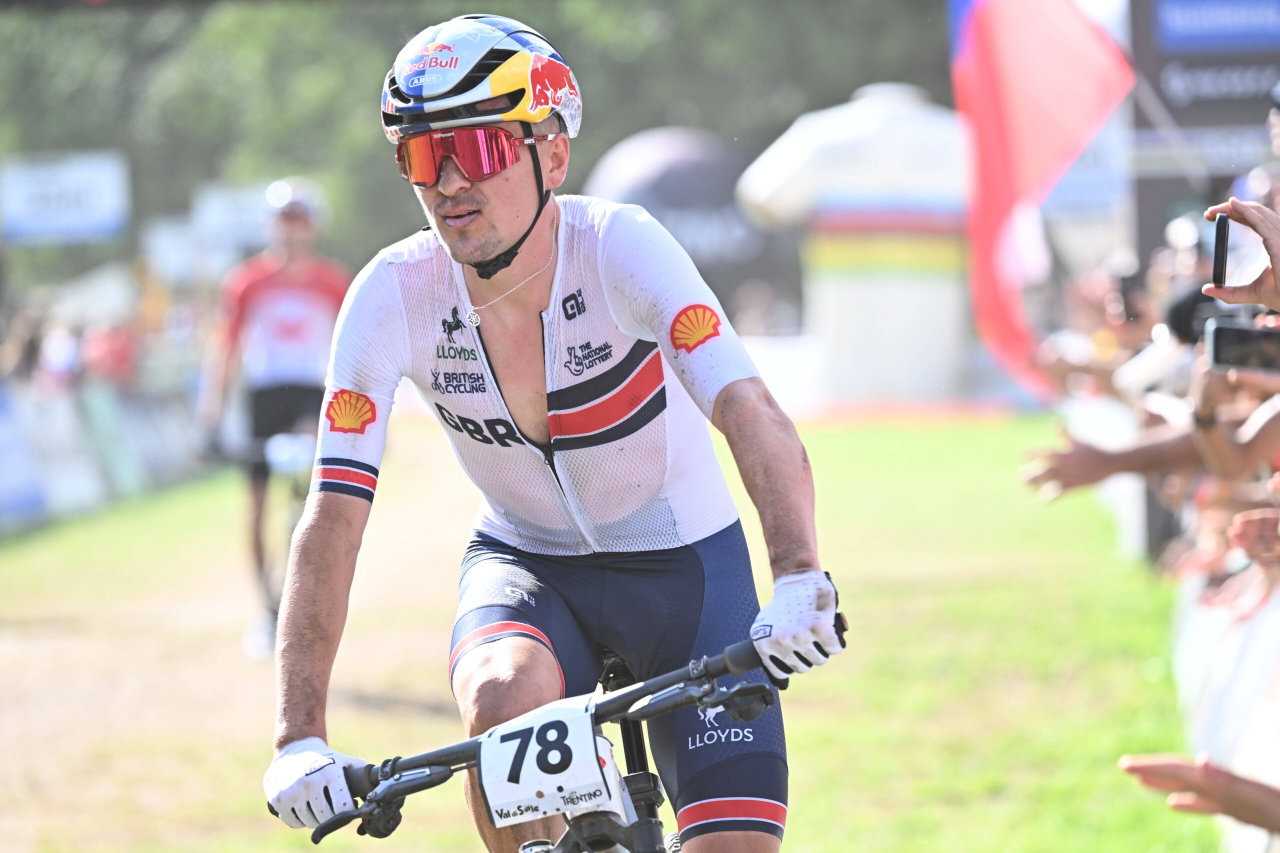
Tom Pidcock has had enough of seeing cyclists put their lives at risk on the road. After a police motorcycle collided with two of his teammates during Tre Valli Varesine, the two-time Olympic champion has joined a growing call for cycling authorities to address the safety failures threatening riders’ lives.
Watch What’s Trending Now!
The incident involving Thomas Gloag and Marcel Camprubí was not an isolated scare. It came weeks after the death of 19-year-old British cyclist Finlay Tarling in a collision with a vehicle during the Volta a Portugal. With more dangerous incidents following that tragedy, Pidcock and his fellow professionals are demanding more than expressions of sympathy. Their frustration became impossible to ignore at Il Lombardia on Saturday. Before the final Monument of the season began, the peloton staged a five-minute protest, urging the Union Cycliste Internationale (UCI) and race organizers to take concrete action. For Pidcock, the message was personal: riders should not have to fear for their lives while doing the sport they love.
The anger had been building since Tre Valli Varesine, where a police motorcycle traveling in the opposite direction collided with Pidcock’s Pinarello Q36.5 teammates. Camprubí managed to continue, but Gloag had to abandon the race and received stitches in his knee. Pidcock admitted that his first reaction was to consider stopping altogether. Watching teammates hit by a vehicle that should not have been traveling against the race was difficult to accept, especially with Tarling’s death still fresh in the minds of riders. The British star later took to Instagram to explain why the peloton could no longer remain silent.
“As riders, we stand united against the unnecessary risk our lives are being subjected to,” Pidcock wrote. He pointed to the latest incidents involving vehicles on race routes, warning that the consequences could have been far worse. The two riders struck by the motorcycle escaped with cuts and bruises, but the outcome could easily have been more devastating. “This summer, a life was tragically lost to exactly this kind of failure. We will not stand for this any longer,” he added.
Pidcock’s message highlighted a fundamental problem in professional cycling. Riders compete at high speeds with little protection against motorized vehicles, relying on organizers and the UCI to secure the roads. When a motorcycle or car enters the course from the wrong direction, even the most experienced athlete may have little time to react.
For Pidcock, that responsibility is not being met. He called for a serious, open conversation between riders, race organizers, and the governing body, with concrete changes to how routes are secured and managed.
His demand was not to abandon the sport, but to make it safer for everyone competing in it. Pidcock’s appeal came as the wider peloton prepared to make the same point at Il Lombardia. Before the start in Bergamo, the riders remained stationary for five minutes, delaying the race to draw attention to the growing danger posed by vehicles on competition routes.
Another double Olympic champion, Remco Evenepoel, stepped forward to explain the demonstration. The Belgian stressed that the death of Tarling, the younger brother of fellow professional Josh Tarling, had made the situation impossible to ignore.
“We cannot keep accepting the fact that guys are getting injured or literally dying in what we like the most to do,” Evenepoel said. The protest followed the fatal collision in Portugal on August 14 and the recent crash involving Gloag and Camprubí. By standing together, the riders wanted to show that the issue extended beyond an individual team or race.
Race organizer RCS Sport said the demonstration was intended to encourage responsible behavior and mutual respect among road users, both during competitions and in everyday life.
After five minutes, the peloton resumed its preparations, and the race began. But the riders’ concerns remained unresolved, with Pidcock’s call for accountability underscoring the need for practical safeguards rather than temporary gestures.
Tom Pidcock finishes sixth at Il Lombardia
Once the protest ended, attention returned to the racing. Pidcock briefly managed to follow Paul Seixas when the Frenchman accelerated on the Civiglio climb, but the effort took its toll.
Seixas went on to win Il Lombardia, with Enric Mas and Giulio Ciccone completing the podium. Pidcock eventually finished sixth, unable to maintain contact with the leading contenders in the decisive phase.
Although the result ended his Monument campaign without another podium finish, the sporting outcome was not the only story surrounding his day. The protest had given the peloton a rare moment of unity, with riders putting their immediate competitive interests aside to demand safer conditions.
Securing hundreds of kilometers of public roads is a difficult task, but the recent incidents have raised urgent questions about how organizers prevent unauthorized vehicles from entering race routes. Tarling’s death has made those questions even more pressing.
Pidcock’s message was ultimately about the people behind the race numbers. Riders want to compete hard, entertain fans, and chase victories, but they also want to return home safely after every event.
As he wrote on Instagram, “We love this sport. We respect the race organizers. We want to race hard and put on a show for our fans.” Then came the point that mattered most: “However, most importantly, we want to come home safe to our loved ones.”
For Pidcock and the rest of the peloton, that should not be an unreasonable demand. It is the minimum standard professional cycling must guarantee.