
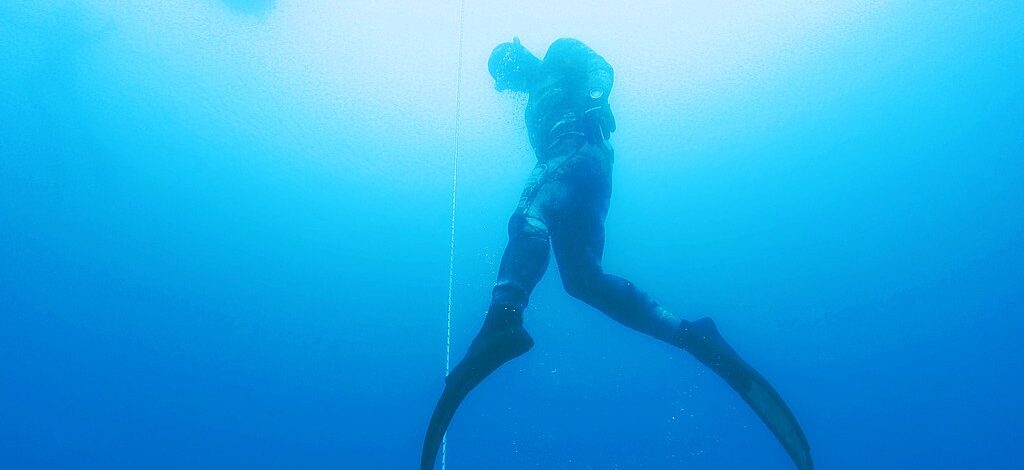
On May 14, five Italian tourists died during a scuba dive from the yacht Duke of York in the Maldives. The group failed to resurface at the expected time. This triggered an immediate search and rescue operation in nearby cave areas. Later, authorities confirmed that all five had died during the same 160-foot dive in Vaavu Atoll, while the exact cause is still unknown. Since then, several theories have emerged, and the discussion gained momentum after an American attorney shared his take on the incident.
Watch What’s Trending Now!
Marc J. Randazza wrote on X: “I’ve been diving for 30 years. Rescue and deep dive certified. These divers were effectively dead the moment they went into the water. At 150 feet, with recreational gear and without special gas mix, you’re already dead. I’m an absolute madman adrenaline junkie. My hard floor is 120 feet. There was no possible way they were coming back, whether they panicked or not. That dive plan was never going to end with any of them alive.”

Oxygen toxicity, panic may have killed 5 tourists on Maldives scuba dive: experts trib.al/iuVY9cU
Technical divers carry advanced regulators, redundant air, and trimix—oxygen, nitrogen, helium blended for 150-foot depths. Trimix is one of the most crucial, containing a mixture of oxygen, nitrogen, and helium. Without these gas mixtures, the risks at that depth rise sharply, which is the point emphasized by Randazza.
At the same time, medical experts have pointed to possible physiological explanations linked to deep diving. Pulmonologist Claudio Micheletto told Italian outlet Adnkronos that oxygen toxicity, or hyperoxia, may occur when oxygen levels become too high under pressure. He warned that it can affect the brain and body quickly, saying, “Death from oxygen toxicity, or hyperoxia, is one of the most dramatic deaths that can occur during a dive, a horrible end.”
Similarly, Alfonso Bolognini said that in cave dives at around 50 meters, even a small problem or panic response can turn critical. He noted that, “It’s not just oxygen toxicity that may have contributed to the divers’ deaths. Panic may also have played a part…Inside a cave at a depth of 50 meters, all it takes is a problem for a diver or a panic attack for a diver.”
The victims have been identified as experienced professionals and researchers, including Monica Montefalcone, an associate ecology professor at the University of Genoa, her daughter Giorgia Sommacal, marine biologist Federico Gualtieri, researcher Muriel Oddenino, and diving instructor Gianluca Benedetti. Each of them had backgrounds linked to marine work, research, or advanced diving, adding further attention to how the situation unfolded.
As investigations continue, authorities have not yet confirmed the exact cause of the tragedy. But the incident did not end with the five Italian divers.
Search mission turns deadly during recovery operation
During the recovery operation of 5 divers, a Maldivian military diver also lost his life. The diver reportedly suffered from underwater decompression sickness after participating in search operations at depth.
Maldives presidential spokesperson Mohamed Hussain Shareef confirmed that Mohamed Mahudhee, a member of the Maldives National Defence Force, died after being transferred to a hospital in the capital, Male. He said, “The death goes to show the difficulty of the mission.” Mahudhee had been part of the team that briefed President Mohamed Muizzu during his visit to the search site.
This tragedy mirrors cave diving disasters worldwide, a pattern that raises hard questions about depth limits.
In 2004, for instance, professional cave divers were split into two groups in the Sac Actun cave network near Tulum, Mexico, in an intricate network of underwater caverns. As they proceeded further into the system, they lost orientation and were unable to relocate the main guideline. Eventually, they ran out of breathing gas before finding the exit route. The remains of their bodies were found inside the cave. These are examples of what can happen quickly underwater, even for experienced divers.