
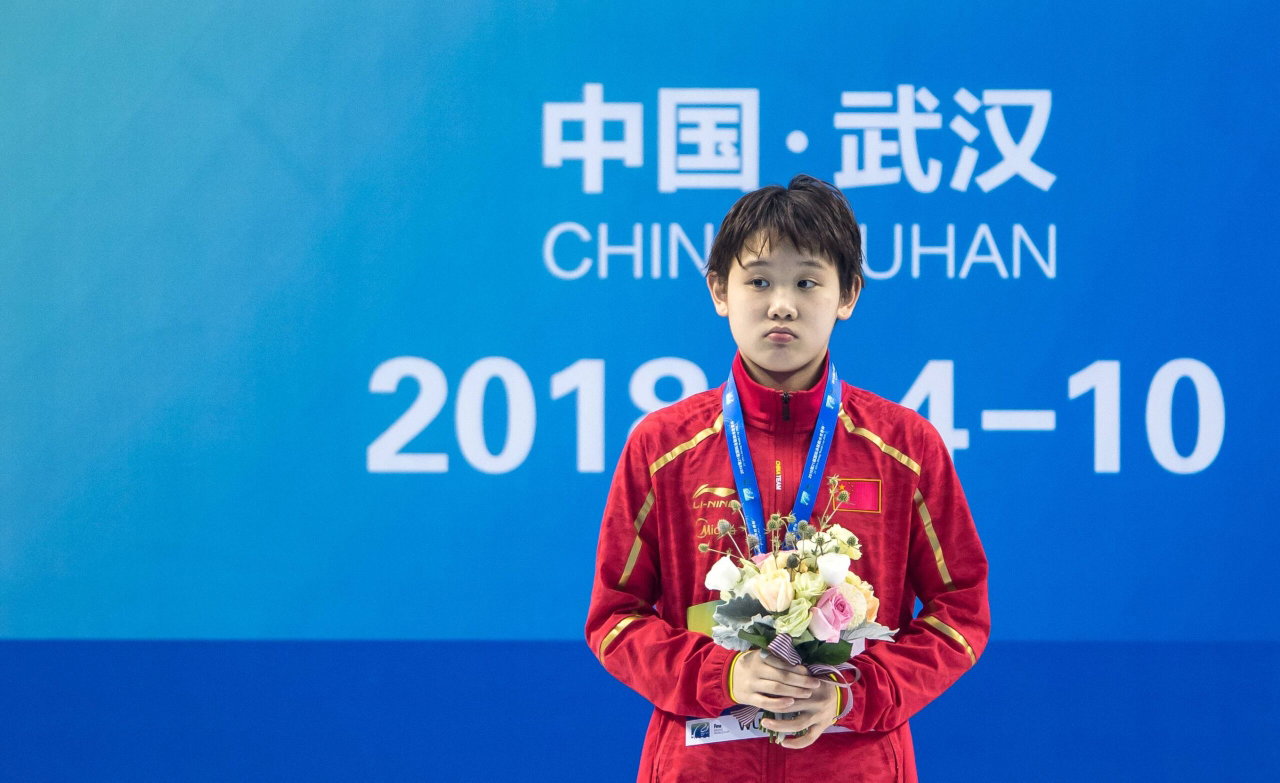
Olympic gold brought Zhang Jiaqi national glory, but retirement has exposed a painful family dispute. The former Chinese diving champion has revealed that her mother allegedly refuses to return the money she earned during her sporting career, raising questions about financial independence and parental control.
Watch What’s Trending Now!
Zhang, now 22, reportedly spent years with her mother, Xiao Yingjie, managing her finances. According to accounts of the reality show My Little One, Xiao held all three of her daughter’s bank cards, including access to savings accumulated throughout her diving career. The dispute came into the open when Zhang sought access to her money after retiring, hoping to learn about investing and plan her future. Her mother’s reported response was blunt: Zhang was too young to understand financial management.
The revelation has sparked widespread debate in China, but the money dispute is only one part of a complicated relationship that has come under public scrutiny. Zhang’s appearance on the show also exposed years of criticism, strict expectations, and emotional distance that she believes shaped her childhood.
Zhang’s journey towards Olympic glory began when she was just a child. After an initial attempt at gymnastics, she moved to diving and entered professional training at around six years old. Her talent soon became evident, and she began collecting national titles before reaching her teenage years.
Her biggest achievement came at the Tokyo Olympics, where she partnered Chen Yuxi to win gold in the women’s synchronized 10-meter platform event. Yet the years behind that triumph demanded enormous sacrifices. Zhang spent much of her childhood training away from home, enduring exhausting sessions and injuries while working towards sporting success.
That experience became central to her account on My Little One. Zhang suggested that the national diving team, rather than her parents, had played the biggest role in raising her. Whenever she called home in tears because of exhaustion or injury, she recalled receiving the same advice: listen to her coach.
Her mother also reportedly monitored her weight closely, worried that gaining weight could affect her diving performance. Zhang’s memories painted a picture of a childhood in which medals and physical discipline often took priority over emotional comfort. “I wasn’t raised by you,” she reportedly told her mother. “I was raised by the team.”
The remark captured the distance that had grown between them over the years. But their disagreements on the program were not limited to Zhang’s sporting childhood. Xiao reportedly criticized her daughter for seemingly minor habits, including leaving clothing tags on, ordering takeaway food, keeping an untidy bedroom, and sitting on the floor to put on her shoes. At one point, her mother described Zhang’s life as “a complete mess.”
The repeated criticism raised questions about whether Xiao could accept her daughter as an adult with preferences and decisions of her own. Zhang had spent years following the demands of elite sport. Now, as she tried to establish a life beyond diving, even ordinary choices appeared to become sources of tension.
The dispute over her savings made those tensions more serious. Reports about the program also highlighted an 810,000-yuan ($121,139) prize Zhang received after winning two gold medals at China’s National Games as a teenager. The money reportedly went into her mother’s account.
Another unresolved issue involved a gold necklace Xiao had purchased to celebrate Zhang’s achievement. Her mother reportedly kept it in safekeeping because she feared her daughter might lose it. Zhang later said she had never even seen the necklace.
While Xiao may have believed she was protecting her daughter and her earnings, Zhang’s desire to access her own money after retirement raised a fundamental question: when does parental protection become an obstacle to independence?
The controversy has prompted a broader discussion about parenting, money, and the pressures placed on young athletes. Some viewers have supported Zhang’s right to control her earnings, while others argue that parents managing the finances of children who win large sums is a common and sometimes necessary practice.
Chinese legal commentary cited in reports about the dispute has also highlighted the distinction between managing a minor’s assets in their interests and claiming ownership of that money. Once a person reaches adulthood, they generally gain the right to manage their own finances.
Psychologist Li Songwei, who appeared on the program, urged viewers not to vilify Xiao. He attributed her behavior partly to parental anxiety and later said she had taken steps to improve her understanding of parent-child communication and had apologized to her daughter.
That perspective complicates a story that might otherwise seem straightforward. Xiao may have believed that strict parenting would help her daughter achieve greatness and avoid an ordinary life. Zhang, meanwhile, has made it clear that she no longer wants someone else defining what success should look like.
Zhang Jiaqi refuses to let criticism dictate her future
Zhang retired in November 2025 after failing to secure a place on China’s team for the Paris Olympics. Leaving competitive diving meant stepping into unfamiliar territory after spending most of her life following a carefully structured training routine.
Rather than immediately choosing a conventional career in coaching or sports administration, she explored livestream selling, public appearances, and other opportunities. Her decision attracted criticism from online users who questioned whether an Olympic champion should pursue e-commerce.
Zhang, however, has defended her choice. She has argued that earning her own living matters more than meeting other people’s expectations, describing financial independence as the greatest form of freedom for women.
The transition has required her to learn skills that many young adults take for granted. She has been navigating everyday responsibilities, exploring further education, and developing new professional interests while working out what she wants from life beyond the diving platform.
On October 4, Zhang addressed her relationship with her mother in a social media post, expressing hope that they could find a healthier balance. “Mum, like any ordinary girl striving to build a life, I want to take charge of my own destiny and become a more well-rounded, fulfilled person,” she wrote.
The message reflected a desire to move forward without abandoning the relationship entirely. Zhang wants the freedom to make decisions, earn money, and discover her identity outside the sport that defined her childhood.
She has already achieved what countless young athletes dream of: Olympic gold. Now, her challenge is different. As she pursues financial independence and builds a future beyond diving, Zhang is fighting for the freedom to decide what comes next.