
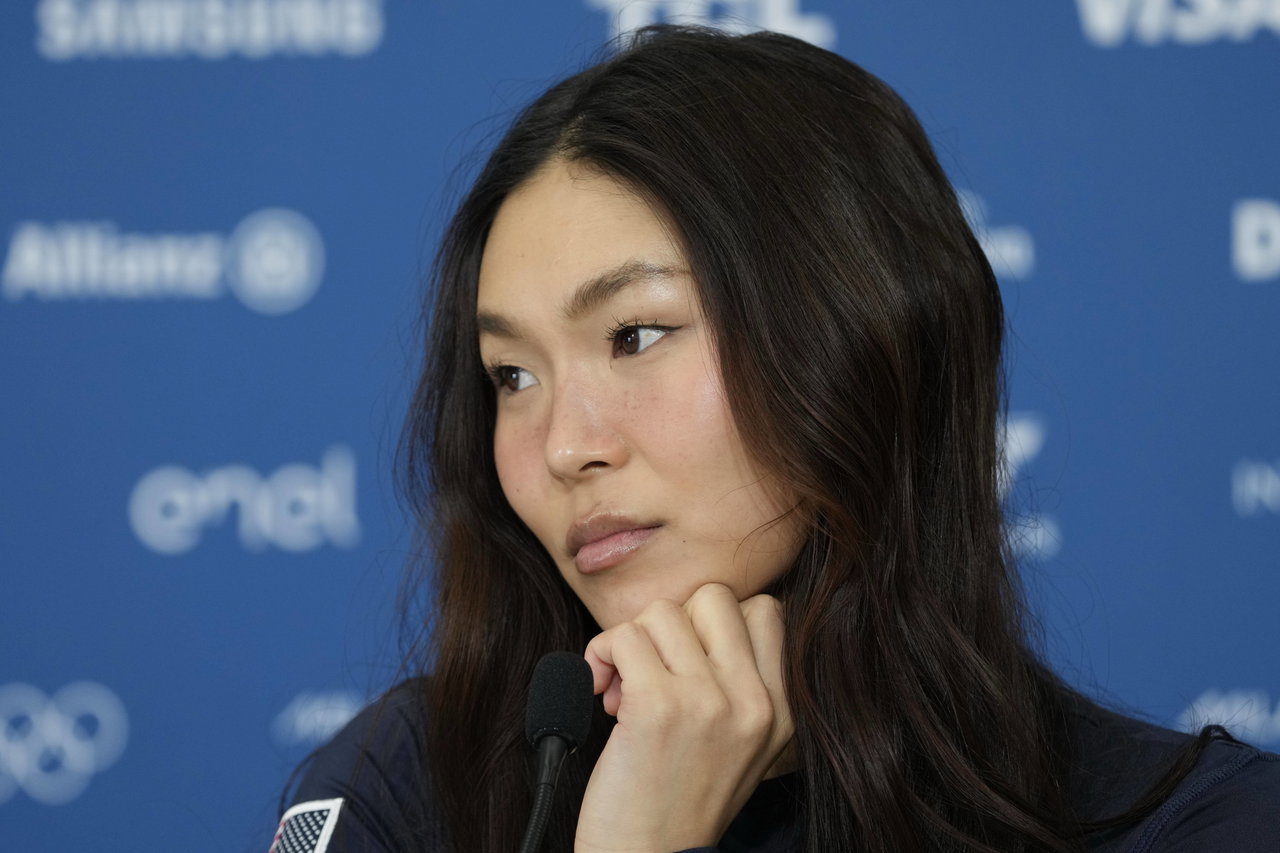
Chloe Kim has spent years doing what she does best, flying down the halfpipe and winning three Olympic medals. Yet behind all those wins, Kim was dealing with something she could not simply train her way through. Away from the snow, she said she had been “in a really bad place,” struggling with brain fog, feeling unlike herself, and finding it hard to enjoy time with friends or stay present in the moment. So, she eventually decided to open up to a psychiatrist, and that conversation helped her understand what she had been going through for years.
Watch What’s Trending Now!
“Actually, I recently found out I have ADHD.” Kim shared this revelation in an Instagram video as part of her partnership with Qelbree. She opened up about a side of her life that fans do not always get to see.
Looking back at the years she spent struggling without knowing the reason, Kim said the diagnosis finally gave her some answers. “For years, I was struggling, but once I finally opened up to my doctor, it was like everything suddenly clicked,” she said.
Kim had not always considered ADHD as a possible explanation. In fact, she initially found it difficult to believe she could have the condition because of how intensely she could focus whenever she was snowboarding.
Speaking on The School of Greatness, Kim explained, “Because you’ve got to be in the flow on the slopes. You can’t be distracted in the air,” she said. “I was so focused whenever… I had my snowboard attached to my feet, like tunnel vision.”
For Kim, that intense focus meant she could get completely “in the zone” on the slopes. Snowboarding gave her a space where distractions seemed to disappear, allowing her to focus entirely on the trick, the landing and what she needed to do next. But away from competition, things could feel very different. Kim said another symptom she experienced was chronic exhaustion. After spending time snowboarding, she often had little energy left for anything else.
“After snowboarding, I didn’t want to go hang out with friends. Like, I didn’t want to go out. Like, I just wanted to rest,” she explained. Her routine became simple: “Snowboard, recover. Snowboard, recover.”
That exhaustion meant she was not always able to enjoy the social side of life in the way she wanted. While snowboarding gave her a place where she could become completely absorbed, the hours away from the sport could leave her drained and wanting to be alone.
At the same time, Kim said she had always had a vivid imagination, something she felt helped her when learning new tricks. “I feel like I never really experienced fear,” she said. “I have a very vivid imagination. So I feel like if I wanted to try a trick, I could visualize it before, without even doing it.” But away from the slopes, Kim was still trying to understand why she could feel so exhausted, reactive and disconnected from parts of her everyday life. That eventually led her to seek more help.
Now, Kim is learning how to manage her ADHD while maintaining the demanding schedule that comes with being an elite athlete. When asked how she manages the condition, she pointed to a few simple habits that help her stay organized. “Well, I love lists and phone reminders, and having a consistent routine helps me so much,” she said.
Those routines have become an important part of her day. Kim also said she takes Qelbree in the mornings, describing it as a once-a-day, non-stimulant prescription ADHD medication that helps her manage her symptoms. Qelbree, also known as viloxazine extended-release capsules, is approved in the United States to treat ADHD in adults and children six years and older. However, the medication needs to be taken with important safety information in mind and with a doctor’s guidance.