
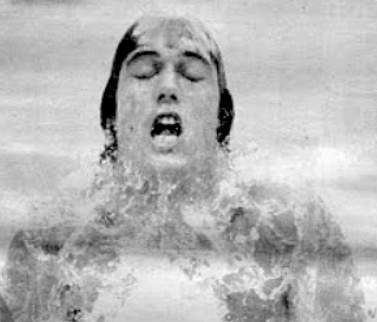
Mike Stamm won Olympic gold in Munich in 1972, briefly held a world record, and spent the decades that followed building a life as rich and unconventional as his swimming career. Despite having ended his swimming career early, Stamm managed to make a mark on society by contributing to art and the world of cooking.
Watch What’s Trending Now!
After living a life of varied experiences, he died in Costa Rica after a brief hospitalization, far from his hometown in California that shaped him. Now, his family has turned to the public for help to help with the expenses that will come with the cremation. The 1972 Olympic star passed away on June 24, according to the GoFundMe page, and the contributions from there are expected to help with the cremation and help his family come to California with him.
“After a lifetime of amazing journeys Michael passed away after a brief hospitalization in Costa Rica,” reads the statement on the page. “As you can imagine, the logistics and expenses involved in getting him back to California has been taxing.
“I am asking for your help to cover the basic costs for his cremation and getting him home, as well as for help with travel expenses for his daughter Mikhaila and grandson Rust to travel from Ireland to celebrate his life with us.”
Michael Stamm was once considered to be the best American swimmer of his time. The 73-year-old started swimming at the age of 5 and worked hard to make it to the pinnacle of the sport. His first coach was Mike Troy, a demanding man and a two-time Olympic gold medalist. That instilled hope in Stamm that he could replicate what Troy did, and so he pushed himself to his limits.
It worked, as he was an All-American star in high school. In fact, the then-teenager owned every school record in swimming going into college. That continued at the collegiate level, where he broke Big Ten Records in the 100 and 200 backstroke. Not just that, he was a crucial part of the Indiana University team that dominated the NCAA tournaments for several years in swimming.
Michael Stamm was part of the Olympic team alongside Mark Spitz for the 1972 Olympics in Munich, where the latter won a record-setting seven Olympic golds. While Michael Phelps has eclipsed him, it turned Spitz into a superstar. Meanwhile, Stamm had a decent Olympics himself, finishing with three medals to his name. That includes a gold in the 4x100m medley alongside silvers in the 100 and 200m backstroke.
It meant that Michael Stamm was the second-best backstroker in the world, behind only East German Roland Matthes. He took that title by breaking Matthes’ 200m backstroke world record in 1970, although the German reclaimed it three weeks later. Post the 1972 Olympic Games, Stamm took a break to focus on college and his life outside the pool.
However, the then-24-year-old missed the action and decided to return to compete in the 1976 Olympic trials. Unfortunately, he left himself too little time to make a comeback and finished 10th in the trials, missing the cut. Stamm retired after that and closed the chapter on his competitive career.
What it did was force him to confront what came next. Rather than dwell on the disappointment, the former world-record holder embraced the transition and later explained how that moment reshaped his outlook on life.
Michael Stamm reflects on his life after the Olympic trials
After the 1972 Olympic Games, Michael Stamm returned to Indiana. Unlike the modern age, the Olympian lived in an era when NIL (name, image, and likeness) wasn’t a thing. Stamm never received an offer, and he thought he would have rejected it anyway. Largely because he wanted to compete at the collegiate level, and taking any sponsorship would have stopped that.
So he continued studying, left Indiana in 1974, and forgot about swimming after that. However, by late 1975, his opinion had changed as he now wanted to make his hard work pay off. After all, Stamm had spent the last eighteen years of his life focused on one thing, so he made a comeback. His former coach, Mike Troy, coached him, and while he was in good shape, fate had other plans.
Instead, Michael Stamm finished tenth in the 100m backstroke and abruptly ended his career. Years later, he revealed that he did so because he had no choice.
“I knew right away that that was it; that the trials were my last big meet,” Stamm told Gordon Smith in 1978. “I was disappointed, but I realized I failed because I hadn’t trained hard enough. Once I knew that, I resolved to myself that I wouldn’t waste time speculating about what could have been. I had to find a way to merge back into society.”
“I could get very corny and say, ‘Life is worth pushing; it’s a matter of living life to its fullest,’ ” he went on. “But that’s what it takes to be a champion. That’s what it takes to be foremost in anything, really. You have to push yourself and find your limit. It’s a good thing to know. It’s a good thing to know.”
Things worked out somewhat for the then-25-year-old. Michael Stamm opened an art gallery in 1978, became renowned around America as a chef, and wore many hats for many years. In fact, as per a 2007 interview, the 73-year-old spent the remainder of his life as a chef. He even taught the profession to men and women from low-income backgrounds, training them as cooks.
His greatest achievements made him an Olympian, but the decades that followed revealed far more about the man himself.