
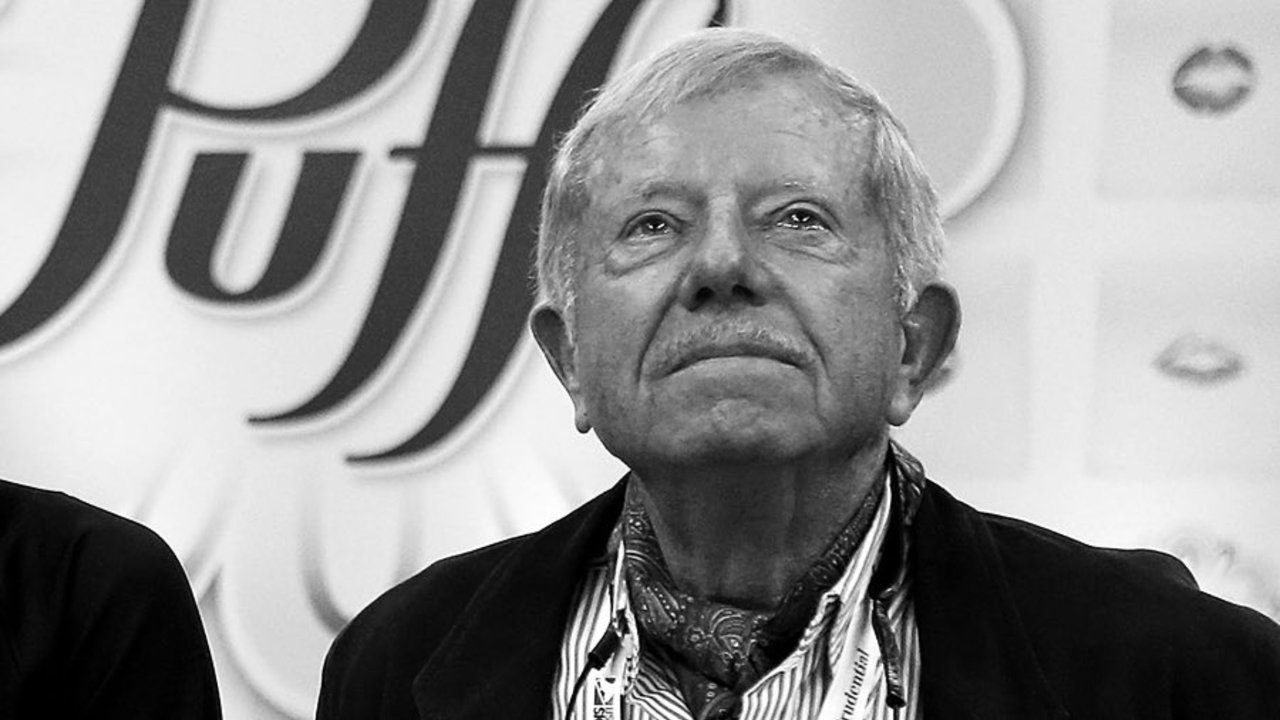
John Nicks, a seasoned figure skating coach who died Monday at 97, was among the rare coaches who coached more than 1,200 skaters even in his nineties. One of figure skating’s greatest champions broke her silence this week.
Her message opened with the lesson Nicks repeated most in practice. In an Instagram caption beside a photo of the two, Sasha Cohen, an Olympic silver medalist, wrote a heartwarming tribute to her former coach.
“Remember, dear, we don’t fall, we bounce,” Cohen wrote on Instagram. “That was something Mr. Nicks always told me during training, and it still makes me smile. Earlier this week, we lost a great legend. John Nicks was my coach through two Olympic Games, three Olympic Trials, and countless other competitions.”
Nicks’ coaching was instrumental in Cohen’s path to Olympic competition, beginning with her first Games appearance. In 2004 and 2005, Cohen gathered world silver medals, claimed the 2005 U.S. silver, secured the 2006 national championship, and then earned Olympic silver in Turin. That’s largely why she earned the nickname “America’s sweetheart”, thanks to her artistry and signature spirals.
For two Games and three Olympic Trials, Nicks remained in her corner, enduring an extended run of at-bats that called for constant resets. Her gratitude went beyond the mantra. In the same caption, Cohen added, “Thank you for your patience, your humor, and for believing in me, including the times I made it hard.”
Cohen’s tribute reflected the warmth of their relationship, recalling how Nicks’ encouragement sustained her through setbacks.
She wasn’t the only one, as another former student echoed that sentiment. Ashley Wagner, the Olympic bronze medalist figure skater, wrote in another tribute, “Mr. Nicks, you were a champion maker. I will forever be grateful for my time with you, the lessons learned and the athlete that you transformed me into.”
The résumé reinforces that statement. Nick built a stellar farm system that produced Olympic champions like Peggy Fleming and Kristi Yamaguchi, as well as pairs skating champions like Tai Babilonia and Randy Gardner. The tributes reached the sport’s leadership too.
Matt Farrell, chief executive of U.S. Figure Skating, wrote in a Tuesday statement, “The skating community has lost a tremendous ambassador.”
The title of ambassador fits aptly given Nicks’ beyond impressive resume. In 1953, he was awarded the world championship in pairs alongside his sister Jennifer Nick while representing Great Britain. He was also inducted into the U.S. Figure Skating Hall of Fame in 1993 and the World Figure Skating Hall of Fame in 2000.
Cohen’s own closing thoughts returned to the beginning. In her Instagram caption, she wrote, “You saw something in a little girl from California and spent years teaching her what to do with it.”
This history traces back to Southern California, where Nicks nurtured raw talent at Iceland Arena in Paramount. Cohen’s ascent, marked by silver medals, was reinforced at the 2004 and 2005 World Championships and with a gold medal at the 2006 U.S. Nationals.
But Cohen’s impact reached beyond jumps and spins, and this is how he earned the trust of generations of skaters.
John Nicks and the coaching style behind his champions
There’s a reason why John Nicks coached well over a thousand figure skaters during his time as coach. Beyond his stellar resume as a figure skater, Nicks regularly earned the trust of both management and the skaters he coached. That trust took decades to build.
Nicks, a Brighton native, moved into coaching after a broken foot temporarily sidelined him and never looked back. He then headed to America after the 1961 Sabena crash and took a post at a rink owned by Frank Zamboni, inventor of the ice resurfacer.
His coaching centered on mental conditioning. In a 1977 interview with Skating Magazine, he touched upon the same.
“Whatever approach you make in those vital weeks before competition, it all must be geared toward giving the skater confidence the minute he steps out onto the ice.”
The confidence-first attitude didn’t just stay within one skating rink. Nick was also the National Director of the Ice Capades chalets, a string of rinks across the nation owned by the ice show production company. It meant that his influence and reach extended down to the grassroots level as well.
“I’ve always understood that any success I’ve had is really because of the young skaters I’ve had,” Nicks said, according to Ice Network (via NBC). “Without talented skaters, you can be the finest coach, but you can’t have success, so I’ve been very lucky.”
Yet despite his success, both as a coach and as a figure skater, Nicks remained humble and was beyond proud of his students, counting his stars that he coached multiple generations.
“I also feel very lucky to have survived this long. I was talking to someone at the rink the other day about health insurance, and I realized that I have taught more than 1,200 students over 51 years and only missed 13 days because of sickness,” Nicks said in 2013 (via NBC).
“I am such a supporter of teaching figure skaters. I keep track of them, and most of them seem to get along very well in their lives. Skating is such a great sport for young people, so I don’t do that. I don’t look back. I always look ahead.”
Now, John Nicks is memorialized in the name of this competition. The John Nicks Pairs Challenge, organized by the International Skating Union, the Skating Club of New York, and the Skating Club of Boston, ensures that his legacy lives on.