
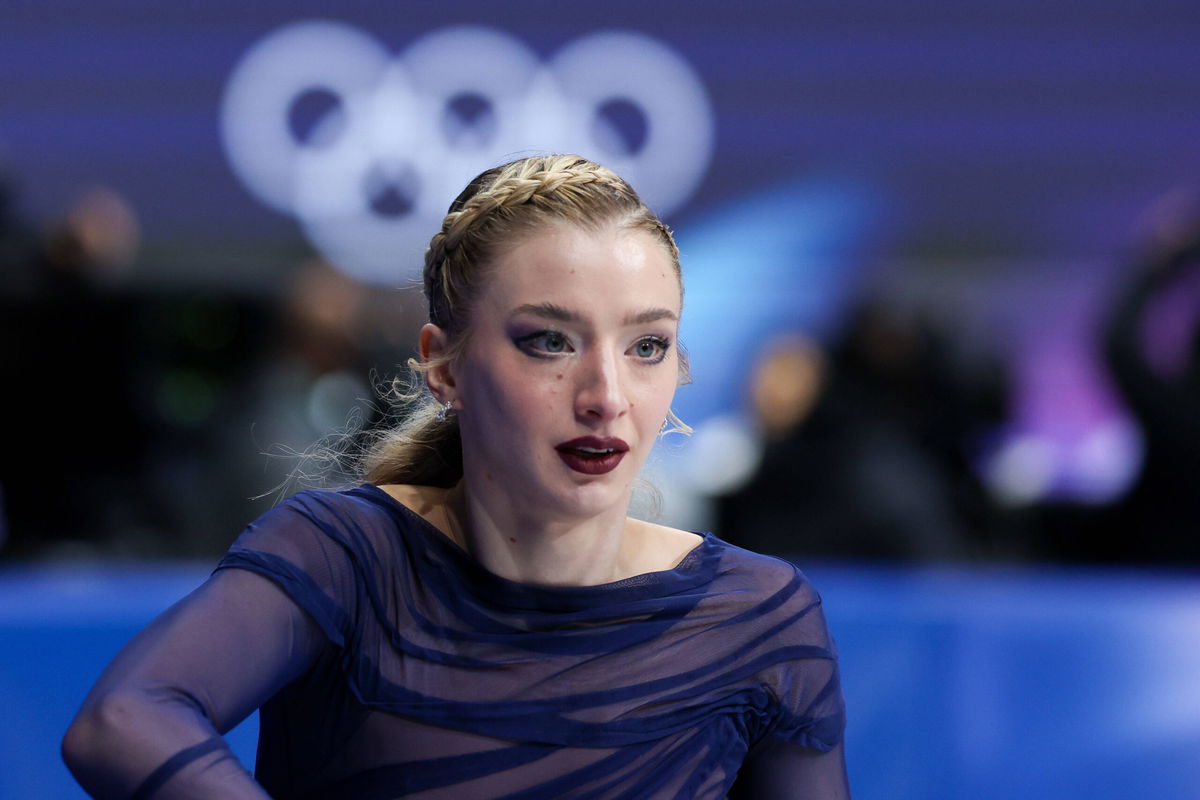
On the ice, Amber Glenn is an Olympic champion capable of launching herself into historic triple axels. Off it, she has spent years fighting a quiet, internal war. To mark Mental Health Awareness Month, the 26-year-old opened up about her private battles and shared how she changed as a person while battling it.
Watch What’s Trending Now!
From struggling with severe anxiety at a young age to battling depression and an eating disorder, Glenn has openly spoken about the moments that almost pushed her away from the sport. During Mental Health Awareness Month observed throughout May, Glenn reshared a Sportsish post on her Instagram story: “I struggled in silence until eventually everything fell apart. Since then, I’ve refused to let my mental health deteriorate for short-term success.”
Those words came from her personal experience.
Before Glenn became a U.S. national champion or Olympic figure skater, there was a lot more to her story.
She was already skating at junior nationals when she was 8 years old, and her family had sacrificed much of their lives to support her skating dream.
Glenn’s talent made her one of the brightest prospects in American figure skating. In 2012, Amber Glenn won silver at the U.S Championships at the novice level. Then, at just 13 years old, she claimed bronze in her ISU Junior Grand Prix debut. However, with increasing success, the pressure increased as well! Glenn felt trapped in figure skating’s constant cycle of comparison, where athletes were judged not only for performances but also for appearance and perfection on the ice.
The pressure became unbearable. Glenn recalled: “It made it even more important that the sacrifices that I was making and that my family was making produced results.” She added, “Knowing how much was going into this, and having that pressure on me from such a young age. I wanted it, but that’s a lot to ask of a kid.”
Imago
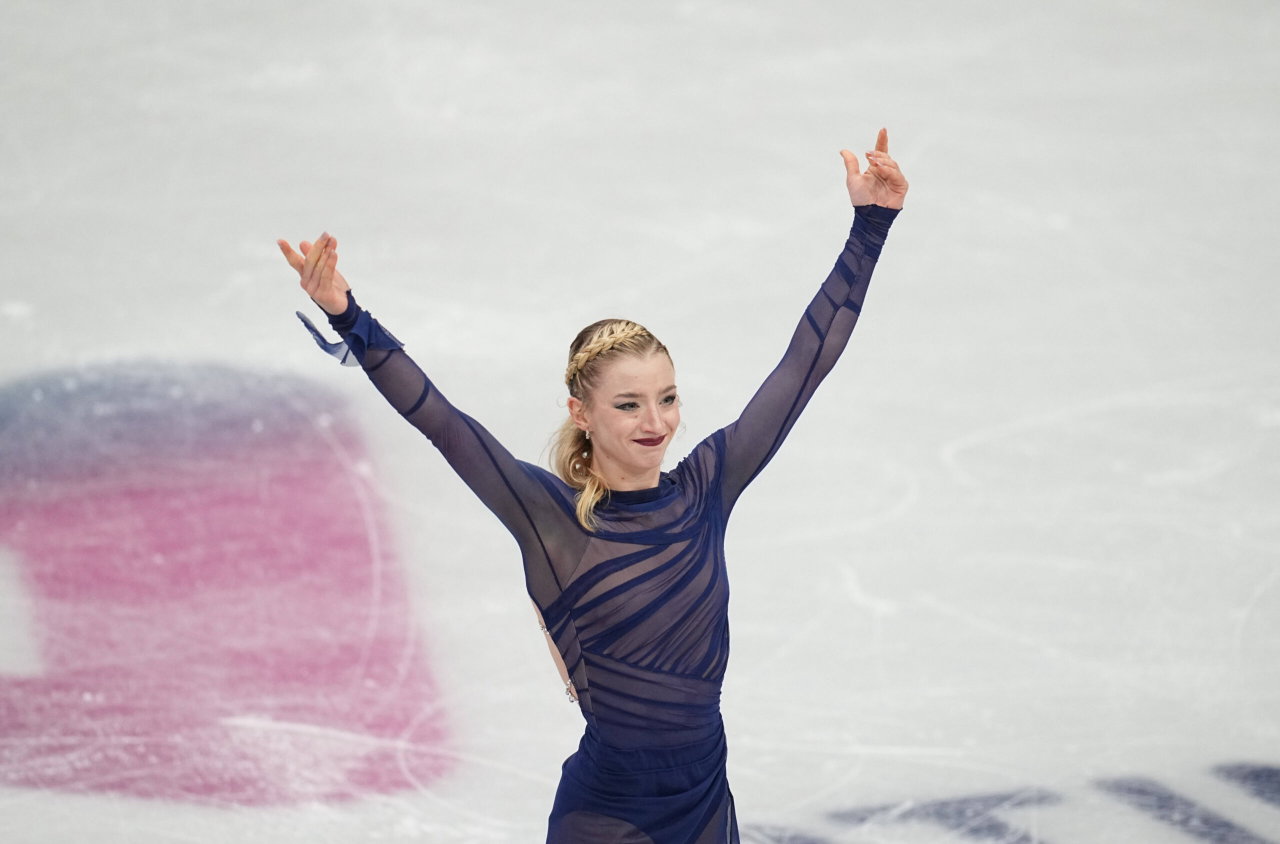
Amber Glenn of competes during Women’s Single Skating, Milano Cortina 2026 Winter Olympic Games, Olympische Spiele, Olympia, OS at Milano Ice Skating Arena on February 19, 2026 in Milan, Italy. Thor Wegner/DeFodi Images Photo by DeFodi Images – *** Amber Glenn of competes during Women Single Skating, Milano Cortina 2026 Winter Olympic Games, at Milano Ice Skating Arena on February 19, 2026, in Milan, Italy Thor Wegner DeFodi Images Photo by DeFodi Images
The pressure eventually affected every part of her life. Amber Glenn revealed that she developed an eating disorder while her anxiety worsened to the point where competitions began feeling “like life or death.” The environment around her only intensified those emotions. “That was our normal,” Glenn said. “Our coaches would pit us against each other, and at 10 years old, we were forced to have this competitiveness and comparison. It’s so toxic.”
As her mental health deteriorated, Glenn came to a point where she felt like quitting skating. “I was miserable,” she admitted. “I thought I wasn’t going anywhere and got into this severe depression where I didn’t want to keep living. I didn’t want to do anything.”
One of Amber Glenn’s friends eventually noticed the severity of the situation and took the time to speak with her parents. Glenn eventually sought professional help. She once said, “Growing up in Texas, there wasn’t mental health…It was Stop crying, get up, and do your job.”
After struggling with medication reactions, poor sleep, and worsening anxiety, Glenn entered an inpatient mental health facility in 2015. When she stopped skating, it seemed like a terrifying thing to do. But looking back, she now describes that decision as a turning point.
“I was kind of in shock and relieved, because I was finally being seen,” Amber Glenn recalled. It helped her reconnect with herself and her skates. Glenn was able to slowly learn to control the anxiety through therapy, group counseling, breathing exercises, and sessions with a sports psychologist. In 2016, she came back to the sport with a new mindset and mental well-being.
Knowing it takes more than courage to fight mental health issues, Glenn has been one of the biggest voices for advocating support. But there were times in her journey when she felt unseen and not taken seriously when it came to mental health.
Amber Glenn is a fighting voice for mental health awareness
Amber Glenn grew up in a system where her mental health struggles were often pushed aside so she could continue competing. She said, “In the beginning, I felt so alone, and if I had these challenges that I could never be one of the top skaters in the U.S., I want to show young athletes that isn’t true,” in an exclusive interview with Olympics.com.
As she got older, she started changing how she handled both skating and her own well-being. Instead of ignoring what she was feeling, she began paying attention to it and making choices based on what she actually needed, not just short-term results. She explains that shift clearly: “[I’ve learned] it’s not about ‘what can I do right now,’ it’s about ‘what should I do.” That mindset also shows in how she approaches injuries and recovery, choosing patience instead of rushing back too quickly.
When asked how she interpreted mental health as a universal right, she replied, “I interpret that as whoever you are, whatever your identity, sexuality. You deserve the chance to have peace in your own mind.”
Now she is in a position where she can speak up more openly about mental health. She has shared her experience in public awareness work, including being featured by the Child Mind Institute during Mental Health Awareness Month in 2024, where she spoke about mental health fitness and coping tools.
In her own routine, she keeps things simple and personal. She goes on long walks with her dog when stressed, skates just for enjoyment rather than only training, listens to music, and sometimes dances to relax. She also uses breathing exercises and grounding techniques to calm herself before big competitions.
Joining Glenn in spreading awareness during the mental health awareness month was the 11-time Olympic medalist Simone Biles. Biles has also been vocal about her mental health struggles. Perhaps the hardest time was when Biles competed in the Tokyo Olympics in 2021, when she went in with the high pressure and expectation of the Olympic Games. She had “the twisties,” a mental block where gymnasts lose awareness of their body in the air. After a dangerous moment in the team final, she made the difficult decision to withdraw.
Later, she explained, “My mind and body are simply not in sync,” and said, “I just didn’t want to go on.” Her decision was a big topic when it happened, but she has since explained that it prevented her from suffering serious injury and thus gave her time to prioritize her health.
After taking time away from competition, Biles returned to elite gymnastics and went on to win three gold medals at the Paris Olympics. She also became more open about getting help, saying therapy became a regular part of her life. In her words, “Seeing my therapist every Thursday is kind of religious for me,” and later confirmed in 2026, “I’m still in therapy.”
On Mental Health Awareness Day, she also summed up her belief simply: “Physical health is mental health.” Together, Glenn and Biles show how different the same truth can look in elite sport. One stepped away to survive, the other rebuilt herself piece by piece while still competing at the highest level.