
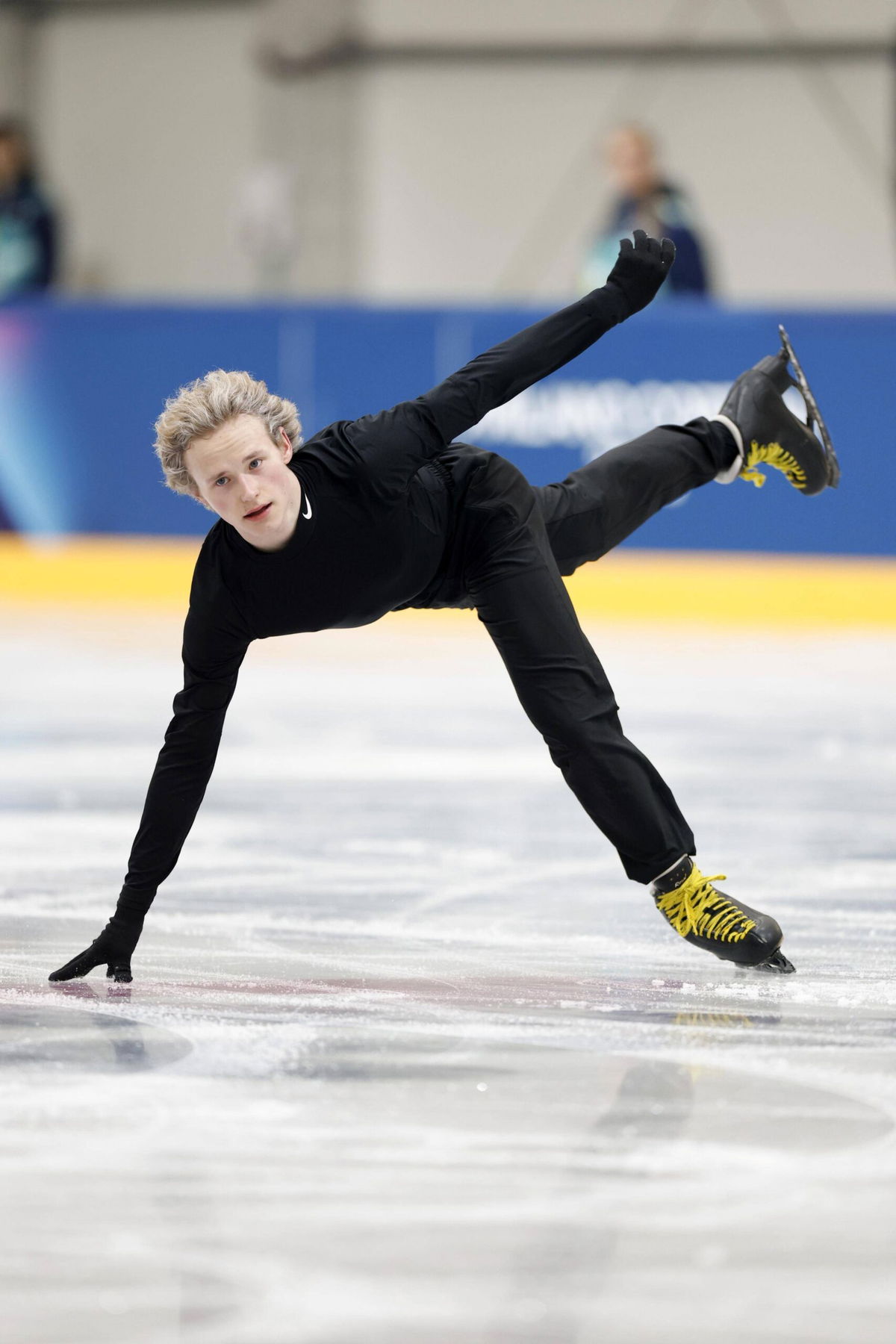
Ilia Malinin had finally figured out how to do what nobody else in figure skating could. He became the first skater to land all six types of quadruple jumps cleanly in competition, then went a step further by completing seven quads in a single free skate. That kind of technical difficulty helped him dominate the sport, with three consecutive world titles and victories by margins of 24 and 30 points in 2024 and 2025.
Watch What’s Trending Now!
Now, the rules have changed, and Malinin cannot rely on the same formula that helped him build that advantage.
The International Skating Union (ISU) has reduced the number of jumping elements permitted in a men’s free skate from seven to six. It has also cut the number of permitted jump combinations from three to two. The changes took effect in the 2026–27 season, after the Milano Cortina Winter Olympics, and they have effectively removed one of the biggest scoring opportunities available to Malinin.
The timing is difficult to ignore. At the 2025 Grand Prix Final in Nagoya, Japan, Malinin made history with a free skate that featured seven quadruple jumps. He had spent years pushing the technical limits of the sport, and his ability to include so many difficult jumps helped create a gap that his rivals struggled to close. But under the new rules, he cannot reproduce that exact seven-element layout.
The change does not prevent Malinin from attempting six different types of quads, nor does it erase the technical difficulty that separates him from much of the field. It does, however, give him one fewer jumping element and one fewer combination to work with. In a sport where a single high-value jump can be worth double-digit points, that reduction could have a substantial effect on his maximum score.
NBC Sports’ Philip Hersh reported that the accompanying increase in spin base values is not expected to make up for the points lost through the removal of a jump element and combination. The changes also mean that records and personal bests set under the previous scoring structure are no longer directly comparable with scores from the new season.
Malinin has made his opposition to the changes clear. At the 2026 World Championships, where he won his third consecutive world title, he questioned the impact the new system would have on the level of competition.
“Looking at the specifics of some of these changes, I think it really takes away the level of competition that we as skaters have developed over the years,” he said, according to NBC Sports.
The ISU, however, has denied that the changes were designed to curb Malinin’s dominance. Leena Laaksonen, chair of the organization’s Technical Committee for Single and Pairs Skating, said the intention was to restore a better balance between jumping difficulty and the artistic side of a program.
“I wouldn’t say at all that it’s a Ilia rule at all,” Laaksonen said. She explained that the committee wanted to give artistry greater emphasis because jumps had come to count for too much in a free skate.
That argument puts Malinin in a difficult position. His technical ability is not in question, but the scoring system now offers fewer opportunities to display it. The three-time world champion will have to decide how to build his programs around the reduced number of elements without sacrificing the difficulty that has made him so difficult to beat.
The changes do not automatically end his dominance. American skater Jimmy Ma told NBC Sports that Malinin has the body mechanics to adapt to almost anything and should still be capable of winning. Malinin’s world title in March 2026, earned by roughly 22 points, also showed how far ahead he can remain when he performs at his best.
But the new rules remove part of the advantage that helped make those margins possible. Malinin will begin his 2026–27 Grand Prix campaign at Skate America in November, followed by the NHK Trophy in Japan. His first competitions under the revised system will offer an early indication of how he has adjusted his technical layout.
U.S. Figure Skating Opens New Grand Prix Season as Ilia Malinin Awaits His Turn
The 2026–27 figure skating season begins in Angers, France, from October 23–25, with the first of six Grand Prix events bringing together Olympic champions, established contenders, and skaters looking to make their mark in the new four-year cycle. The opening event features Olympic men’s champion Mikhail Shaidorov and French ice dance stars Laurence Fournier Beaudry and Guillaume Cizeron, setting up an early test of the post-Olympic competitive landscape.
The United States will send nine athletes to France across women’s singles, men’s singles, and ice dance. In the men’s event, Jimmy Ma and Jacob Sanchez will represent the country. Ma brings Grand Prix experience and a Four Continents bronze medal, while Sanchez arrives after a strong 2025–26 campaign that included a fourth-place finish at the U.S. Championships. Their performances will offer an early look at the depth of the American men’s field as the season gets underway.
The opening Grand Prix also comes with a reshaped international field. Japan’s Yuma Kagiyama is sitting out the season, and several prominent Olympic medalists have retired or taken breaks from competition. Those absences create opportunities for skaters hoping to move up the rankings, although Shaidorov’s presence in France means the men’s event will still feature the reigning Olympic champion.
Malinin will not compete in France. His Grand Prix season is scheduled to begin at Skate America in Everett, Washington, on November 13–15, before he heads to the NHK Trophy in Japan later that month. That gives him a few more weeks before his first competitive test under the revised scoring rules, which have reduced the number of jumping elements and combinations allowed in a free skate.
The Grand Prix series consists of six events, with skaters eligible to compete at two and earn points toward qualification for the Final in Chongqing, China, scheduled for December 10–13. For Malinin, the opening weekend in France will provide a glimpse of the competitive landscape he is about to enter, even if his own season begins several weeks later.