
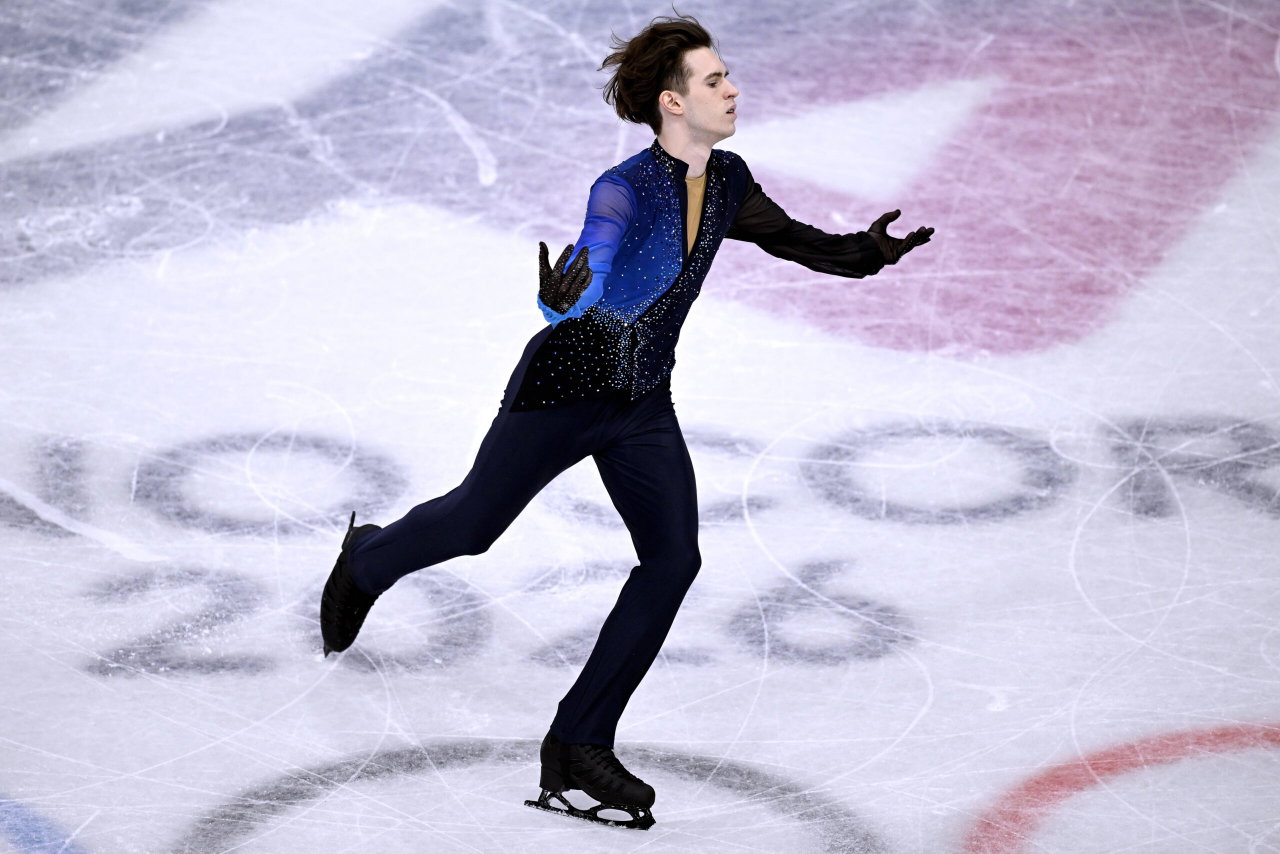
Olympic glory has given way to another frustrating start for the Kazakhstani figure skater, as bad luck continues to follow the reigning champion. After finishing 10th at the French Grand Prix, the Kazakhstani skater now sits fifth at the Cup of China. With 4 competitors ahead and the free skate still to come, Mikhail Shaidorov faces another uphill battle to reach the podium.
Watch What’s Trending Now!
Shaidorov’s difficult start continued in China, where the Olympic champion currently sits fifth. That position surprises many after his stunning Olympic gold medal win over bonafide favourites in February, but the competition is not yet finished.
“Mikhail Shaidorov scored 94.87 points to place fifth among 12 competitors at the 2026 Cup of China,” reported QAZINFORM.
His 94.87 points leave him behind 4 skaters after Friday’s short program in Shenzhen. Sunday’s free skate gives him another chance to recover, although the gap is already significant.
The trouble came on his opening jump, when Shaidorov stepped out of a quadruple Lutz. That mistake cost valuable points before the rest of his program could build momentum. He recovered with a strong triple Axel, earning positive marks from the judges. He then landed a quadruple toe-triple toe combination, showing his other major jump remained reliable. His spins and step sequence also scored well, but that opening error continued weighing heavily.
Kao Miura took the lead with 102.90 after landing two clean quadruple jumps. His opening Salchow-triple toe combination and triple Axel helped create an 8.03-point advantage. Shun Sato then followed on 101.97, producing a clean personal-best performance to claim second place and cut the lead to 0.93. Their strong routines pushed Shaidorov behind them, despite his recovery after that opening mistake.
Evgeni Semenenko scored 99.72 as a neutral athlete, while Vladislav Dikidzhi reached 98.86. Their stronger technical marks outweighed Shaidorov’s steady presentation through the remaining elements of his program. Shaidorov’s 54.62 technical score trailed the leaders by 3.44 points—a gap his 40.25 presentation score could not close. Shaidorov’s 40.25 presentation score was competitive, but it couldn’t close that technical gap.
China’s setback feels especially frustrating because Shaidorov had started this season with encouraging signs. September’s Nepela Memorial showed stronger form: a 272.75 total, with a 95.98 short program that was 1.11 points higher than his China result.
At Nepela, Shaidorov’s 95.98 short program was 1.11 points higher than China—showing the decline is measurable, not just bad luck. Those marks showed he could remain competitive after becoming Olympic champion earlier this year.
At the Grand Prix de France, Shaidorov finished 10th overall after a difficult free skate. A fourth-place short program (80.25) collapsed in the free skate: two falls and under-rotated jumps dropped him to 11th, and a 126.30 score sealed 10th overall. His final total of 206.55 was far below September’s result and his Olympic standard.
There is a bad-luck element in how quickly his momentum has fallen since February. France turned a fourth-place short program into 10th overall, while China began with another costly error. That does not make every mistake unlucky, because execution remains his responsibility on the ice. But the timing has been unforgiving, with setbacks arriving before he can rebuild confidence.
Shaidorov now needs a clean free skate to stop this pattern from accelerating. His Olympic victory came after a 198.64 free skate lifted him from fifth to first. That performance showed how much ground he can recover when his jumps and rhythm return.
After reaching the biggest moment of his career, Shaidorov now faces the challenge of maintaining that level. With every competition bringing fresh expectations, finding the same rhythm has not been easy for him.
China offers another opportunity, but he cannot rely on a late rescue every time. If early mistakes continue, his season could drift further below the level expected of an Olympic champion.
How can Mikhail Shaidorov get back to his Olympic form?
Mikhail Shaidorov needs changes to his jumps, stamina, choreography, and preparation to regain his Olympic form. His 10th-place finish at the 2026 Grand Prix de France showed how mistakes can accumulate. He scored 206.55, placing fourth in the short program before finishing 11th in the free skate. At the Cup of China, he placed fifth in the short program with 94.87 points. Those results contrast with Milan, where he climbed from fifth to claim Olympic gold.
His comeback begins with making his most difficult jumps more dependable under competition pressure. In France, his free skate score fell to 126.30, and 2 falls cost him valuable points. In China, Shaidorov’s opening quadruple Lutz step-out was the decisive error, not external misfortune. He can focus first on cleaner landings and steadier attempts before restoring his hardest combinations.
His historic triple Axel-Euler-quadruple Salchow shows the technical ability remains firmly within his reach. That same care must extend to the programs he is still learning this season. Shae-Lynn Bourne choreographed his short program, Vidacarnaval, and Benoit Richaud is also officially listed.
His free skate uses 3 pieces by Kirill Richter, giving him fresh material to master. Practising transitions and full programs could help him save energy before the final jumps. At China, his program components totalled 40.25, leaving room to strengthen his overall presentation.
Better pacing could help him maintain control throughout both programs, especially during demanding closing sections. Shaidorov also needs a calmer approach to the new expectations following his Olympic victory. His coaches, Olympic champion Alexei Urmanov and Murad Kurbanov, can help keep adjustments measured.
At Milan, he recovered impressively, moving from fifth after the short program to first overall. That performance reminds us what happens when early mistakes start affecting his confidence during competitions.
He can treat Grand Prix events as chances to test changes, not final judgments. His September Nepela Memorial bronze, worth 272.75 points, showed that stronger form was already possible. That score gives him a recent benchmark while he works through these current problems.
Cleaner jumps, stronger stamina, and more settled programs could gradually restore his consistency in competition. With patient work, Shaidorov can approach the major championships with greater control and renewed confidence.