
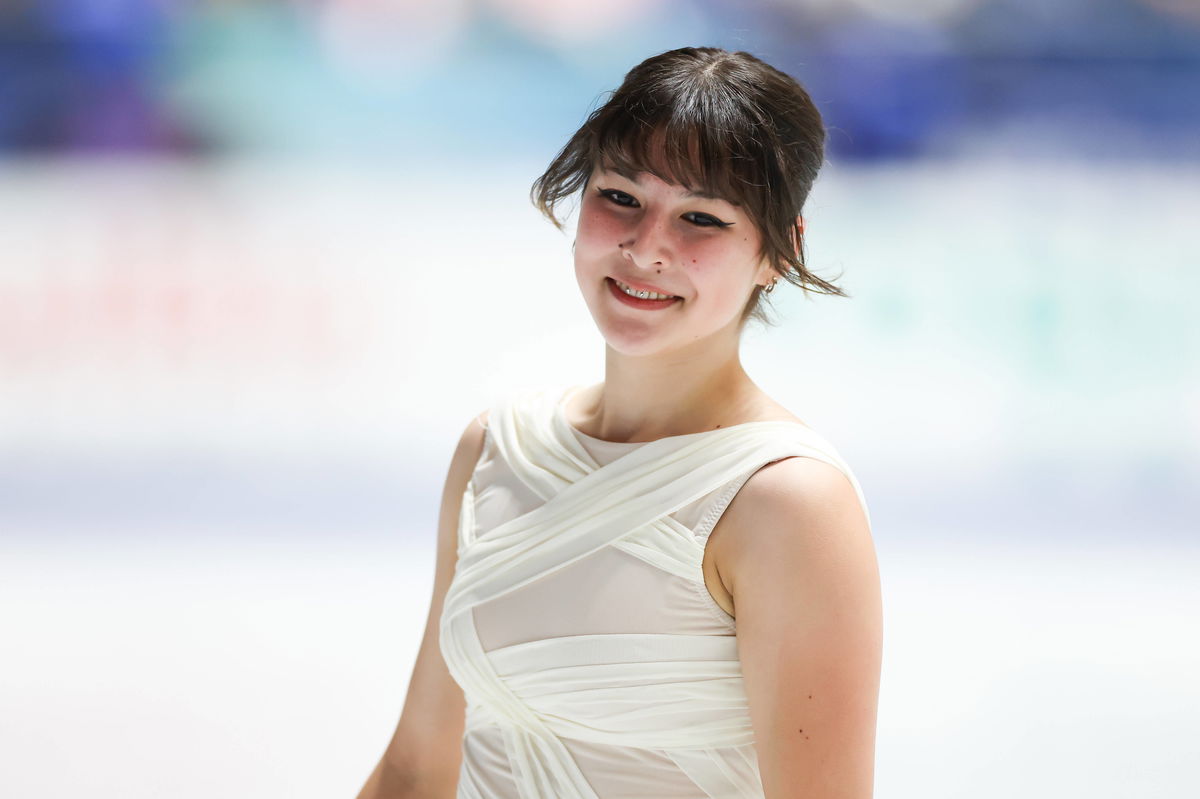
Alysa Liu has reached the top of figure skating, but she isn’t ready to let competition dictate what comes next. After a dream Olympic season, the American star has decided to step away from the competitive spotlight and focus on herself.
Watch What’s Trending Now!
The 21-year-old announced on August 25 that she would sit out the 2026-27 season, despite having earned two Olympic gold medals at Milano Cortina 2026. Her decision means she will miss the upcoming Grand Prix assignments at the Cup of China and Skate America, but she has made it clear that this is a pause, not another retirement.
Explaining her choice in an interview on NBC Bay Area, Liu said, “I like to kinda be like one hundred in something, and because, like, so many commitments this year – like those unforeseen commitments and stuff like that – I wanna explore all of them. So, I’m … I don’t like to split my energy and time because it doesn’t fulfill me as much. So, I’m gonna do this stuff now and then go back to my regular skating routine next year.”
Her words offer a glimpse into the thinking behind a decision that might surprise fans who watched her dominate the ice in February. For Liu, though, stepping back means having the freedom to explore other opportunities without dividing her attention between them and the demands of elite competition.
Liu’s Olympic triumph made her one of the biggest names in American figure skating. She became the first American woman since Sarah Hughes in 2002 to win Olympic gold in women’s singles, while also helping the United States secure gold in the team event. After winning the 2025 World Championships and her first Grand Prix Final, she had completed a remarkable rise from comeback skater to Olympic champion.
But the attention that followed her success brought an entirely different set of commitments. Invitations to the Met Gala, Paris Fashion Week, and the iHeartRadio Music Awards, where she presented a trophy to Taylor Swift, opened doors beyond the rink. She also appeared in a music video for Laufey, whose song “Promise” featured in her skating programs after her return.
Rather than try to fit everything into an already demanding competition schedule, Liu wants to give these experiences room to develop. That doesn’t mean she intends to abandon the work that made her an Olympic champion. She told NBC that she would continue training, concentrating on her overall artistry and technical elements, including spins and jumps.
Her coaches, Phillip DiGuglielmo and Massimo Scali, will remain involved throughout the break. Liu said she approached them with her decision and found them understanding of her reasons.
“I came to them, and they totally understood where I was coming from,” Liu told NBC. “I did have to explain a little bit, but they didn’t think I needed to justify my reason for it or anything. So it was really chill.”
That support matters, especially given how differently Liu approaches skating today compared with her teenage years. In 2022, after making her Olympic debut in Beijing at just 16, she announced her retirement. She had already become the youngest U.S. women’s national champion in history at 13, but stepping away gave her the chance to discover who she was outside the sport.
Her return during the 2024-25 season came on her own terms. Liu went on to win the world title in Boston, helping the United States claim the World Team Trophy gold, before reaching the summit again at Milano Cortina. This time, she appears determined to protect the independence that made her comeback so successful.
What does Alysa Liu plan to do during her break?
Liu’s next chapter won’t be limited to time away from competitions. She has previously spoken about her interest in fashion, design, and storytelling, describing creativity as another way to express her experiences and personality.
After her Olympic victory, she spoke about wanting to develop creative ideas of her own and encouraging others to embrace individuality. Her distinctive style and musical choices have already helped her stand apart in a sport where athletes often face pressure to fit established expectations.
Still, Liu has not closed the door on her competitive future. In her August announcement, she reassured supporters that she intended to return for the 2027-28 season, promising to use the time to recalibrate and refine her skating.
The decision reflects a lesson she learned during her first retirement: success means more when she has a say in how she pursues it. She is not leaving the ice behind; she is giving herself the space to decide what she wants to bring back to it.
For now, Liu will continue training without the immediate pressure of chasing medals, while exploring opportunities that emerged from her Olympic breakthrough. When she returns, she hopes to bring that personal growth into her performances.
And after everything she has achieved in such a short time, Liu’s next evolution may be just as interesting to watch as her rise to Olympic gold.