
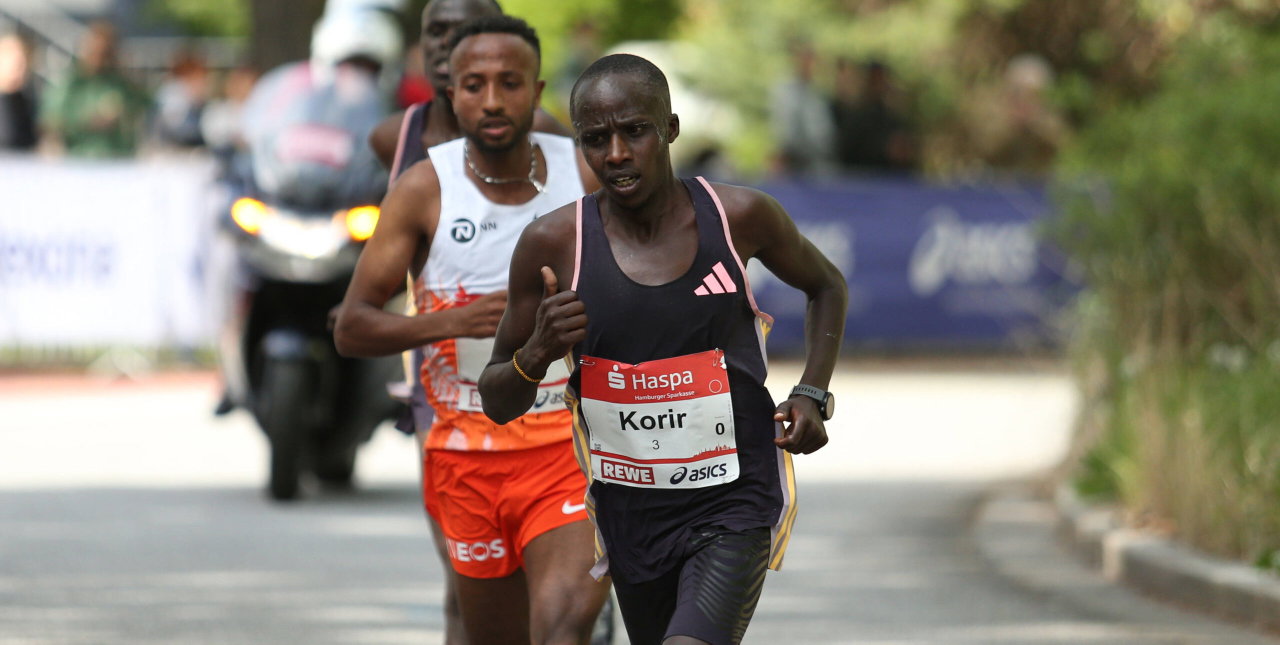
Back in 2023, Ronald Kipkoech Korir looked like a Kenyan runner with a bright future ahead of him after finishing fourth at the Berlin Marathon in a personal best of 2:04:22. He followed that performance with another fourth-place finish at the Hamburg Marathon in 2024, showing that he could compete among the world’s leading marathon runners. But in October 2026, his career took an unexpected turn when the Athletics Integrity Unit provisionally suspended him in an anti-doping case, putting his future under a cloud of uncertainty.
Watch What’s Trending Now!
The AIU announced the suspension on 13 October 2026 over an alleged use of a prohibited substance or method in an Athlete Biological Passport (ABP) case. Its disciplinary records list a notice of charge dated 25 September 2026 under Article 2.2 of the World Athletics Anti-Doping Rules. The ABP monitors an athlete’s biological markers over time, allowing experts to look for changes that may point to prohibited practices. Such a case does not necessarily mean a specific banned substance was detected in a single test.
For now, Korir’s provisional suspension prevents him from competing while the proceedings continue, but it does not mean he has been found guilty. A final decision will depend on the outcome of the disciplinary process.
The suspension comes after a career that has seen Korir enjoy strong results as well as periods of slower performances. He finished sixth at the Frankfurt Marathon in 2014 in 2:07:29 before taking second place at the Seoul International Marathon in 2016 in 2:09:01. His times later slowed, and in 2019 he won the Muscat Marathon in 2:13:36 before finishing sixth in Geneva, a period that preceded his return to faster times in the years that followed.
He eventually returned to faster times, running 2:05:37 at the Valencia Marathon in 2022 before setting his personal best in Berlin a year later. His fourth-place finish at the Hamburg Marathon in 2024, in 2:05:41, was another strong result. With that said, the suspension now leaves Korir’s immediate future uncertain.
His case also comes at a time when Kenya continues to face scrutiny over doping in athletics. More than 140 Kenyan athletes have reportedly faced suspensions or bans since 2017, keeping pressure on the country’s anti-doping efforts as Nairobi prepares to host the 2029 World Athletics Championships.
Kenya faces renewed doping scrutiny ahead of 2029 World Athletics Championships
Nairobi will host the 2029 World Athletics Championships in September 2029. The main venue will be Kasarani Stadium, which is being renovated ahead of the championships and the 2027 Africa Cup of Nations. However, this selection has also brought renewed scrutiny of Kenya’s record on doping, with questions being raised about whether the country can maintain a credible anti-doping system and protect clean athletes ahead of the event.
The concerns come amid a series of cases involving Kenyan runners. Former half-marathon world record-holder Kibiwott Kandie received a seven-year ban in June 2026, while Philemon Kiplimo Kimaiyo accepted a two-year ban. These cases have added to the pressure on Kenya to show that it can tackle doping effectively. Last week, the World Anti-Doping Agency urged Kenya to step up its efforts ahead of the championships and ensure that its national anti-doping agency has the support and expertise needed to do its job.
Speaking in Nairobi, WADA president Witold Bańka said Kenya needed to build a stronger culture of clean sport and take a more determined approach to preventing and fighting doping if it wanted to protect its reputation as a leading athletics nation. “Kenya proudly calls itself the Home of Champions. But for that home to remain respected and credible, it must also be clean,” Bańka said.
He stressed that the fight against doping should go beyond testing athletes and punishing those who break the rules. Bańka also urged Kenya to target those who manufacture, smuggle and supply prohibited substances, rather than focusing only on athletes accused of doping. He called on the country to ensure that officials responsible for collecting samples and managing the national testing programme have the training and expertise needed to carry out their work.
Kenya’s testing capacity is another issue ahead of 2029. The country has expressed interest in establishing its own World Anti-Doping Agency-accredited laboratory, although accreditation requires meeting strict standards. Kenyan officials, including Sports Cabinet Secretary Salim Mvurya, have pledged to work with WADA to strengthen anti-doping measures and protect clean athletes.
The latest warnings highlight the work still ahead, but they do not mean Kenya has lost its hosting rights. Nor do the cases involving other runners establish anything about Korir’s own case, which remains subject to the AIU’s disciplinary process.