
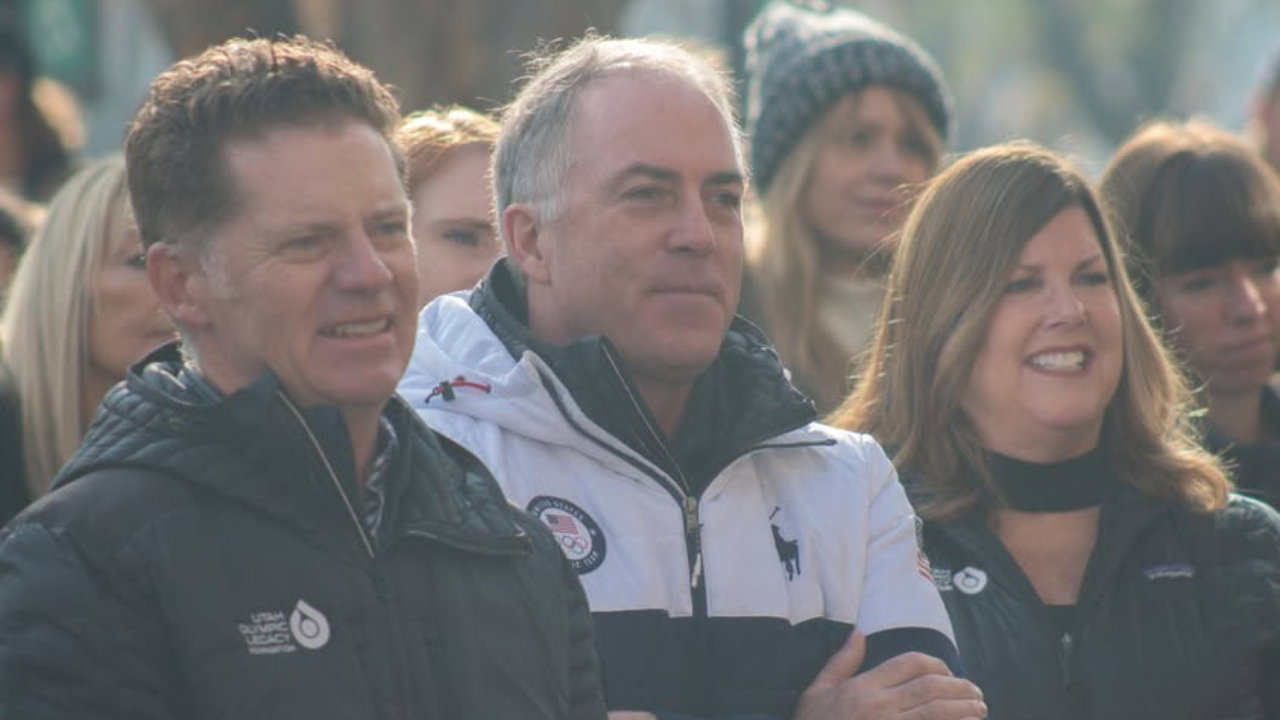
Colin Hilton, one of the driving forces behind Utah’s Olympic legacy, has died at 58. He passed away at his home on August 21, 2026, with no cause of death made public. Hilton helped make the 2002 Winter Olympics work, then spent years helping bring the Games back to Salt Lake City for 2034.
Watch What’s Trending Now!
For more than two decades, Hilton was one of the people keeping Utah’s Olympic legacy alive. As president and CEO of the Utah Olympic Legacy Foundation, he oversaw Utah Olympic Park, Utah Olympic Oval and Soldier Hollow Nordic Center, making sure the venues stayed useful for elite athletes, international events, youth programs and local communities long after the 2002 Games were over.
“Colin’s remarkable leadership benefited our entire state as he served as a steward of Utah’s living Olympic legacy,” Utah Olympic Legacy Foundation Board Chair Natalie Gochnour said. “He more than anyone else ensured that Utah’s Olympic imprint remained active, relevant, future-oriented, and connected to the communities it serves.”
Tributes quickly poured in from across Utah’s Olympic community after Hilton’s death. Utah 2034 CEO Brad Wilson said, “His knowledge, energy, and commitment made our work better,” while Fraser Bullock, president and executive chair of Utah 2034, remembered him more personally, saying, “Colin was a dear friend for 27 years.”
UOLF board chair Natalie Gochnour credited Hilton with keeping Utah’s Olympic legacy alive, saying, “He more than anyone else ensured that Utah’s Olympic imprint remained active, relevant, future-oriented and connected to the communities it serves.”
UOLF COO Calum Clark added, “I learned an enormous amount from him,” while Utah Senate President Stuart Adams said, “Colin understood that the Olympic legacy is about inspiring future generations, supporting athletes and strengthening our communities.”
Hilton’s role went far beyond managing old Olympic venues. He helped shape Utah’s winter-sports system, bringing eight local ski clubs together to form Park City Ski & Snowboard and expanding opportunities for both young athletes and elite competitors. Under his leadership, UOLF venues became year-round training centers while also hosting hundreds of international events.
That experience became crucial when Utah went after the 2034 Winter Olympics. Hilton served on the Utah 2034 Executive Committee and helped shape the venue and winter-sports plans behind the bid. In a full-circle moment, many of the same sites he spent years preserving after 2002 are now set to host the Games again in 2034.
In 2025, Hilton received the S.J. Quinney Award for Visionary Leadership, recognizing the role he played in keeping Utah’s Olympic and winter-sports legacy moving forward. By then, his career had already stretched across several major sporting events before and after the 2002 Games.
Before Utah, Hilton had already worked on the 1994 FIFA World Cup and the 1996 Atlanta Olympics.
But leading Utah’s Olympic venues came with a harder reality of rising costs, funding pressure, and growing community concerns.
The financial struggles behind Colin Hilton’s Olympic legacy
Behind Hilton’s Olympic legacy was a much tougher reality. Keeping Utah’s venues alive was expensive, and the financial pressure only kept growing.
One of Hilton’s biggest problems was simply keeping Utah Olympic Park financially afloat. The venues were expensive to run, and before his death, the foundation was staring at an annual deficit of roughly $2 million to $3 million, forcing it to find new revenue without gutting its Olympic mission.
The numbers made that pressure clear. The $76 million Legacy Fund created after the 2002 Games had dropped to about $42 million by 2025, and Hilton warned that letting it fall much further could threaten the nonprofit’s future.
The venues themselves were another money problem. A 2017 state audit estimated they needed about $39 million in improvements, while insurance costs kept climbing. Hilton later told lawmakers that insuring the three Olympic venues had jumped from roughly $300,000 a year when he became CEO in 2006 to about $1.2 million.
Hilton’s push for new revenue also drew criticism. He backed plans for housing, a hotel and other development around Utah Olympic Park to bring in money and prepare the site for 2034. Those fights did not define his career, but they showed just how difficult and expensive it was to keep an Olympic legacy alive.