
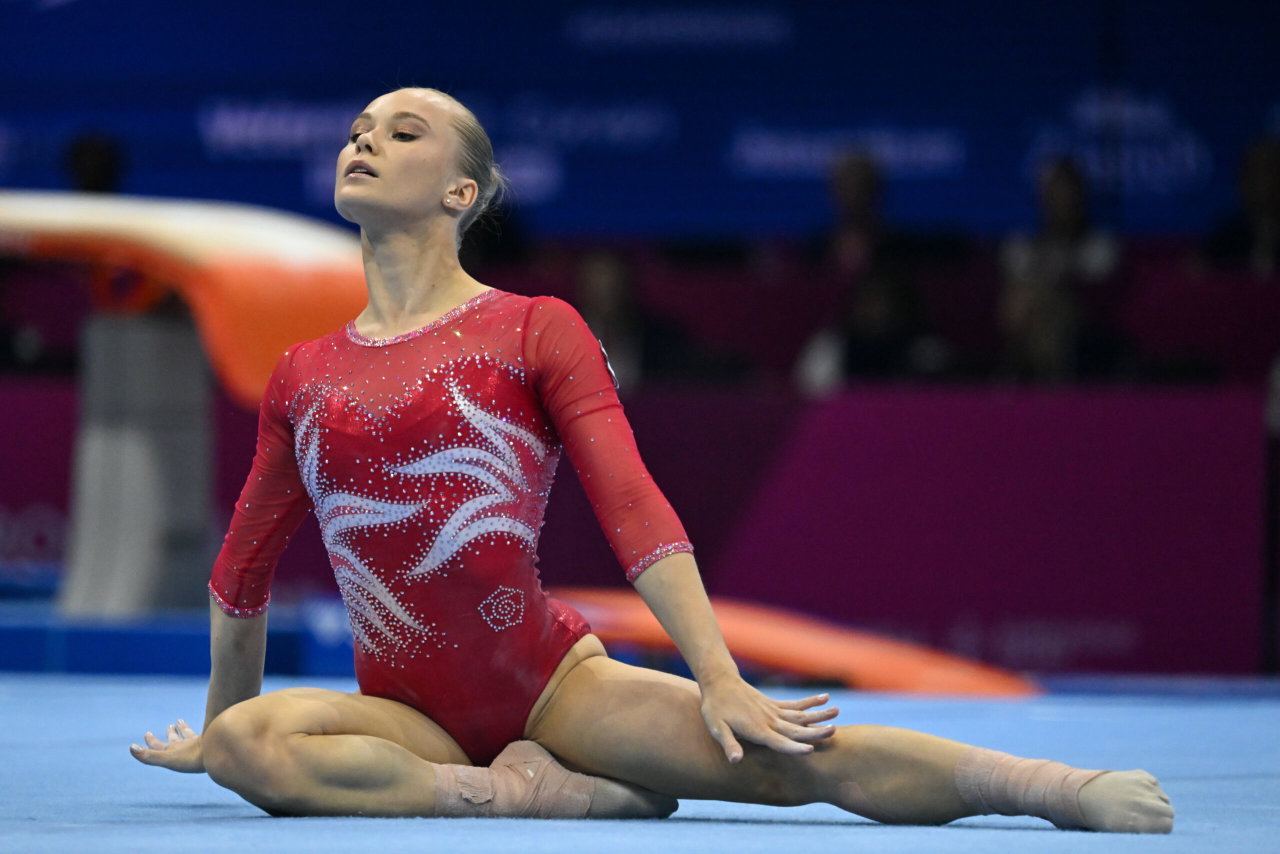
The Netherlands’ decision to deny visas to three Russian gymnasts ahead of the 2026 World Artistic Gymnastics Championships has sparked controversy, with reigning world all-around champion Angelina Melnikova among those affected. After winning the world title in 2025, Melnikova was expected to be one of Russia’s biggest medal hopes in Rotterdam. However, the visa refusal has put her participation in doubt and prompted the Russian Gymnastics Federation to accuse Dutch authorities of deliberately targeting its strongest athletes. Now, with the championships set to begin, the Dutch government has broken its silence on the decision.
Watch What’s Trending Now!
In an exclusive statement shared by journalist Caroline Price on October 14 on social media, a Dutch government official pushed back against the allegations, saying, “It should go without saying that athletic performance plays no role in the visa assessment.” The statement rejected the suggestion that sporting ability influenced the decision, but left questions about the three refusals unanswered.
The controversy began on October 13, when the Dutch Embassy in Moscow notified the visa centre that applications from three members of Russia’s women’s national team had been rejected. Alongside Melnikova, the affected athletes were Viktoria Listunova and Anna Kalmykova. The timing left little room for the gymnasts to challenge the decisions before the competition, which runs from October 17 to 25 in Rotterdam.
Melnikova’s absence has attracted particular attention because of her achievements on the international stage. She won the world all-around title in 2021 and reclaimed it in 2025. At the Tokyo Olympics, she helped the Russian Olympic Committee team win gold in the women’s team event ahead of the United States. She also enjoyed a strong 2026 season, winning the European all-around title in August. With several medals to defend and challenge for, she had been one of the leading names to watch in Rotterdam.
Listunova was also part of the gold-medal-winning Russian team at the Tokyo Olympics and was expected to contend for medals at the World Championships. Kalmykova, 18, is the reigning Russian national all-around champion and won silver in the all-around at the 2026 European Championships, finishing behind Melnikova. With all three athletes absent, Russia faces the loss of several of its leading female gymnasts at a competition that carries major implications for its Olympic ambitions.
The Russian Gymnastics Federation has strongly criticised the decision, accusing Dutch authorities of a “deliberate attempt to exclude the strongest gymnasts from competing for World Championship medals and Olympic quotas.” The federation described the refusals as discriminatory and argued that they undermine the principle of equal conditions for Olympic selection. Melnikova also voiced her frustration on social media, calling the situation “unfair” and questioning why certain athletes had been excluded while others were allowed to compete.
According to the Russian federation, the refusal notices stated that one or more Schengen member states considered the three gymnasts a threat to their international relations. However, the specific circumstances behind each application have not been fully explained publicly, leaving the precise reasons for the refusals unclear.
For Russia, the decision carries implications beyond the immediate loss of three leading competitors. The Rotterdam championships are the first qualifying event for team places at the 2028 Los Angeles Olympics. Results at the competition will determine some of the first team places available for the Games.
The Russian Gymnastics Federation has said it intends to appeal to World Gymnastics and the International Olympic Committee, seeking to challenge the decision and secure equal conditions for Olympic qualification. However, with the championships only days away, it remains uncertain whether any appeal could produce a change in time for the competition.
World Gymnastics has stated that visa decisions fall under the responsibility of the Dutch authorities and that it cannot explain why individual applications have been refused. For now, the Dutch official’s statement addresses the claim that athletic performance influenced the assessment, but the specific grounds for denying the three gymnasts’ visas remain unclear. However, the latest controversy is not the first time Russian gymnasts have encountered visa problems ahead of a major international competition.
Russian gymnasts faced similar visa issues ahead of major championships
In August 2026, Russian gymnasts faced a similar situation ahead of the European Artistic Gymnastics Championships in Zagreb, when Croatian authorities initially refused visas to nine members of Russia’s 65-person delegation. Among those affected were Melnikova and Listunova. According to the Russian Gymnastics Federation, the refusals cited insufficient evidence regarding the purpose and conditions of the athletes’ intended stay.
However, the outcome differed for the two gymnasts. Melnikova and several other members of the delegation eventually secured visas and competed in Zagreb, where Melnikova went on to win medals. Listunova, meanwhile, remained among those unable to attend, making the latest refusal particularly notable as both gymnasts have now faced visa barriers ahead of major international competitions.
Visa difficulties have also affected Russian and Belarusian athletes in other sports. In March 2024, Russian trampolinist Iana Lebedeva and Belarusian Olympic champion Ivan Litvinovich competed at a World Cup event in Cottbus, Germany, despite not receiving German visas. They were able to enter Germany using Spanish visas valid across the Schengen area.
Similar uncertainty arose in tennis ahead of Wimbledon in 2023 when Russian and Belarusian players faced delays in securing UK visas despite being eligible to compete under the tournament’s neutrality conditions. The situation raised concerns that administrative delays could prevent eligible athletes from taking part in major events.