
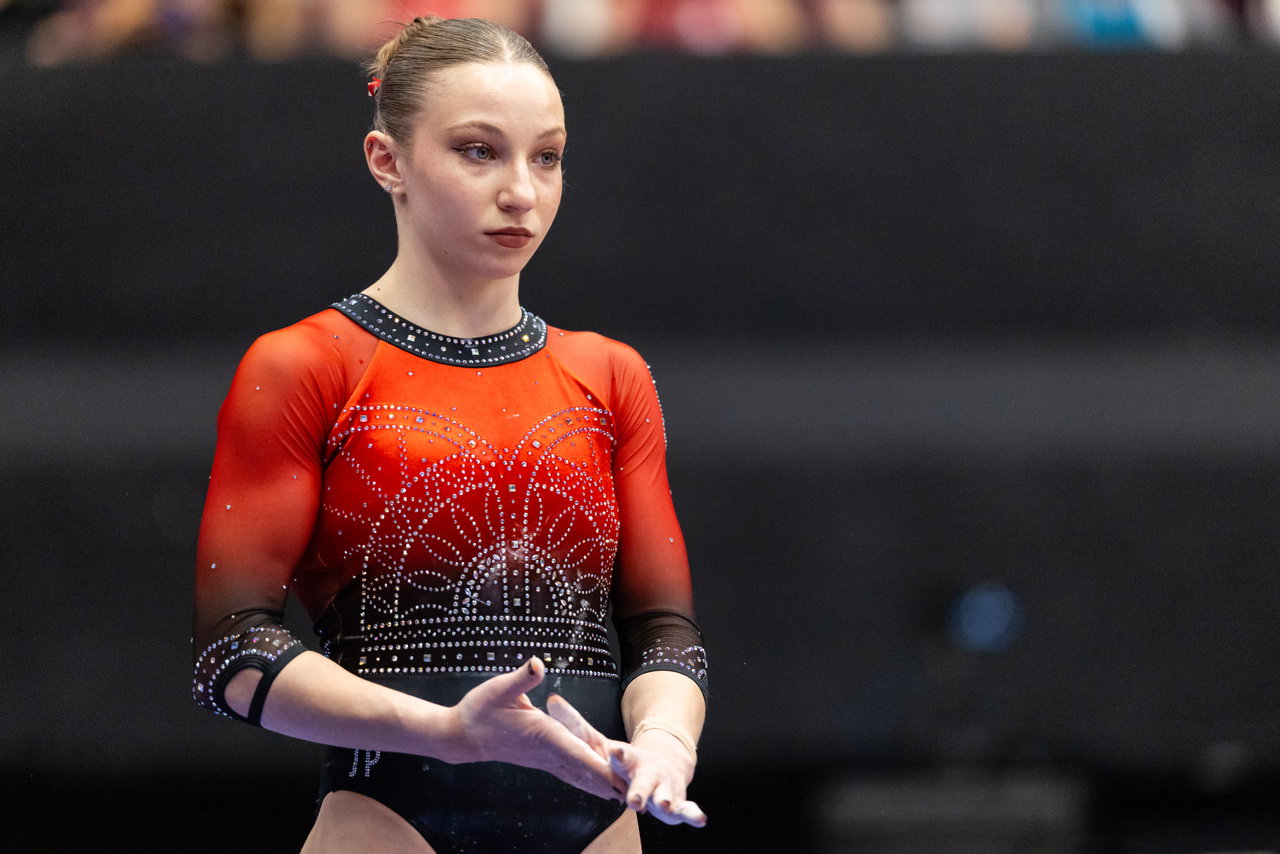
After becoming the center of the controversy surrounding Jordan Chiles’ Paris 2024 Olympic bronze medal, Romanian gymnast Ana Maria Barbosu is now facing another setback. Barbosu was awarded the floor exercise bronze after Chiles was moved down to fifth place following a successful Romanian appeal. However, her Olympic achievement has now been overshadowed by a suspension imposed over 3 whereabouts failures. The provisional suspension was initially imposed on May 5, 2026, prompting Barbosu to challenge the allegations before the CAS. After months of legal proceedings, the court has now delivered its decision, confirming a two-year ban that could affect her chances of competing at the 2028 Los Angeles Olympics.
Watch What’s Trending Now!
On November 4, CAS announced that it had “partially upheld” the disciplinary request against Barbosu. The court found that all three whereabouts failures had been “correctly recorded”, confirming that she had committed an anti-doping rule violation. The failures were recorded between September and December 2025.
A hearing took place on August 20, 2026, before a single CAS judge, who considered the arguments presented by both sides. Barbosu disputed two of the three recorded failures and challenged the proposed suspension. However, the judge upheld all three violations and imposed a two-year period of ineligibility, backdated to May 5, 2026, when her provisional suspension began.
Barbosu had already addressed the situation publicly in May 2026. In a statement shared through her Instagram story, the Stanford gymnast explained that moving to the United States and beginning college had been a major transition. She acknowledged that adjusting to the changes had been challenging but stressed that the case had nothing to do with prohibited substances. “To be clear, this situation has nothing to do with prohibited substances, and I have been grateful for the guidance and support throughout the process,” she wrote.
Although the suspension is a major setback, Barbosu received some relief from the latest ruling. World Gymnastics had also requested the disqualification of her competitive results dating back to December 2025. However, CAS rejected that request and ruled that her results from December 2025 onward would not be disqualified. This means she will retain those results despite the two-year suspension.
With the ban backdated to May 5, 2026, Barbosu is scheduled to become eligible to return to competition on May 5, 2028. That would leave her roughly two months before the Los Angeles Olympics begin in July 2028. However, becoming eligible to compete again does not guarantee her a place on Romania’s Olympic team. She would still need to meet the selection and qualification requirements.
The CAS decision can also be appealed by the parties involved, including Barbosu, World Gymnastics, the International Testing Agency (ITA), the World Anti-Doping Agency (WADA), and Romania’s National Anti-Doping Agency, within the applicable deadlines.
Interestingly, the suspension is not the only legal challenge surrounding Barbosu. She is also involved in a separate CAS case concerning the Paris 2024 Olympic floor exercise bronze medal.
Jordan Chiles’ Paris bronze medal appeal adds to Ana Barbosu’s legal troubles
The controversy began during the women’s floor exercise final at the 2024 Paris Olympics. Chiles initially finished fifth with a score of 13.666, while Barbosu was provisionally placed third with 13.700. However, after the American coaching team submitted an inquiry challenging Chiles’ difficulty score, her mark was raised by 0.1 points to 13.766, moving her into third place and pushing Barbosu down to fourth. Romania then challenged the decision before CAS, arguing that Chiles’ scoring inquiry had been submitted after the one-minute deadline allowed under gymnastics rules.
On August 10, 2024, CAS ruled in favor of the Romanian appeal, determining that the inquiry had been submitted four seconds after the permitted deadline. Chiles’ original score was reinstated, moving her back to fifth place, while Barbosu was awarded the bronze medal. However, the American gymnast continued to challenge the decision, arguing that CAS had refused to consider video evidence that showed her coach had actually submitted the inquiry within the allowed time.
In January 2026, Switzerland’s Federal Supreme Court accepted a request for revision filed by Chiles and USA Gymnastics, allowing the case to return to CAS for reconsideration in light of the newly available footage. The Swiss court said the recording could potentially lead to a change in the original ruling in Chiles’ favour.
Then the latest update came on November 4, 2026, when CAS confirmed that the parties were continuing to exchange written submissions and had requested that no hearing take place before May 2027. This means the dispute over the official ownership of the Paris Olympic floor exercise bronze medal is unlikely to be resolved before then. With the medal case still open and her separate two-year suspension keeping her out of competition until May 2028, Barbosu is now facing two obstacles that could shape her future in gymnastics.