
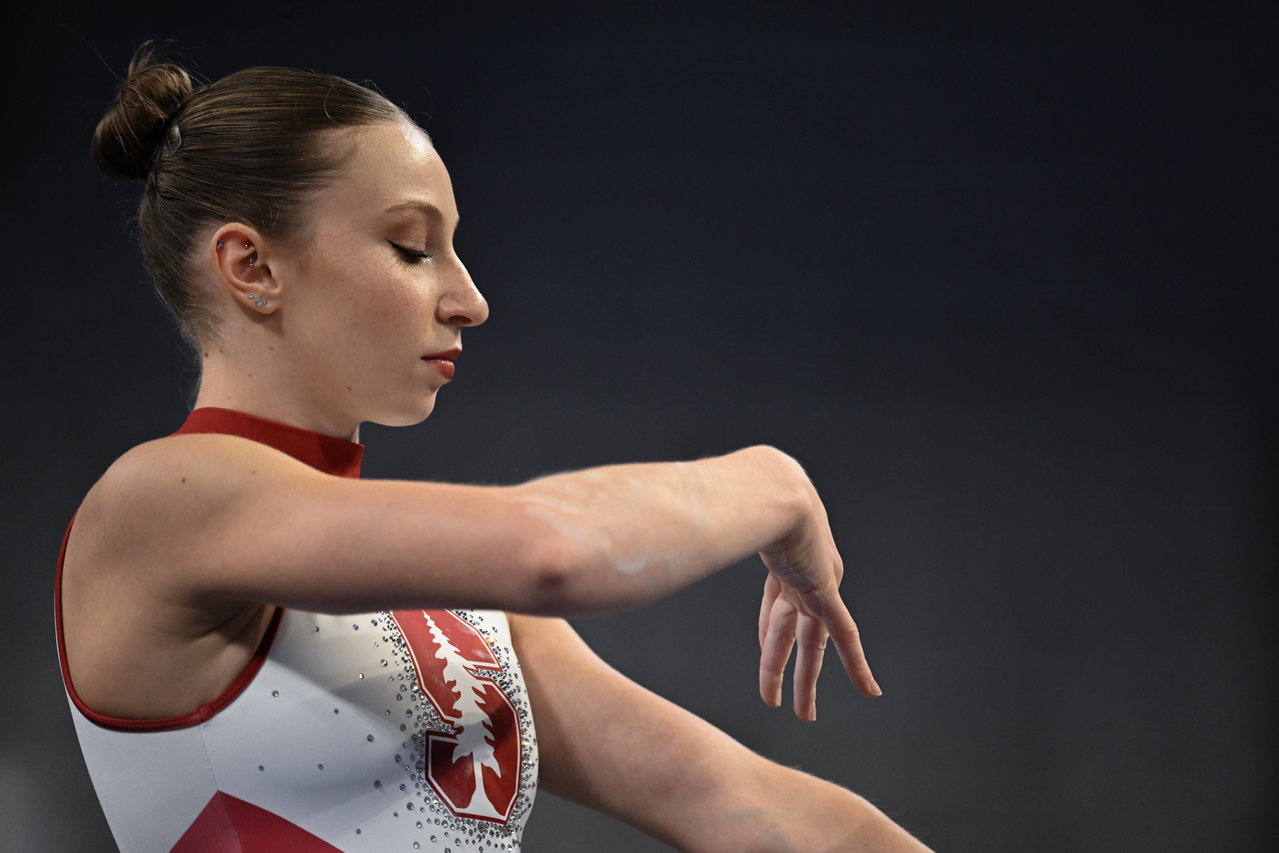
Nearly two years after the Paris Olympics bronze medal dispute between Romania’s Ana Barbosu and American gymnast Jordan Chiles, the case is headed back to the CAS. After Switzerland’s Federal Supreme Court ordered a fresh hearing, Romania initially faced uncertainty over funding its legal defense. Those concerns have now been resolved after Parliament approved an amendment allowing the COSR to finance the country’s representation before CAS.
Watch What’s Trending Now!
Following the development, Barbosu shared a message thanking those who made Romania’s legal defense possible.
“Thank you very much for the support and efforts made to make it possible to represent the Romanian side before the court in Lausanne. I always remain confident that the state fights for its most trusted ambassadors, the athletes.” (Translated from Romanian into English using Google Translate).
Interestingly, the post was issued in the wake of weeks of doubt regarding Romania’s participation in the reopened arbitration. In January, the original Court of Arbitration for Sport decision was overturned in part, and the case sent back for a new hearing, due to the new evidence presented by USA Gymnastics determining whether it is possible that Jordan Chiles’ score inquiry was submitted within the required one-minute period.
When the case was brought back to CAS in Lausanne, the Romanian Gymnastics Federation estimated that defending Bărbosu’s Olympic bronze medal would cost around 250,000 Swiss francs for lawyers, expert opinions, translations, a procedural fee and other legal costs. At that time, COSR stated that it had resources on hand, but under current laws, it was not legally able to use public funds for legal representation in international sports conflicts.
This changed when Romania’s Parliament passed an amendment that removed the restriction, which allowed COSR to pay for Bărbosu’s defense before CAS. Speaker of the Chamber of Deputies Sorin Grindeanu said the move is a message that “if you are wronged, this country stands by you.”
While Barbosu has now secured Romania’s backing in the Olympic bronze medal dispute, she has one more battle to fight.
Back on May 7, the International Testing Agency (ITA) provisionally suspended Ana Barbosu for three whereabouts failures within a 12-month span. But in response to the announcement, Bărbosu stated that this was due to her relocating from Romania to the United States to attend Stanford University and continue her gymnastics career.
“This situation has nothing to do with prohibited substances, and I have been grateful for the guidance and support throughout the process.”
Instead of accepting a sanction, Bărbosu asked for her case to be heard by the Court of Arbitration for Sport’s Anti-Doping Division, where she will have the opportunity to contest the alleged whereabouts failures and present evidence in her defense.
Under the World Anti-Doping Code, three whereabouts failures within 12 months can result in a suspension of up to two years. However, no final ruling has been issued, and Bărbosu remains under a provisional suspension while the case is pending.