
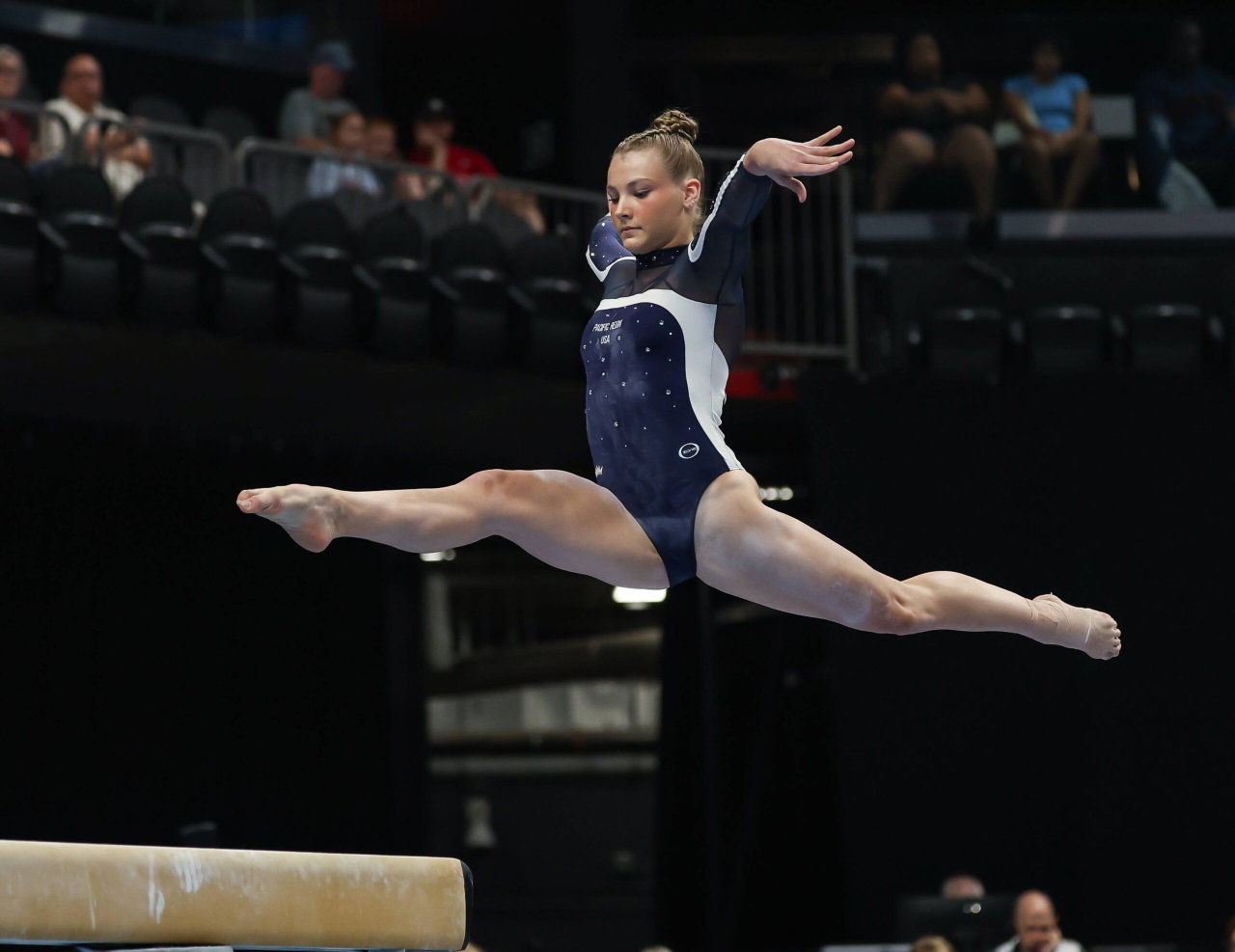
For young athletes, the Youth Olympic Games offer something that few other competitions can replicate. They provide an opportunity to represent their country on an international stage, compete against some of the best athletes in their age group, and gain experience that can shape the early years of an Olympic career. The 2026 edition will be particularly significant, with Dakar becoming the first African city to host an Olympic sporting event when the Games take place from October 31 to November 13.
Watch What’s Trending Now!
Team USA, however, will head to Senegal without any gymnasts on its 2026 delegation. The U.S. Olympic & Paralympic Committee announced its 29-member team on Thursday, with athletes selected across 12 sports. Gymnastics is notably absent from the roster, ending a run of American representation at all three previous Summer Youth Olympic Games in Singapore, Nanjing and Buenos Aires.
“The Youth Olympic Games are an important milestone in the development of young athletes, giving them the opportunity to represent Team USA and gain valuable experience competing on the international stage,” said Daniel Smith, USOPC Director of Summer Games and Team USA Chef de Mission.
“Dakar will be a special moment for the Olympic Movement, and we’re excited for our athletes to embrace the opportunity, build connections with young athletes from around the world and proudly represent the United States on this historic stage,” he further added.
Team USA will compete in archery, badminton, breaking, equestrian, rugby sevens, rowing, taekwondo, triathlon, skateboarding, volleyball, beach wrestling and wushu. The competition will be spread across Dakar, Diamniadio and Saly, as Senegal prepares to host the first Olympic sporting event on African soil.
The decision to leave gymnastics out of the delegation was not made by the USOPC in isolation. USA Gymnastics confirmed in May that it would not send athletes to Dakar, citing concerns over the Games’ credentialing arrangements. Personal coaches would not receive credentials, which the organization said created concerns around athlete safety and well-being.
Those concerns had also surfaced during preparations for the Games. Minutes from the U.S. Men’s Program Committee documented issues raised following a USOPC site visit and noted that other American sports had declined to participate over similar challenges. With personal coaches unable to receive credentials, USA Gymnastics ultimately decided that sending its young athletes to Dakar was not the right choice.
That decision marks a clear break from the United States’ history at the Youth Olympics. The previous Youth Olympics appearances preceded Olympic opportunities for the athletes involved. Alec Yoder went on to compete at the Tokyo Olympics, while Brandon Briones, who won vault gold in Buenos Aires, later served as an alternate on the U.S. Olympic team for Tokyo.
That history makes the decision especially significant for the young gymnasts who had hoped to follow the same path. For Addalye VanGrinsven, however, Dakar was more than just another opportunity. It had become a goal she was actively working toward.
Addalye VanGrinsven had spent two years building toward Dakar
Just months ago, Dakar looked like the natural next step in Addalye VanGrinsven’s rapidly developing gymnastics career.
The Minnesota native had made a remarkable jump in just a year, going from a Level 9 gymnast in 2024 to a junior national-team standout in 2025. She began making her mark internationally that year as well, winning vault gold at International Gymnix and helping the United States claim team gold at the Junior Pan American Games.
Her momentum only grew in 2026. VanGrinsven won the junior all-around title at the U.S. Classic before claiming the junior national all-around crown. With each new achievement, a spot at Dakar looked increasingly within reach.
VanGrinsven had also been thinking about the Youth Olympics as a realistic goal. While discussing her ambitions for the season, she recalled being told, “You can go to the Youth Olympics.” Her reaction was immediate: “This is so amazing.” For her, Dakar represented more than another medal or international competition.
“That’s my end goal. I’ve always wanted that, because I feel like that will lead me up to everything else I need in the future to get to the actual Olympics,” she told Olympics.com.
Reaching that point had already required a major commitment from her family. In late 2024, they moved from Minneapolis to Seattle so VanGrinsven could train at Pacific Reign Gymnastics. Within months, she had made the jump to the elite level and begun collecting international medals. Her younger sister, Audrey, was training alongside her too, making gymnastics a shared family pursuit.
VanGrinsven has already made significant strides despite how quickly her path has unfolded. At the 2025 Junior Pan American Games, she helped the U.S. win team gold while also taking individual gold on vault, silver on beam and bronze on floor. She added four more medals at the 2026 Pan American Championships, further establishing herself among the country’s promising young gymnasts.
And while Dakar is no longer part of her immediate path, VanGrinsven’s ambitions extend well beyond the Youth Olympics. She has already set her sights on becoming an Olympian at Los Angeles 2028, a goal that was shaped in part by watching Suni Lee compete at the 2024 U.S. Olympic Trials.
“The Olympics has always been in the back of my mind,” she said. “But I try to think of one step at a time, one day at a time.”
Dakar may have disappeared from that roadmap, but the destination has not. For VanGrinsven and the next generation of American gymnasts, the road to LA28 simply has another unexpected turn.