
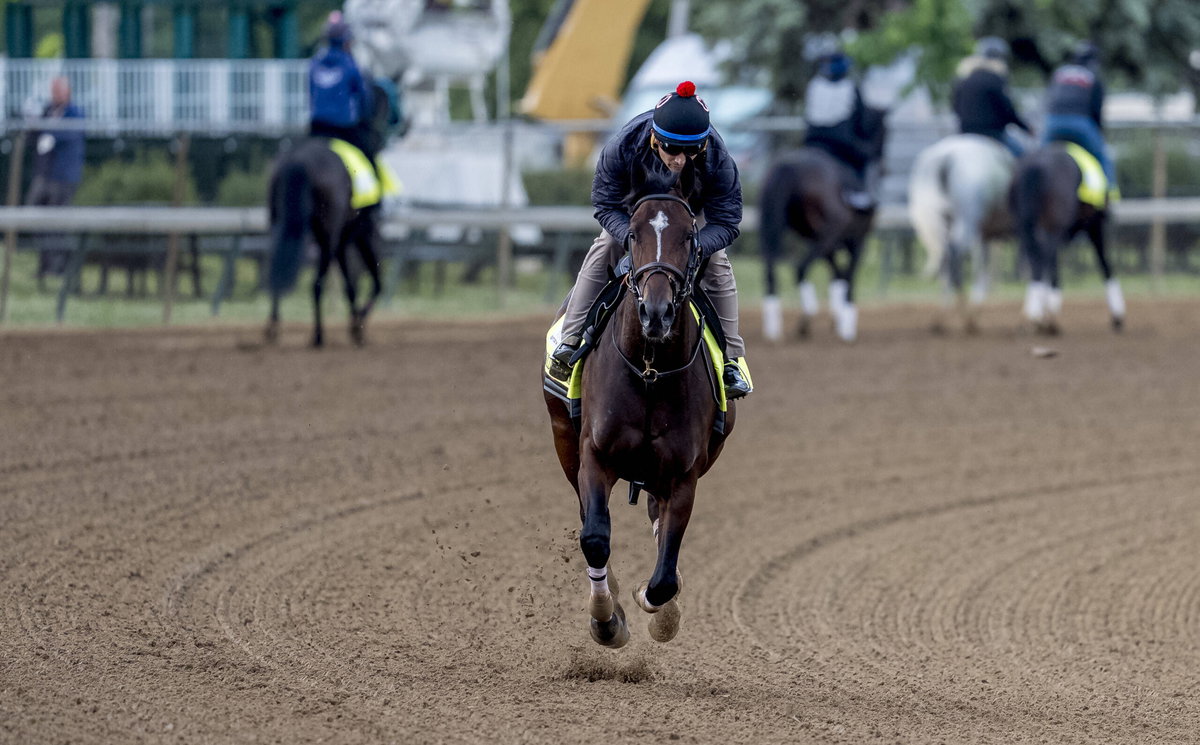
Just days after Cherie DeVaux and Golden Tempo won the Kentucky Derby, many expected the colt to continue his Triple Crown chase at the Preakness Stakes. But DeVaux decided to withdraw him, saying “to give him a little more time.” After all, the Preakness was just 2 weeks later on May 16, and such a short gap may not be enough for a horse to fully recover. Soon after, criticism started growing around the tight Triple Crown schedule. But amid all the buzz, DeVaux made it clear the real concern was not the timing.
Watch What’s Trending Now!
During a recent appearance on Dan Patrick’s podcast, the veteran broadcaster brought up how much horse racing has changed over the years. Patrick pointed out that in the past, trainers aimed for their horses to run all three Triple Crown races, but now it seems horse racing might be becoming more specialized, where they train for the Derby, the Preakness, and the Belmont differently. He then asked DeVaux why that mentality seems different in modern racing.
Without hesitating much, Cherie DeVaux admitted that horse racing today has become much more race-specific and horse-specific. “Well, it’s definitely different; we do focus more on the race-to-race of what we’re doing,” she explained. And she explained, “The Kentucky Derby was our big goal.”
That answer led Patrick to ask the biggest question surrounding the current Triple Crown debate. If the Preakness schedule had one more week between races, would that have changed her decision?
Cherie DeVaux replied, “That has nothing to do with the timing…”
She further added, “And I admire any horse that tries for the triple crown, whether we take that route or not. Um, but it’s a horse-by-horse basis. If you were a different type of horse with a different running style, probably, you know, would play differently in our decision- making.”
Because the trainer knew about Golden Tempo’s natural strengths. According to DeVaux, the colt is especially comfortable at a mile and a quarter, the exact distance of the Kentucky Derby. “He’s a horse that relishes a mile and a quarter,” she said, while also noting that Golden Tempo had previously run well at a mile and 3/16.
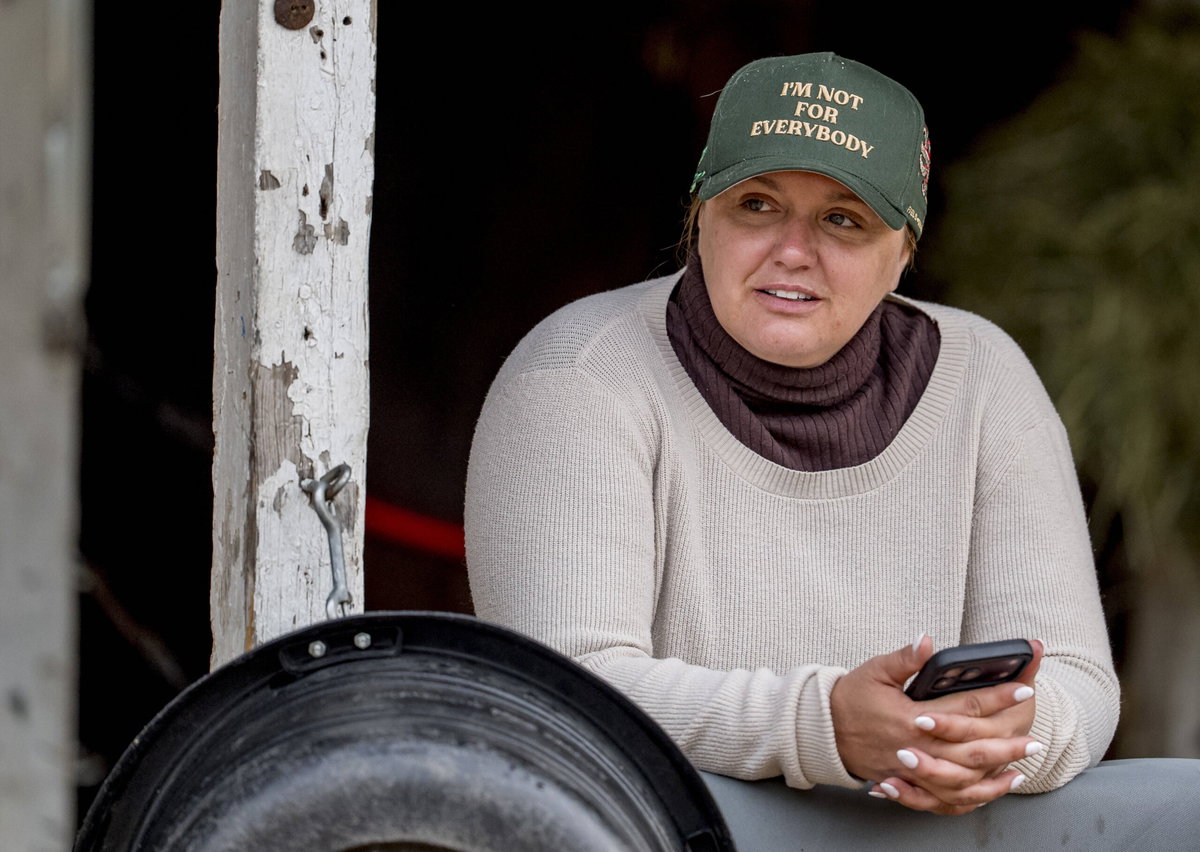
Imago
April 27, 2026, Louisville, Kentucky, USA: Trainer Cherie Devaux at the track as horses prepare for the Kentucky Derby and Kentucky Oaks at Churchill Downs in Louisville, Kentucky on April 27, 2026. /Eclipse Sportswire /CSM HORSE RACING 2026: Kentucky Derby And Oaks Preparations APR 27 PUBLICATIONxINxGERxSUIxAUTxONLY – ZUMAcs17 20260427_faf_cs17_034 Copyright: xTerexPoplinx
Still, Cherie DeVaux suggested the longer stamina tests later in the Triple Crown create completely different demands for certain horses. “He’s going to have to really take a jump forward to be able to take that extra 16th of a mile,” she added while discussing the challenge of stretching the colt farther. That may be the reason DeVaux is preparing Golden Tempo for the Belmont Stakes on June 6, 2026.
So, Cherie DeVaux makes it clear that even if the Triple Crown calendar had more recovery time, Golden Tempo still may not have chased all three races. For DeVaux, the major concern was whether her colt’s running rhythm, energy level, and natural abilities were suited to the various demands of the Triple Crown series. But the debate over the Preakness Stakes race day hasn’t taken a back seat.
Growing pressure around Preakness schedule sparks Triple Crown debate
Cherie DeVaux’s Golden Tempo was not the only Derby competitor that pulled out of the race. Bob Baffert’s Crude Velocity has also withdrawn from the Preakness Stakes. As per a post by @agentes305 on X, the reason was that, “The Preakness is coming too close for Crude Velocity.”
At the center of the controversy is the tight two-week gap between the Kentucky Derby and the Preakness Stakes. Many within horse racing now believe modern thoroughbreds are no longer conditioned to recover and compete at the highest level within such a short span, especially after the physically exhausting Derby. One of the loudest critics recently was former NBC analyst and longtime horse racing fan Chuck Todd.
After Golden Tempo withdrew, Todd publicly blasted the current Triple Crown structure and urged officials to rethink the calendar. “Please, Triple Crown people, create a schedule that encourages participation in all three races. This stubbornness about the dates of these races is self-defeating. Most major sporting events have allowed their schedules to change to accommodate changes in the sport.”
Traditionally, the Triple Crown calendar has remained untouched for decades. Since 2018, only three Kentucky Derby winners have returned to compete in the Preakness. This year also marks the eighth straight season in which the Preakness gates will open without a chance at a Triple Crown winner.
The Preakness was skipped by recent Derby winners such as Sovereignty (2025) and Rich Strike (2022). In recent years, Justify won all three races in 2018, making him the 13th Triple Crown winner in history. But things might change now.
A major offer reportedly under consideration for 2027 is a one-week delay of the Preakness to enable a three-week break following the Derby. However, Maryland Jockey Club officials have not finalized any decision for now.