
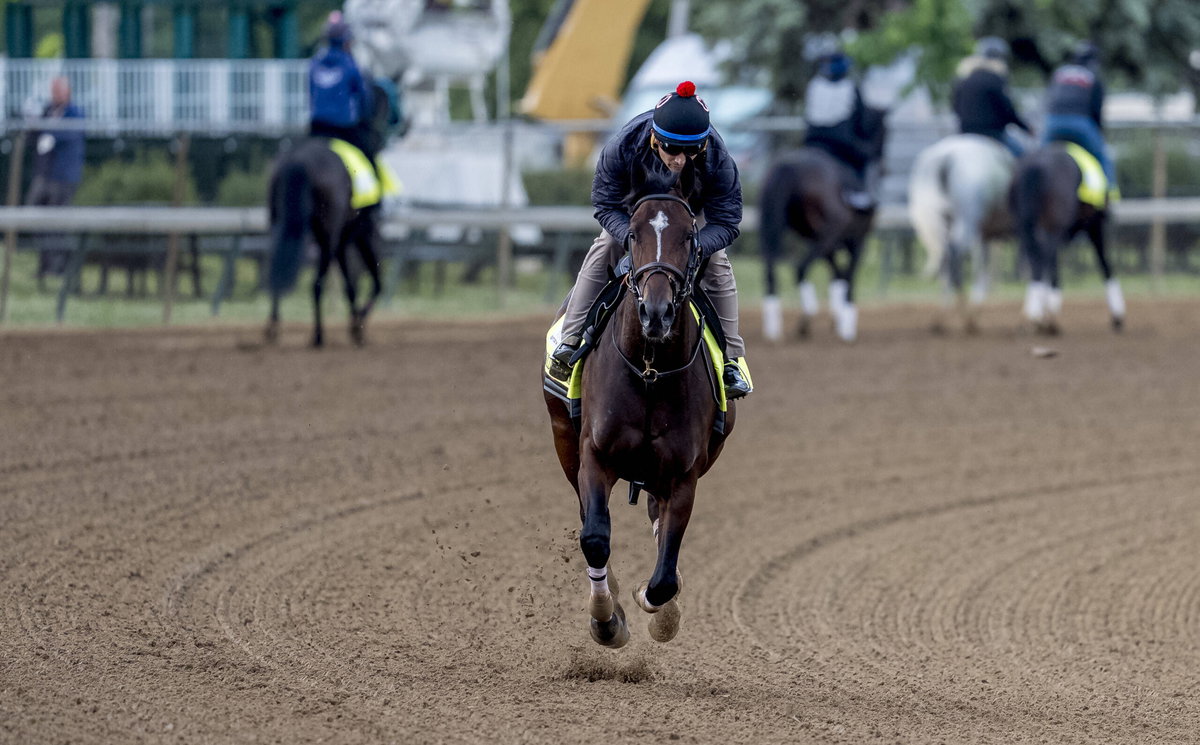
Cherie DeVaux once planned a future in medicine, but changed direction when organic chemistry pushed her elsewhere. That decision led her to horse racing, where she made history as the first woman to train a Kentucky Derby winner. Triple Crown talk followed, but she chose to skip the Preakness Stakes to give Golden Tempo more time. The colt went on to win the Belmont Stakes, renewing questions about what might have been. Even so, DeVaux has shown no sign of second-guessing her call.
Watch What’s Trending Now!
On June 6, DeVaux won the Belmont Stakes at Saratoga Race Course. The colt ridden by Jose Ortiz went off at 6-1 odds as the fourth betting choice in a nine-horse field, but he proved to be the best. Despite facing a competitive field, Golden Tempo produced a strong late run to win in 2:03.49. With the win, DeVaux became the first female to win more than one Triple Crown race. In addition, she also became the second woman to win the Belmont Stakes, following Jena Antonucci’s historic win in 2023 with Arcangelo.
But the outcome raised fresh doubts about what might have been. Had Golden Tempo competed in and won the Preakness Stakes, he would have entered the Belmont with a chance to complete the Triple Crown. Moments after the race, DeVaux was asked the same question. “You know, it’s not something I’m gonna think about,” she replied. “We made our decision, and he won today, and we’re gonna be happy about that.”
Well, seems like she is still following the same philosophy that guided her decision a month earlier. Following Golden Tempo’s Kentucky Derby victory, DeVaux and her team elected to bypass the Preakness Stakes. The most immediate reason was recovery and a tight schedule.

More history! Tom Rinaldi is with Cherie DeVaux who becomes the first woman trainer to win multiple Triple Crown races!
At the time, DeVaux explained that Golden Tempo’s well-being came first. She said, “Golden gave us the race of a lifetime in the Kentucky Derby, and we believe the best decision for him moving forward is to give him a little more time following such a tremendous effort. His health, happiness, and long-term future will always remain our top priority.”
While health was a major factor, DeVaux has suggested that the decision was not solely about the gap between races. During an appearance on Dan Patrick’s podcast, she explained how modern horse racing has become increasingly horse-specific. “Well, it’s definitely different; we do focus more on the race-to-race of what we’re doing,” DeVaux said. “The Kentucky Derby was our big goal.”
When Patrick asked whether an extra week between the Derby and Preakness would have changed her decision, DeVaux dismissed the idea that timing alone was the issue. “That has nothing to do with the timing,” she said. Instead, she emphasized that every horse requires a different approach.
“And I admire any horse that tries for the triple crown, whether we take that route or not. Um, but it’s a horse-by-horse basis. If you were a different type of horse with a different running style, probably, you know, would play differently in our decision- making.” DeVaux pointed to Golden Tempo’s particular strengths, noting that the colt thrives at a mile and a quarter, which is the same distance as the Kentucky Derby.
In the end, Golden Tempo’s hopes of winning the Triple Crown are dead for now. It also helped to produce a Belmont Stakes winner, and another historic moment for DeVaux. However, he left a much bigger question unanswered: Who was there to fill the place of the Triple Crown contender in the Belmont Stakes?
The growing trend behind Triple Crown dreams ending early
The Triple Crown is a series of three races that a horse must win in the same season: the Kentucky Derby, the Preakness Stakes, and the Belmont Stakes. Golden Tempo’s race over the Preakness took the chance of winning the Triple Crown in 2026 away. But the tale doesn’t end with one horse.
It was once normal to race all 3 of the Triple Crown events. The first Triple Crown winner, Sir Barton, did it in 1919 and won all three races in 32 days. The next six Triple Crown champions all raced with only a one-week gap between the Kentucky Derby and Preakness Stakes. Modern racing, however, operates differently.
In 2026, many trainers believe the two-week turnaround between the Derby and Preakness is too demanding for today’s horses. For example, Crude Velocity also skipped Preakness, saying, “The Preakness is coming too close for Crude Velocity, so he will point the horse towards the Woody Stephens’ and Haskell; so they will pass on this year’s edition of the @PreaknessStakes…”
As a result, he and others prioritized rest and long-term development over a quick return to competition. Notably, the top three finishers in the 2026 Belmont Stakes, Golden Tempo, Commandment, and Renegade, all skipped the Preakness before heading to Saratoga.
This approach is becoming increasingly common. Since 1875, 54 Kentucky Derby winners have missed the Preakness, and the trend has accelerated in recent years. Sovereignty skipped the race in 2025, becoming the fourth Derby winner in seven years to do so. That shift has made Triple Crown winners increasingly rare, with Justify the last to sweep all three races in 2018, following American Pharoah’s drought-ending run in 2015.
The approach has evolved for many in the sport and appears to indicate an increasing concern with the welfare of the horse and differential program design.