
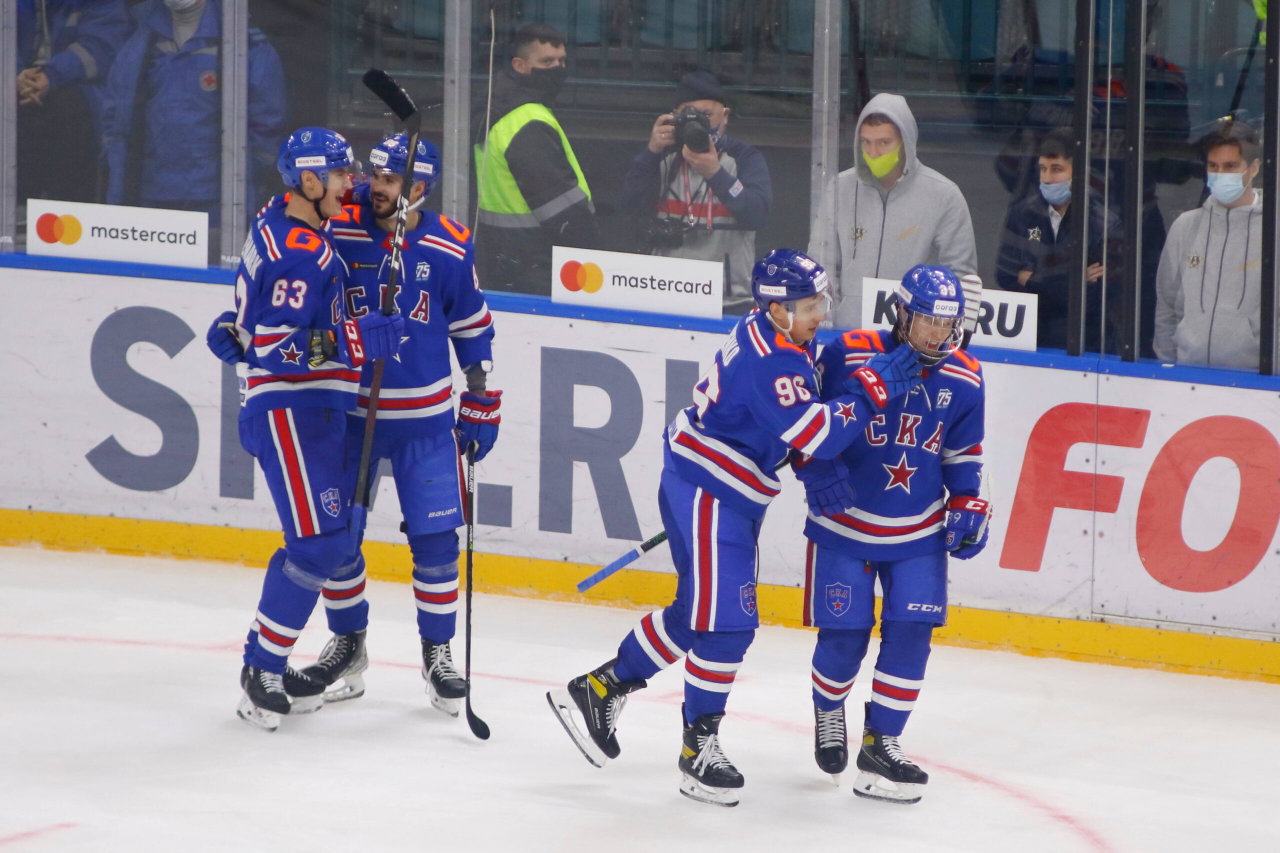
Russia believed its return to international ice hockey was finally within reach after a landmark legal ruling. But that hope has now hit another roadblock. Despite the Court of Arbitration for Sport (CAS) ordering the International Ice Hockey Federation (IIHF) to reinstate Russian teams, the country will remain absent from the 2027 World Junior Championship in Canada. The decision has sparked an angry response from Moscow, with the Russian Ice Hockey Federation (RIHF) threatening further legal action.
Watch What’s Trending Now!
The IIHF confirmed on Sunday that Canada’s government restrictions would prevent Russia’s under-20 team from entering the country. “The IIHF confirms that due to the position and restrictions formally communicated by the Canadian Government, the Russian U20 national team is unable to participate in the World Junior Championship.” The tournament will go ahead as planned from December 26, 2026, to January 5, 2027, with Edmonton and Red Deer in Alberta serving as hosts.
In its official statement, the governing body said it had assessed possible alternatives before deciding to keep the event in Canada. It also confirmed that participating national associations had been informed and that an updated competition schedule would follow.
For Russia, however, the announcement was far from acceptable. The RIHF issued a strong protest, describing the exclusion as both “unacceptable” and “unlawful.” It argued that the IIHF had ignored a binding CAS ruling and an agreement between the two hockey bodies to implement that decision immediately.
The federation also accused the IIHF of allowing political considerations to override fundamental sporting principles, including non-discrimination and equal treatment of athletes. “The IIHF’s decision was made solely due to political reasons, in violation of a binding and effective ruling by the Court of Arbitration for Sport (CAS) – which stated that the IIHF must allow Russian national teams to participate in international competitions – as well as an agreement between the IIHF and RIHF, under which the international federation committed to implementing the CAS ruling with immediate effect.”
It now plans to approach the International Olympic Committee alongside the Russian Olympic Committee. The RIHF further vowed to pursue every available legal route to restore its players’ rights and seek compensation for the damage caused.
The latest dispute follows a suspension that has kept Russian and Belarusian teams out of international ice hockey since Russia’s invasion of Ukraine in 2022. That position appeared to change on October 30, when CAS ruled in Russia’s favour, finding that the IIHF had not presented sufficient evidence to justify continuing its exclusion on safety and security grounds.
The ruling called for Russia’s immediate reinstatement and was expected to affect several competitions, including the 2027 World Junior Championship and the women’s world championship scheduled for Quebec City in November 2027.
However, Ottawa quickly made clear that the legal decision would not change its position. On November 3, Prime Minister Mark Carney said Russian and Belarusian athletes would not be allowed to compete for their countries in Canada while the war in Ukraine continued.
“While Russia and Belorussia (sic) are supporting this illegal, unjustified, horrific war in Ukraine, as long as that’s going on, there will be none of those athletes competing for their countries in Canada,” Carney said. He also specifically ruled out Russian participation in the World Juniors.
Canada later clarified that even players who already held valid visas would not be permitted to compete. Officials also dismissed the possibility of Russia participating as a neutral team, explaining that neutral participation applied to individual athletes rather than an entire national side.
The CAS ruling had already triggered resistance from several European hockey nations. Finland, Sweden, Czechia and Latvia were among those to oppose playing Russia while the war continued. Austria, Denmark and Norway also joined the list of countries threatening boycotts ahead of future competitions. Their stance, alongside sponsor concerns, has created further uncertainty for the IIHF.
Russia out, Norway back in
With Russia unable to participate, another team has regained its place in the tournament. The Norwegian Ice Hockey Association confirmed that its under-20 side would compete after previously being informed that it would have to make way for Russia as the lowest-ranked team.
The reversal brought relief to a squad that had spent weeks uncertain about its place. Association secretary general Petter Salsten welcomed the decision, saying the players and coaching staff had earned their opportunity by securing promotion the previous year.
“The team have been looking forward to this for a whole year but have spent the past month in limbo,” Salsten said. Norway also confirmed that its pre-tournament training camp and scheduled games in Canada would proceed as planned.
The developments have consequences beyond the junior competition. Germany, which will host the 2027 men’s world championship in May, has urged the IIHF to clarify its position before preparations advance further. Several nations have already threatened not to face Russia if it returns, leaving organizers and sponsors facing difficult questions.
German Ice Hockey Federation chairman Frank H. Lutz welcomed Canada’s stance but stressed that the IIHF must provide certainty for the upcoming event. “We now need this planning security for our home World Championship in May, for the teams, the fans and all our partners. We therefore demand prompt clarification from the IIHF,” Lutz said.
For now, Russia’s return to international hockey remains blocked despite the CAS ruling. The RIHF’s promised legal challenge could keep the dispute alive, while the IIHF faces mounting pressure to establish how it will handle future tournaments. What began as a ruling that appeared to reopen the door for Russian teams has instead exposed a growing divide between sporting authorities, national governments and competing federations.