
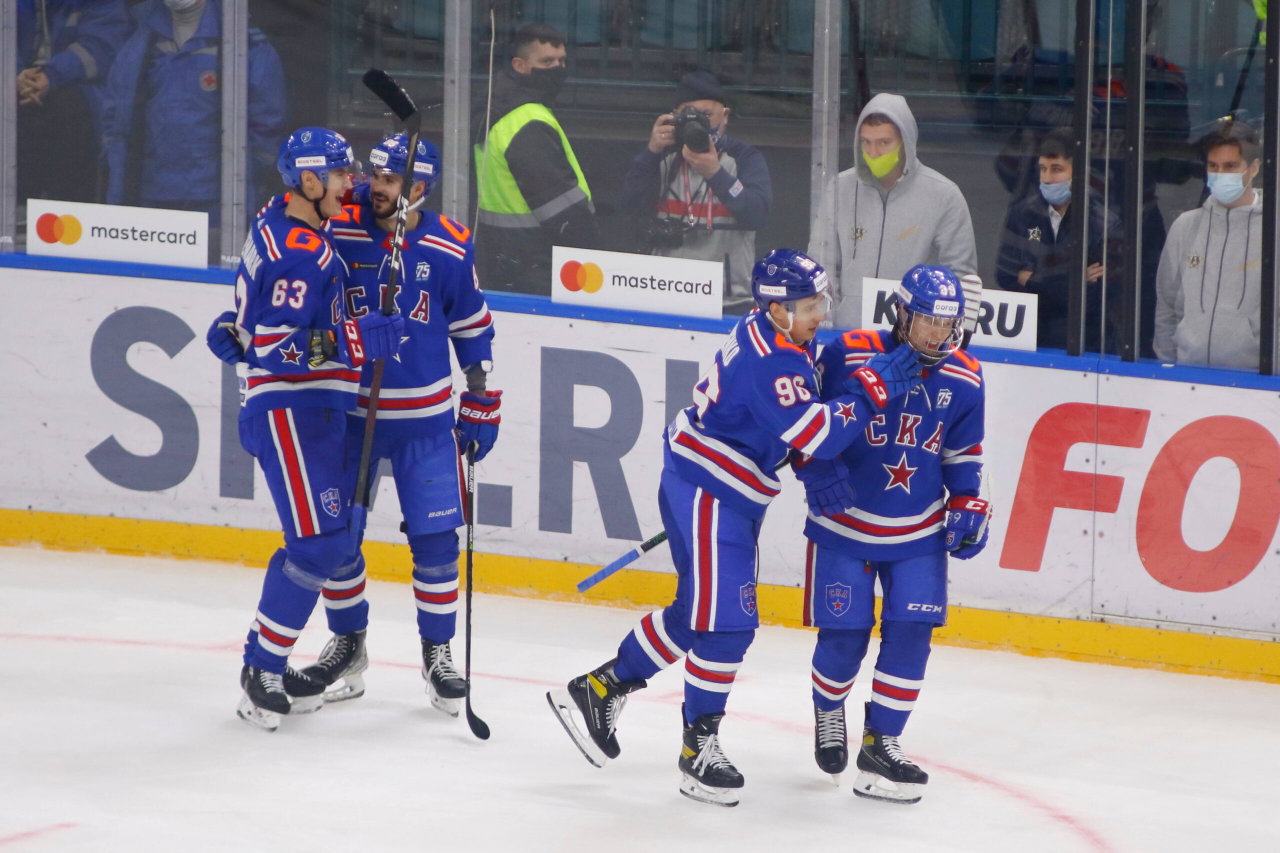
Russia’s return to international ice hockey was meant to follow a ruling in its favor. Instead, it has triggered a growing standoff, with several countries now refusing to face its teams.
Russian Sports Minister and Russian Olympic Committee chairman Mikhail Degtyarev has responded by warning that any nation that boycotts a game against Russia at the 2027 Men’s World Championship could hand his team a forfeit victory. His message comes as federations across Europe challenge the Court of Arbitration for Sport’s decision to overturn the International Ice Hockey Federation’s ban.
“Players must compete for their countries and win on the ice, not end up on the front pages of the news. Let us remember that in the event of a boycott of matches against Russia, the International Ice Hockey Federation (IIHF) will be obliged to award a forfeit in our favor. We do not want that. We want to compete and prove our strength in sports, not through forfeits,” Degtyarev said, according to Match TV. He has also repeatedly warned that Russia would seek to strip hosting rights from countries unwilling to admit its athletes.
Norway, Denmark, Sweden, and the Czech Republic have said their teams will not play Russia at next year’s tournament, while Finland and Latvia have also maintained their refusal to compete against Russian sides. The dispute centers on Russia’s return while its war in Ukraine continues.
The immediate pressure falls on Germany, which is due to stage the 90th edition of the men’s World Championship from May 13 to 30, 2027, across Düsseldorf, Gelsenkirchen, and Mannheim. The draw and schedule were prepared without Russia, creating practical questions for the IIHF if it must now accommodate the team.
Germany has not announced a boycott of a match against Russia. However, the German Ice Hockey Federation (DEB) has openly questioned whether it should continue as a host if Russian teams are admitted. DEB chief executive Frank Lutz said the federation could consider handing back the event, putting the tournament’s expected multimillion-euro return at risk.
“I do not want to paint a black picture. I do not want to question the World Championship either. But of course, we at the DEB also have to consider the option that we hand back this championship,” Lutz told broadcaster MagentaSport.
Norway’s federation, meanwhile, said it would not play Russia “based on the current situation and the information available to us today.” It said its other group matches would go ahead as scheduled.
Denmark has raised similar concerns about protecting players and staff. Danish Ice Hockey Union chairman Henrik Bach Nielsen warned that a game against Russia could descend into “utter chaos.” Sweden’s association maintained its firm stance, while Czechia joined the refusal. Latvian law also bars its teams from competing against Russian sides.
CAS ruling sparks a wider backlash
The dispute began with Russia’s exclusion from IIHF competitions after President Vladimir Putin launched the full-scale invasion of Ukraine in February 2022. The IIHF maintained the ban for 2026–27, citing safety concerns. Russia’s federation appealed.
On October 30, 2026, CAS ruled in Russia’s favor, finding that the IIHF had not sufficiently demonstrated that the security concerns justified the continued exclusion. The IIHF has opposed the decision, pointing to “significant practical implications” and reiterating that the safety of participants and the integrity of its championships remain priorities.
The backlash is also reaching events beyond the senior men’s championship. Canada has said Russian and Belarusian athletes will not be allowed to compete under their national flags or symbols at events hosted there. Prime Minister Mark Carney specifically confirmed that Russian players would not take part in the 2026-27 World Junior Championship in Alberta. Ottawa said it would use immigration powers to prevent athletes and officials from entering Canada to represent their countries, while neutral athletes may still compete.
The ruling has also unsettled commercial partners. Swedish furniture company AJ Products, a sponsor of the men’s World Championship since 1989, has said it will withdraw its sponsorship if Russia participates. Finnish tire maker Nokian Tyres has also indicated it will end its deal under those circumstances. In Finland, the city of Turku has said it would relinquish hosting duties for the 2028 World Junior Championship if Russia is allowed to compete.
For Degtyarev, the answer is straightforward: teams should settle the contest on the ice, not through political statements or withdrawals. But with federations, governments, host cities, and sponsors pushing back, the IIHF faces a much larger challenge than simply adding Russia to a tournament schedule. Its ruling may have opened the door to a return, but it has not secured Russia a place on the ice.