Imago
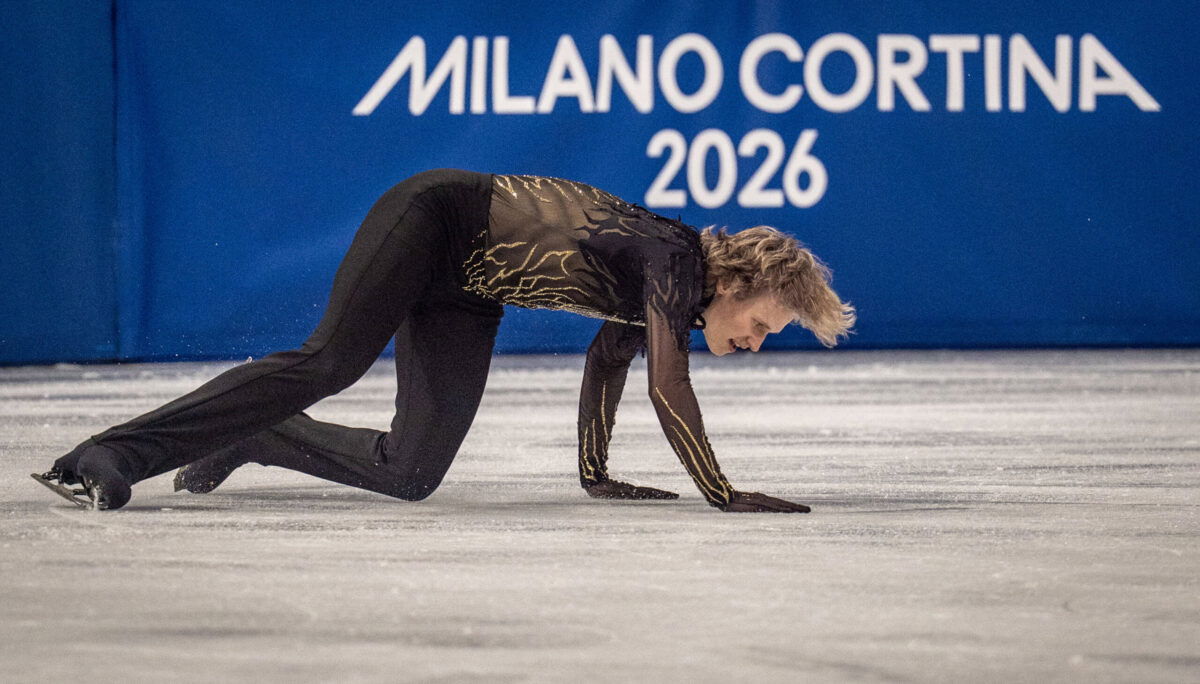
February 14, 2026, Milan, Italy: ILIA MALININ USA falling during his men s Figure skating, Eiskunstlauf free skate performance and losing any chance for a medal at the 2026 Milano Cortina Winter Olympics. He finished eighth. Milan Italy – ZUMAa35_ 20260214_oly_a35_002 Copyright: xDanielxA.xAndersonx
Imago
February 14, 2026, Milan, Italy: ILIA MALININ USA falling during his men s Figure skating, Eiskunstlauf free skate performance and losing any chance for a medal at the 2026 Milano Cortina Winter Olympics. He finished eighth. Milan Italy – ZUMAa35_ 20260214_oly_a35_002 Copyright: xDanielxA.xAndersonx
When fans see Ilia Malinin doing things no one on earth does, they often forget that he is barely 21 years old. Entering Milan, Malinin was the clear favorite in the individual event, especially considering his form. In the four competitions leading up to the Olympics, his scores ranged between 209 and 238. However, on the biggest stage, Malinin stumbled twice, coming in 8th with a final score of 156.33.
Watch What’s Trending Now!
“All of this pressure, all of the media, and just being the Olympic gold hopeful was a lot,” he said immediately after the result. “It was too much to handle.” In an interview on TODAY, Malinin further detailed that he was not ready for the Olympic spotlight. “Honestly, it’s not a pleasant feeling. The most honest way to say it is it’s just a lot on you, just so many eyes, so much attention,” Malinin said of the expectations he felt in Milan. While he was not directly blaming NBC, the Olympics broadcaster has pushed back on Malinin’s comments.
“I will tell you that our approach to the ‘before’ [he competes in Milan], which is to introduce the American audience to the athletes that are going to compete, to try to engage the audience in their story — the mantra is ‘make them care’ — has been the same for decades,” said NBC Olympics president Gary Zenkel in an interview with Sportico.
The star-focused broadcasting has been an American staple for as long as the sports industry has existed. In every sports league or tournament, there are a few chosen stars that earn the “face of the league” tag. They are pushed to the audience, and they embrace it. In the NBA, it is players like Michael Jordan and Steph Curry. In the NFL, it was Tom Brady when he was around, now Patrick Mahomes. MLB has Shohei Ohtani.
Imago
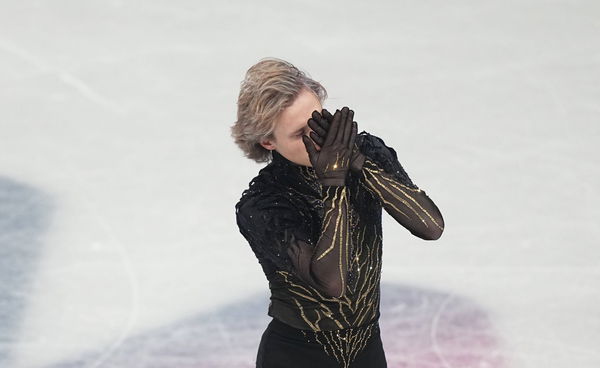
February 14, 2026, Milan, Aarhus, Italy: ILIA MALININ competes during the Men s Single Free Skating, Milano Cortina 2026 Winter Olympic Games, Olympische Spiele, Olympia, OS at Milano Ice Skating Arena Milan Italy – ZUMAp228 20260214_zsp_p228_144 Copyright: xUlrikxPedersenx
That formula was consistent for NBC, as it is the American broadcaster and not a worldwide one. In the Winter Olympics coverage, stars like Malinin, Mikaela Shiffrin, Lindsey Vonn, and Jordan Stolz are highlighted. However, Zenkel maintained that nothing is compulsory for these athletes. So, Malinin had the option to avoid the spotlight if he wanted to.
“Everything is purely voluntary. There’s no requirement,” Zenkel said. “I don’t think U.S. Figure Skating has any requirements. We profile athletes in advance [of the Olympics], and some of them don’t want that, and we don’t profile them. So again, it’s something they choose to participate in.”
Obviously, a star of Malinin’s caliber cannot avoid it completely. However, he had the chance to control it. It’s a double-edged sword, isn’t it? The extensive promotion gives athletes popularity, which in turn awards them endorsements. It makes them a household name. That can crush an athlete if they are not ready for it.
And one can never gauge if they are ready for it unless they go through that experience, and it was Malinin’s first Olympics. Now that he has understood how it works, he will be better prepared the next time around. Zenkel is doubtful about whether NBC played a role in Malinin’s failure.
“I think the Olympics place an enormous amount of pressure. Does NBC exacerbate that pressure up to the point where they’re unable to perform at their true potential? I don’t know,” he said.
Imago
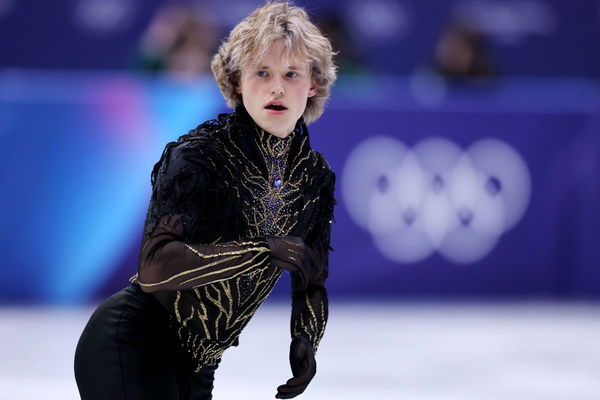
Ilia Malinin USA, FEBRUARY 8, 2026 – Figure skating, Eiskunstlauf : Team Men s Free Skating during the Milano Cortina 2026 Olympic Winter games, Winterspiele,Spiele, Summer games at Milano Ice Skating Arena in Milan, Italy. Noxthirdxpartyxsales PUBLICATIONxNOTxINxJPN aflo_319044190
What Ilia Malinin experienced is very common among elite athletes. According to a 2012 study (Kristiansen, Roberts, & Abrahamsen), 72% of elite athletes report experiencing heightened anxiety when competing under media scrutiny. Ultimately, the athletes have no option but to overcome that because it is how the industry works. Regardless of where responsibility lies, the unexpected result required NBC to pivot its storytelling in real time.
NBC President explains quick pivot after Ilia Malinin’s failure
Like fans, even NBC was prepared for Ilia Malinin’s glory. It was arguably the most anticipated event for the USA at the Olympics. The viewership would have spiked. They planned their coverage on the assumption that Malinin would take home the gold, or at worst, a silver. Then Malinin stumbled. Even more viewers would have joined in, curious about what happened. Despite the result being unexpected, NBC quickly pivoted.
“We didn’t expect it,” Zenkel said. “My view is that our talent was amazing in that moment. And I think perhaps one of the most extraordinary bits of television was the interview that Andrea Joyce conducted, when he very unexpectedly went right to the mixed zone [right after competing]. I think it was, like, 60, 90 seconds, two minutes, whatever it was, but certainly very quickly.”
The first interview is the most important one. It captures the raw, unadulterated reaction of the athlete.
“I blew it,” Malinin said. “That’s honestly the first thing that came to my mind — there’s no way that just happened. Like, I mean, I was preparing the whole season, you know?”
In the end, whether the spotlight comes from broadcasters or the Olympic stage itself, the pressure is real. And how athletes navigate it remains one of sport’s most unforgiving tests.
Written by

Edited by

Deepali Verma