

For decades, the Olympics enforced rigid amateurism rules. Athletes were not rewarded financially for their passion for the sport and the sacrifices they made to represent their country at the highest level. Stars like Long Jumper Greg Rutherford have spoken out against this practice in the past, calling the International Olympic Committee “greedy” for generating billions while choosing not to share that revenue with the athletes. But now, a historic change has finally arrived.
Watch What’s Trending Now!
The IOC has announced that all athletes participating in the Olympic Games will now be eligible for a $10,000 grant, officially known as the “Fit for the Future” grant. The initiative was announced today at the 146th IOC Session in Lausanne by Pau Gasol, Chair of the IOC Athletes’ Commission. The two-time NBA champion was elected as the athletes’ representative on the IOC Executive Board during the Milan Winter Games earlier this year, and got the chance to break this news to the world.
Across a full summer and winter Olympic quadrennial, the total commitment amounts to approximately $133.84 million, a number that reflects both the scale of the new policy and just how many athletes compete across a four-year cycle. The condition attached to the grant is that athletes should have met the IOC’s integrity obligations.
This includes clean sport and anti-doping obligations. Subject to that requirement, the grant is universal, and it is not based on the winners’ or first-round losers’ status or the amount of funding available to their home countries. The announcement is of tremendous importance in the latter case, especially.
This grant will be available to every Olympian,” said Pau Gasol, the head of the IOC’s athletes’ commission. “Not just medal winners, not just athletes from certain countries, every Olympian…”
This grant however is not the ‘prize money.’ However, as per The Guardian, it marks the IOC breaking its 130 years of tradition by deciding to pay athletes to compete at the Olympic Games. About 14,000 athletes from the Summer and Winter Games are eligible for this payment.
Many of the world’s Olympians do not have professional contracts or prize money and receive no financial compensation other than from their national committees and families. For many, it’s a game-changer when it comes to a guaranteed $10,000 payment for qualifying and competing.


The announcement comes amid an ongoing debate about athlete compensation in Olympic sports. Earlier this month, IOC President Kirsty Coventry faced criticism after saying, “I don’t believe in paying athletes,” a remark that was later clarified as being about prize money rather than athlete support.
Australian Olympic champion swimmer Cameron McEvoy responded publicly, arguing that paying every athlete at the Games $10,000 as an appearance fee, alongside up to $100,000 in prize money for a podium finish, would amount to approximately 1.5% of the IOC’s quadrennial revenues.
“For reference, the NBA has a 50% revenue share with the players. You can have prize money and pay all athletes to help those who aren’t the absolute top and still be extremely comfortable with your boatloads of revenue,” McEvoy added, as per The Sports Examiner.
The support provided by the Fit for the Future grant is not as great as what McEvoy and others have called for, but it is a step in the right direction nonetheless.
What the IOC has agreed to is a starting point. Athlete advocates have long argued that competitors at the highest level shouldn’t have to sacrifice financially to compete at the Olympic Games. The Fit for the Future grant doesn’t settle that debate, but it does send a clear message: every Olympian, regardless of where they finish, will now leave the Games with something to show for it.
The 146th IOC Session marks a wider day of reform in Lausanne
The athlete grant was not the only significant decision to come out of Lausanne today. The 146th IOC Session also agreed to fundamental changes in the way the Olympic programme is decided, which will influence the choice of sports and disciplines in the future, starting with Brisbane 2032.
The new methodology introduces a discipline-based assessment process, rather than evaluating sports as units, and instead evaluates each discipline as it relates directly to the venue requirements, operational delivery, and total cost of the sport.
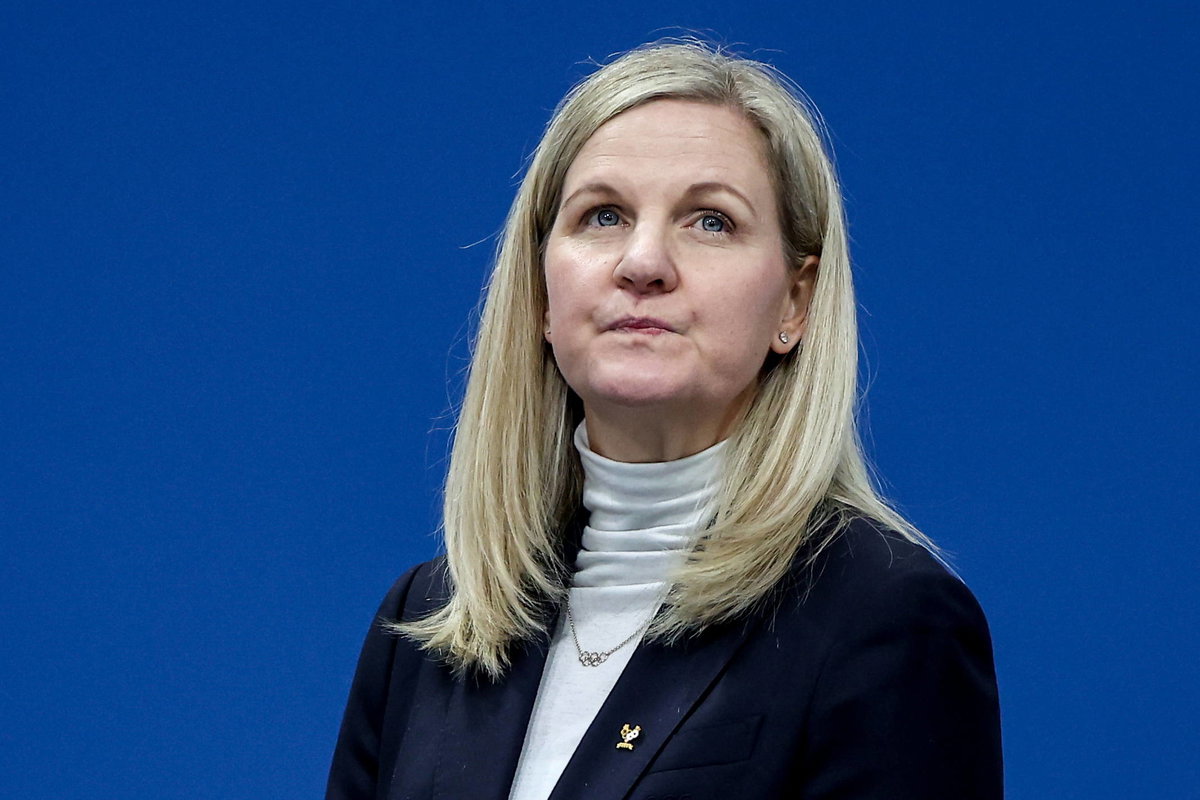
Imago
ITALY, MILAN – FEBRUARY 19, 2026: Kirsty Coventry, President of the International Olympic Committee, during a victory ceremony for the women’s Figure skating, Eiskunstlauf event at the 2026 Winter Olympic Games, Olympische Spiele, Olympia, OS at Milano Ice Skating Arena. Peter Kovalev/TASS PUBLICATIONxINxGERxAUTxONLY 88973207
Organizing Committees will have the possibility to propose a maximum of four additional disciplines for the Summer Games and two for the Winter Games. The aim, according to IOC President Coventry before the Session, is to keep the Games manageable, with Los Angeles 2028 already set to feature a record 36 sports.
The Session also approved a modified host selection process, which will feature a new Strategic Dialogue stage between the Continuous and Targeted Dialogue stages, to be held at the time of the 2036 Olympic Games’ host election, in the middle of 2029. The changes are designed to give potential hosts greater planning certainty and clearer evaluation criteria from the outset, addressing long-standing criticism that the selection process lacked transparency.
Taken together with the athlete grant, the decisions coming out of Lausanne today represent the most substantive single-day package of reforms the Olympic Movement has produced in years.
What ties these together is Coventry’s Fit for the Future programme, set up by her when she took over in June 2025, which the IOC consistently refers to as an ongoing process of reform.
“As a former athlete, I know how important it is that your voice leads the way. Your insights will guide our path forward with athletes always at the heart of the Olympic Movement,” she said at the time the programme was launched.
The 146th Session was not the finish line. It was the time when the direction became official. The grant is the most tangible result, a direct financial pledge, something that decades of the amateur-spirit ideology had refused to approve for athletes. The programme and host selection reforms are a sign of the end of unchecked Olympic growth for the broader Olympic Movement. The two changes coming on the same day indicate that IOC is at the very least trying to align its governance with what athletes and host nations have sought.