
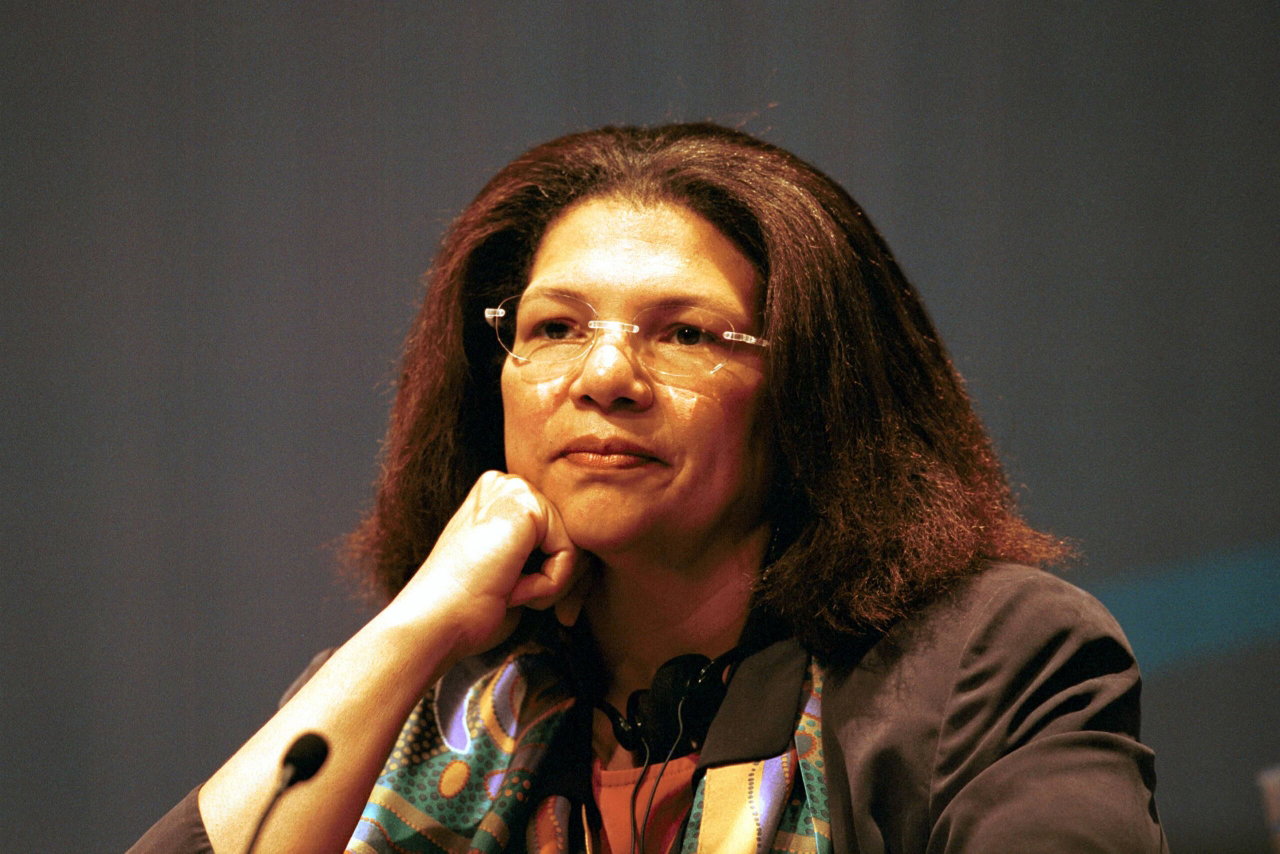
As a young girl, Anita DeFrantz watched her brothers enjoy sporting opportunities she was denied simply because she was a girl. But that never stopped her from chasing her own Olympic dream. She eventually found her way into rowing and won bronze at the 1976 Montreal Games. Having faced those barriers herself, she spent her life fighting for equal opportunities for women and a stronger voice for athletes. Her fight also took her to court in 1980, when she challenged the US boycott of the Moscow Olympics. Although she lost that battle, she never stopped speaking up for athletes. Now, decades later, the Olympic world is mourning the loss of DeFrantz, who has passed away at 74.
Her death was announced by the International Olympic Committee on November 26, 2026. According to The Washington Post, DeFrantz passed away after battling gastric cancer, which she had been diagnosed with in 2021. She underwent several rounds of chemotherapy and surgery to remove her stomach, but continued to remain involved in the Olympic Movement despite her illness. Her passing left IOC President Kirsty Coventry heartbroken, as she remembered DeFrantz as a mentor, friend and inspiration.
“I feel an immense sense of loss at Anita’s passing,” Coventry said. “Anita was a mentor, a friend and a true inspiration to me, and to so many others around the world. From my earliest days in the Olympic Movement, she showed me what courageous leadership looked like, and what was possible for women in sport. She broke barriers long before many of us had the opportunity to follow, and I will never forget that the path I have been privileged to walk was made possible by trailblazers like Anita.”
DeFrantz’s journey to becoming one of the most influential women in Olympic history was far from easy. Growing up in Indianapolis with three older brothers, she attended schools that did not have girls’ sports teams. While her brothers enjoyed opportunities to compete, she had to look elsewhere to pursue her interest in athletics. She eventually discovered rowing at Connecticut College, where she initially studied music. Her talent for the sport became clear, but reaching the Olympic level required years of hard work. While attending law school at the University of Pennsylvania, she trained at a Philadelphia rowing club, often getting up before dawn and working multiple jobs to pay for her education and training.
Her efforts finally paid off in 1976 when she earned a place on the US women’s rowing team. She captained the team at the Montreal Olympics, where women’s rowing made its Olympic debut. The American women’s eight secured bronze, making DeFrantz the first Black woman to compete in Olympic rowing and win an Olympic medal in the sport. At just 23, she had achieved the dream she once struggled to find an opportunity to pursue. But her Olympic journey was not over.
She wanted another chance to compete, and she earned a place on the US team for the 1980 Moscow Olympics. However, a political decision would soon take that opportunity away. Four months before the Moscow Games, US President Jimmy Carter announced that the United States would boycott the Olympics in protest against the Soviet Union’s invasion of Afghanistan. The decision left American athletes unable to compete, including DeFrantz, who had spent years preparing for another Olympic appearance.
She refused to accept it quietly. DeFrantz became one of the leading voices opposing the boycott and tried to convince the authorities that athletes should not pay the price for political decisions. She also filed a lawsuit against the US Olympic Committee, arguing that the government and sports officials should not take away athletes’ right to decide whether they wanted to compete.
Her legal challenge was unsuccessful, and the American team did not travel to Moscow. But the experience changed the direction of her life. She realized that athletes needed people inside sports organizations who would stand up for their interests and make sure their voices were heard.
IOC Honorary President Thomas Bach also remembered DeFrantz for her stand against the 1980 boycott. “With the death of Anita DeFrantz, the Olympic Movement has lost a great trailblazer and an outstanding advocate for the Olympic values. Personally, I am losing a longstanding and wonderful friend,” Bach said. He recalled that their shared opposition to the boycott showed how much they thought alike. He also spoke of the years they spent working together on the IOC Executive Board, saying he would be “forever grateful” for her inspiration and support.
For DeFrantz, the events of 1980 became a turning point. “The year 1980 changed my life in many ways,” she once said. “Becoming an IOC Member never crossed my mind, but the path I took led me to that opportunity.”
Just six years later, she joined the organisation she had once challenged. In 1986, DeFrantz became the first African American and the first American woman elected to the International Olympic Committee. Her appointment marked a major breakthrough in an organisation where women had very little representation.
Anita DeFrantz opened doors for Women in sport
DeFrantz continued breaking barriers in Olympic leadership. In 1997, she became the first woman to serve as an IOC Vice-President, a position she held until 2001. She later returned to the role from 2017 to 2021. In 2001, she made history again as the first woman to run for IOC President, although she lost the election to Jacques Rogge. But her work for women in sport went far beyond holding senior positions.
As chair of the IOC’s Women and Sport Commission from 1995 to 2014, she spent nearly two decades pushing for greater opportunities for women, both on the field of play and in sports leadership.
One of her important efforts came in 1995, when she represented the IOC at the Fourth World Conference on Women in Beijing, China. At the time, sport was not widely recognised as part of the international women’s rights movement. DeFrantz wanted that to change. She worked to have access to sport recognised in the Beijing Declaration and Platform for Action, an international agreement on women’s rights and equality.
She later reflected on the importance of that moment, saying: “It was the first time that sport was considered part of the international women’s movement.” She also remembered seeing women from different countries and cultures come together at the conference, describing the gathering as: “A picture of gorgeous humanity.”
She had seen the inequality in sport first-hand. When women’s rowing made its Olympic debut at the 1976 Montreal Games, women raced over 1,000 metres, while men competed over 2,000 metres. It was not until the 1988 Seoul Olympics that women’s rowing events were extended to the same 2,000-metre distance. DeFrantz continued to push for change within the Olympic Movement, including greater opportunities for women to compete. She also played a role in the inclusion of women’s softball and football in the Olympic programme.
Her work reached beyond the Olympic arena, too. She served as vice-president of the organising committee for the 1984 Los Angeles Olympics and later led the LA84 Foundation for more than two decades. Through the foundation, she helped expand access to sports programmes for young people, particularly those in underserved communities.
Her influence also extended to the next generation of Olympic leaders. IOC President Kirsty Coventry recalled the advice DeFrantz gave her and other athletes early in their careers within the organisation: “Even though you sit at the back of the room, you should be the loudest.”
One of the most memorable moments of DeFrantz’s later years came on February 6, 2026, when she handed the Olympic flame to Coventry ahead of the Milano Cortina Winter Olympics. The moment carried special meaning. Coventry had made history in March 2025 by becoming the first woman to lead the IOC, following decades of work by women like DeFrantz to create more space for female leaders in sport.
Reflecting on the handover, Coventry said: “Receiving the Olympic flame from Anita was a moment full of emotions. She really led the way for female leaders in sport globally.” DeFrantz had also spoken warmly about Coventry’s appointment, describing having a woman as IOC President as “exactly how the world should be”. Now, as the Olympic Movement mourns her death, Coventry has paid tribute to the woman who helped make that progress possible.
“Anita opened doors for the rest of us, but her real legacy is that she expected us to keep those doors open for those who come next. We can only hope to live up to that,” the IOC President said. DeFrantz’s contribution was also recognised in 2025 when she was inducted into the US Olympic and Paralympic Hall of Fame. She became the first female rower and the first Black woman to be inducted into its rowing category.
As a mark of respect, the IOC announced that the Olympic flag would fly at half-mast for three days at Olympic House.