
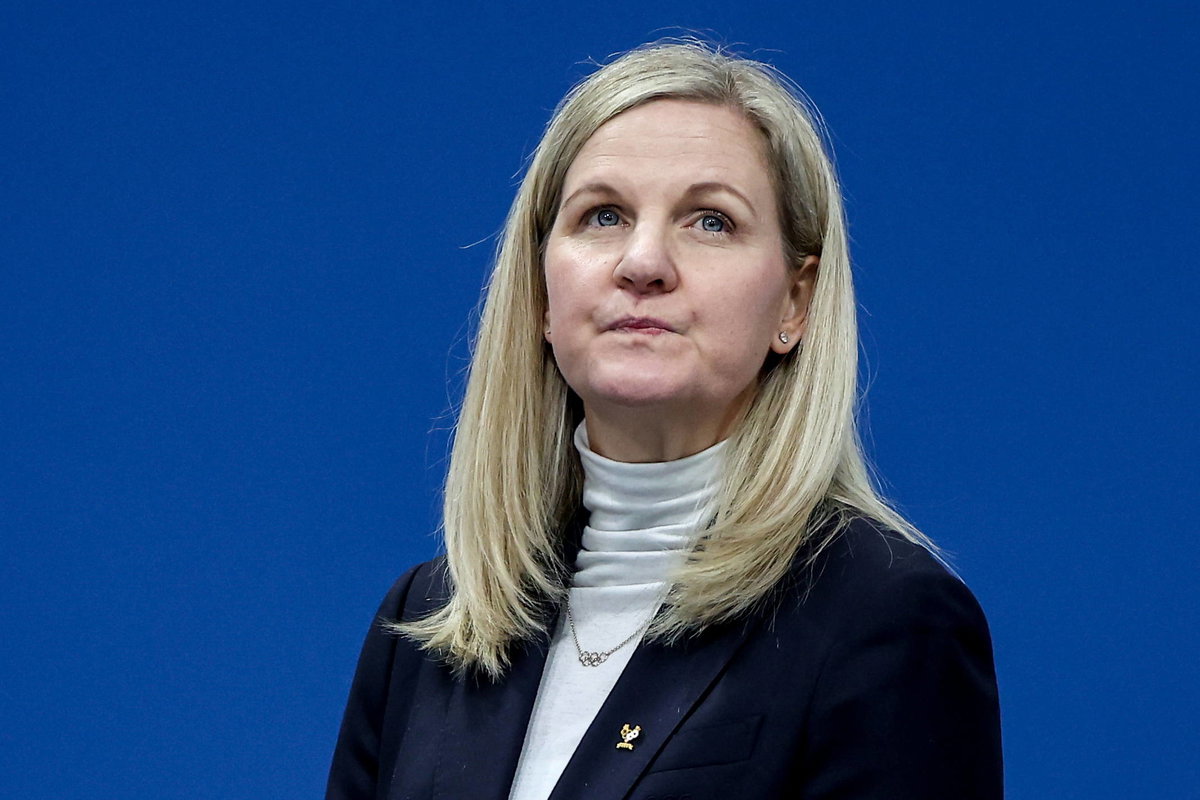
By the time the Enhanced Games ended, they had handed out $25 million to 42 athletes. In comparison, the IOC generated $7.7 billion over two Olympic cycles and offered athletes no direct share of that revenue. Then Kirsty Coventry said, “I don’t believe in paying athletes,” which unsurprisingly drew immense criticism. Despite that, she has doubled down on her stance.
Watch What’s Trending Now!
Speaking after the International Olympic Committee Executive Board, Coventry addressed the same, after acknowledging the controversy surrounding her comments.
“If we were not aware of it, we’d be hiding our heads under a pillow,” the IOC President said at the meeting. “But it’s nothing new that I don’t agree with prize money at the Olympic Games. There’s prize money at continental games, at international federation games, and at World Cups.
That said, Coventry feels that there should be help available to those who do make their way to the Games.
“I feel that we have a broader responsibility to try and find ways to directly support every Olympic athlete that comes to the Games, and I have been asking the teams here internally: How do we do that? How do we increase Olympic solidarity scholarships? How do we find other innovative ways?” she continued.
The IOC adopts a solidarity model, which is why it doesn’t issue huge paydays to athletes as the Enhanced Games did. It doesn’t make direct payments but instead reallocates the funds it receives to federations, organizing committees, development programs, and more. From there, a percentage, reported to be around 0.5%, is distributed to athletes by their respective federations. The United States, for example, awarded $37,500 for a gold medal, $22,500 for a silver medal, and $15,000 for a bronze medal following the 2022 and 2024 Olympics.
The figure does vary, but in 2024, intending to change that, World Athletics announced it would hand out $50,000 to gold medalists. That does include each member of a relay team, although the IOC continues to adhere to its solidarity model.


Protecting sport’s autonomy, strengthening solidarity and the universality of the Olympic Movement were underlined by IOC President Kirsty Coventry at the General Assembly of the European Olympic Committees (EOC) in Budapest, Hungary. Full story: oly.ch/4fCkfkR

However, they are looking to help athletes, as Coventry believes that, since she took over, their focus has been on that.
“We’ve been doing a lot of work since the day I took office,” the former Olympian added. “I think we have a number of really cool, exciting commitments that you’re all going to get to see. But for me, the principle will be: ‘How do we try to help every Olympic athlete?'”
That echoed what Coventry said the first time around, though for many it got buried under her first statement. “Now I do think we should find more ways to directly impact athletes..to find ways to directly help them on their journey to becoming Olympians…” she had said after insisting that she doesn’t believe in paying Olympians.
This has, however, only intensified a debate that began to gather steam at the Paris Olympics, especially after the World Athletics’ decision. It saw federations question whether the IOC could extend that across the board.
However, given that their president’s stance hasn’t changed, athletes have begun to question their future. So much so that even former Olympian Ryan Lochte believes that the monetary lure of the Enhanced Games has changed the game completely.
Ryan Lochte reflects on Enhanced Games’ prize money
For many Olympians, the chance to compete at one of the highest levels in sport is what drives them to do well. However, the lack of financial support often forces many of them to turn towards fundraisers and more, with Monica Aksamit a key example. In a rather revealing essay, the Olympic bronze-medal-winning fencer revealed that at her peak, she earned $300 a month.
That is, unfortunately, the case for a large majority of Olympians. However, a few lucky ones and popular ones get sponsorships that allow them to survive. Ryan Lochte was one of those, and it’s why he believes the Enhanced Games’ monetary lure will change everything.
“They’re finally getting to the point where all these top people, they’re making so much money, like the CEOs and all that, but then the actual athletes that show up are getting nothing,” Lochte said, according to Bro Bible.
“So now it’s the other way around. The swimmers, the people that are actually competing, are getting the most amount of money. That’s how it should be. I could see more and more swimmers and athletes moving over to the Enhanced Games because it’s life-changing financial stability. It’s going to be life-changing,” he added.
The 12-time Olympic medalist even revealed that he only earned “50 grand” for a gold medal, which wasn’t enough to survive. That seems to be the case across the board, although the IOC president shows no sign of changing her position. Only time will tell how the situation plays out.