IOC’s LA 2028 Decision on Russian Athletes Triggers Global Backlash and Fury From Ukraine

Add us on Google
IOC’s LA 2028 Decision on Russian Athletes Triggers Global Backlash and Fury From Ukraine
Add us on Google
Imago
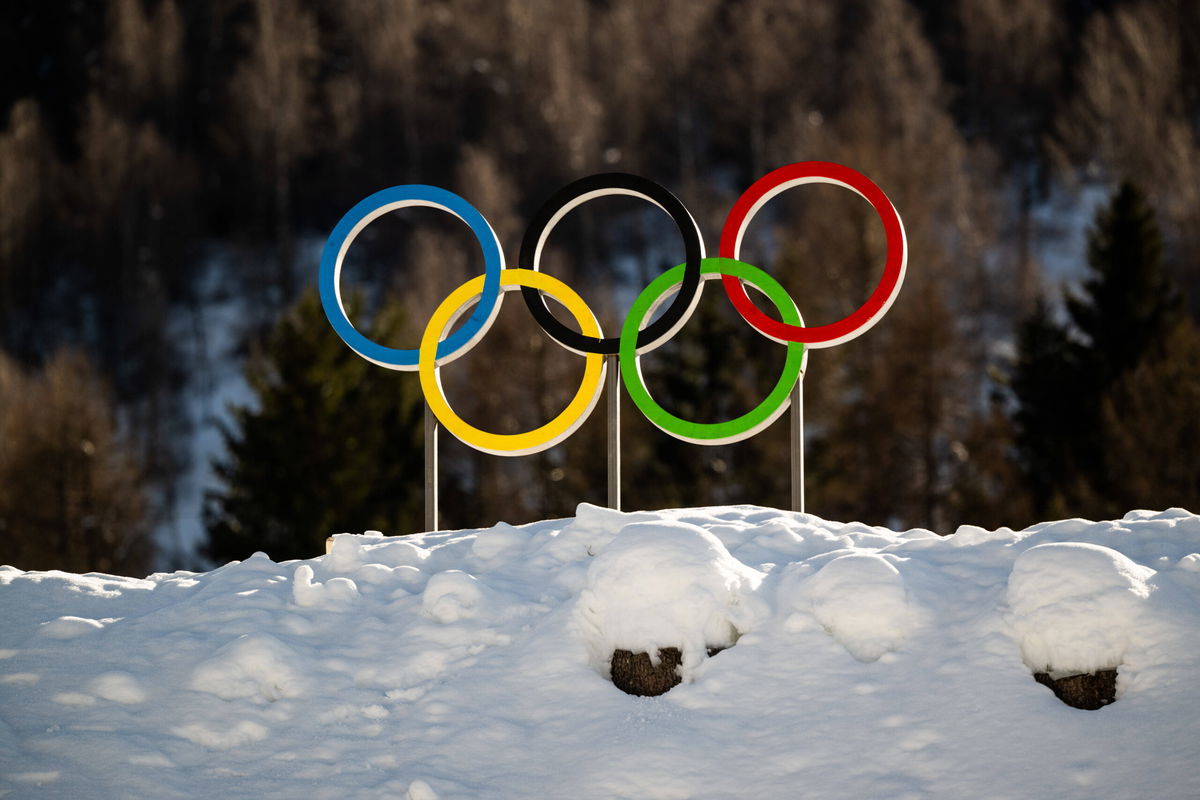
260201 The Olympic Rings are seen at Tesero Cross Country Stadium during day -5 of the 2026 Winter Olympics on February 1, 2026 in Tesero. Photo: Mathias Bergeld / BILDBYRAN / kod MB / MB1289 skidor cross-country skiing langrenn Olympic Games, Olympische Spiele, Olympia, OS olympics winter olympics os ol olympiska spel vinter-os olympiske leker milano cortina 2026 milan cortina 2026 milano cortina 2026 olympic games milano cortina 2026 winter olympic games milano cortina-os milano cortina-ol vinter-ol -5 bbeng Tesero Cross Country Stadium genre os-ringar os-ringarna olympic rings *** 260201 The Olympic Rings are seen at Tesero Cross Country Stadium during day 5 of the 2026 Winter Olympics on February 1, 2026 in Tesero Photo Mathias Bergeld BILDBYRAN kod MB MB1289 skidor cross country skiing langrenn olympic games olympics winter olympics os ol olympiska spel vinter os olympiske leker milano cortina 2026 milan cortina 2026 milano cortina 2026 olympic games milano cortina 2026 winter olympic games milano cortina os milano cortina ol vinter ol 5 bbeng Tesero Cross Country Stadium genre os ringar os ringarna olympic rings PUBLICATIONxNOTxINxSWExNORxFINxDEN Copyright: MATHIASxBERGELD BB260201MB020
Imago
260201 The Olympic Rings are seen at Tesero Cross Country Stadium during day -5 of the 2026 Winter Olympics on February 1, 2026 in Tesero. Photo: Mathias Bergeld / BILDBYRAN / kod MB / MB1289 skidor cross-country skiing langrenn Olympic Games, Olympische Spiele, Olympia, OS olympics winter olympics os ol olympiska spel vinter-os olympiske leker milano cortina 2026 milan cortina 2026 milano cortina 2026 olympic games milano cortina 2026 winter olympic games milano cortina-os milano cortina-ol vinter-ol -5 bbeng Tesero Cross Country Stadium genre os-ringar os-ringarna olympic rings *** 260201 The Olympic Rings are seen at Tesero Cross Country Stadium during day 5 of the 2026 Winter Olympics on February 1, 2026 in Tesero Photo Mathias Bergeld BILDBYRAN kod MB MB1289 skidor cross country skiing langrenn olympic games olympics winter olympics os ol olympiska spel vinter os olympiske leker milano cortina 2026 milan cortina 2026 milano cortina 2026 olympic games milano cortina 2026 winter olympic games milano cortina os milano cortina ol vinter ol 5 bbeng Tesero Cross Country Stadium genre os ringar os ringarna olympic rings PUBLICATIONxNOTxINxSWExNORxFINxDEN Copyright: MATHIASxBERGELD BB260201MB020
The International Olympic Committee announced on Tuesday that it is provisionally lifting its suspension on the Russian Olympic Committee (ROC), removing restrictions on Russian nationals competing in the 2028 Games in Los Angeles.
Watch What’s Trending Now!
The decision, confirmed by IOC President Kirsty Coventry, came after the IOC’s Legal Affairs Commission found the ROC no longer includes regional sports organizations in territories in the jurisdiction of Ukraine’s National Olympic Committee. There was a swift reaction against it.
“It doesn’t smell right,” Rob Koehler, Director General of Global Athlete, said. “It doesn’t feel right, and it’s simply not right for every athlete out there.”
He pushed back directly on the IOC’s long-held position that sport and politics can be kept separate. “That’s pure rhetoric. Russia is run by the government. Their sport is totally run by the government. The athletes train in government venues, so there’s no separation between sport and politics. The IOC uses that only to serve what they want to do.”
The Foreign Ministry of Ukraine saw it as a “troubling” development for the international community. Ukrainian athlete Vladyslav Heraskevych, who became the face of the Milano Cortina Games after being banned for wearing a helmet honoring athletes who lost their lives, called for a coalition of national Olympic committees to fight the decision.
“We have shelling just every other day in Ukraine,” he said on As It Happens. “And today we have a day of mourning because a lot of victims were killed in a previous attack. And to see that Russian flags are now welcomed again, once again by the IOC — it’s absolutely shameful.”
“Director General of the Global Athlete, Rob Koehler, says many athletes are appalled.
“It doesn’t smell right. It doesn’t feel right, and it’s simply not right for every athlete out there.” @RobKoehler2 with @SBSNews @iocmedia https://t.co/b13SYEOwHr— Global Athlete (@GlobalAthleteHQ) July 8, 2026
The suspension had been in place since October 2023, after Russia seemingly incorporated regional sports councils from occupied regions of Ukraine as part of the ROC, violating the Olympic Charter.
“We wanted to ensure all athletes have the possibility to compete at the Olympic Games and not be held responsible for their government’s actions,” Coventry said, adding that the IOC “does not condone any violence and war around the world.”
Russia has not appeared in full strength at any Olympic Games since Rio 2016. It was first banned in 2017 for state-sponsored doping and then had its competition further reduced after invading Ukraine in 2022. The doping cloud, in particular, has never fully dissipated.
Russia deployed a state-directed system that would conduct doping, including a sample-swapping operation at the 2014 Sochi Winter Olympics. Russian authorities have always denied the existence of any state-sponsored programme. After the McLaren report was released, the World Anti-Doping Agency (WADA) imposed a four-year ban in 2019, which was later brought down to two years by the Court of Arbitration for Sport.
The IOC announced that Russian athletes will undergo multiple tests and must be included in a recognized testing program before they can compete internationally again.
World Athletics refuses to follow the IOC’s lead on Russian athletes
Not all the doors have reopened after the IOC’s decision. Four days before the announcement, World Athletics reaffirmed its own blanket ban on Russian and Belarusian athletes, officials, and support staff from all competitions under its jurisdiction. World Athletics President Sebastian Coe said the original decision remains in place “with no tangible movement towards peace negotiations having materialized.”
Reuters
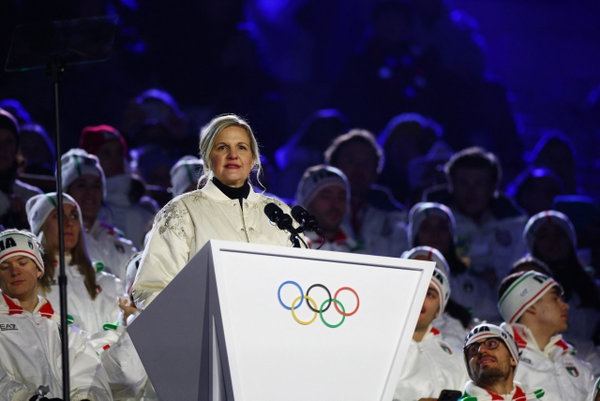
[US, Mexico & Canada customers only] Feb 22, 2026; Verona, Italy; IOC President Kirsty Coventry delivers a speech in the Closing Ceremony of the Milano Cortina 2026 Olympic Winter Games at Verona Olympic Arena. Mandatory Credit: Guglielmo Mangiapane/Reuters via Imagn Images
The IOC said a decision about the display of the Russian flag, anthem, or national colors at the Games has yet to be made and will be reviewed at the appropriate time. The next test arrives soon: the Youth Summer Games 2026 in Senegal’s capital of Dakar, which is set to begin on October 31. This will be the first place where Russia is to be reintegrated.
Written by

Edited by

Afreen Kabir