
Los Angeles is not waiting for the Olympic spotlight to arrive before changing the way its residents move. With LA28 now less than two years away, one of the city’s busiest corridors is set for a $339 million transformation that could reshape daily travel long after the Games are over.
Watch What’s Trending Now!
Vermont Avenue is at the center of that change. The 12.4-mile stretch from Sunset Boulevard to 120th Street is being rebuilt as a Bus Rapid Transit corridor, with dedicated bus lanes, upgraded stations and pedestrian improvements designed to make one of LA’s most heavily used routes faster and more reliable.
The project recently received a major boost, with $149.9 million in federal funding through the Federal Transit Administration’s Capital Investment Grant Small Starts Program. Combined with funding from Measure M, the total investment will reach roughly $339.1 million.
Construction is expected to begin in late 2026 or early 2027, while Metro is targeting an opening before the 2028 Olympic and Paralympic Games. That’s significant for a corridor already carrying around 36,000 transit trips every day. Once the BRT system is running, that number could climb to approximately 66,000.
And commuters could feel the difference immediately. A journey that currently takes about 70 minutes is expected to drop to roughly 53 minutes.
The new system will feature 26 stations in both directions, complete with platforms, shelters, seating, lighting, and real-time arrival information. All-door boarding should further reduce the time buses spend waiting at stops.
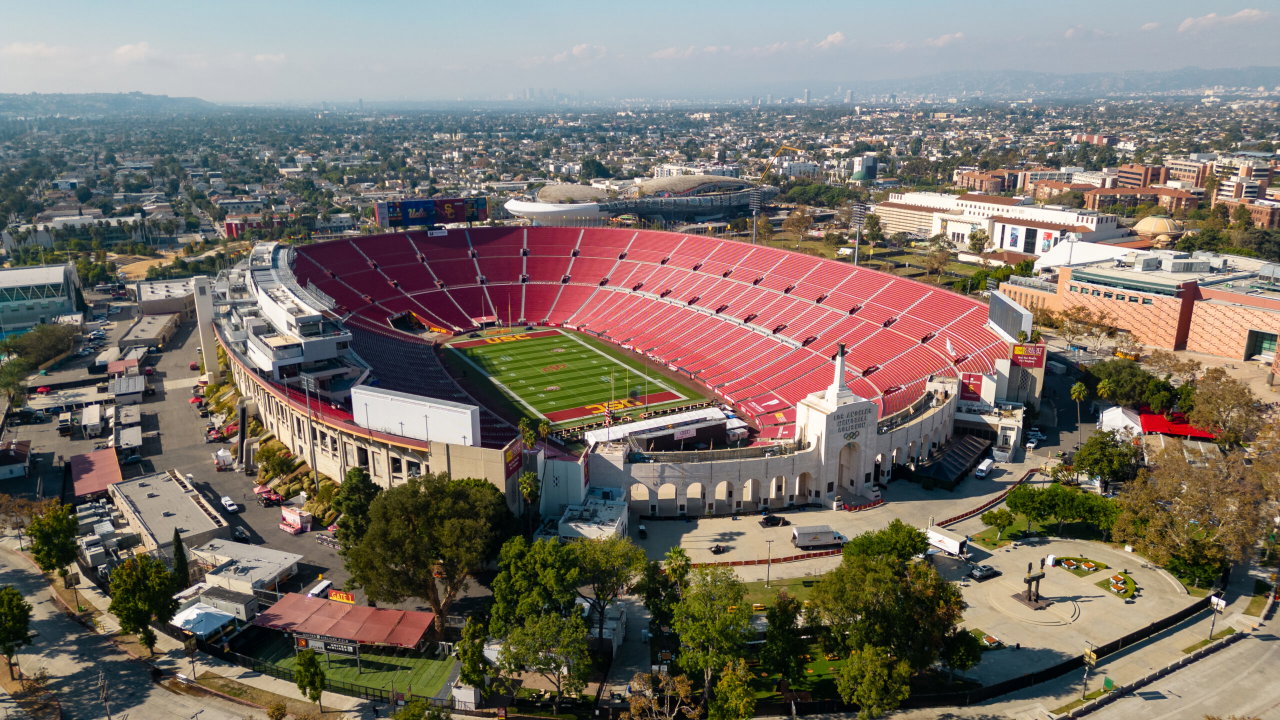
More importantly, Vermont Avenue sits right in the middle of LA’s Olympic geography. The corridor connects with the B and D Lines, E Line and C Line, as well as several east-west bus routes. It also runs past Los Angeles City College, Exposition Park, USC, Children’s Hospital Los Angeles and the Los Angeles Memorial Coliseum.
While the Vermont project is a long-term investment, LA28 has another transportation challenge to solve: moving athletes, officials and spectators through a city famous for its traffic.
California officials are developing a Games Route Network covering about 369 miles of roads, including freeways and local streets. Permit-only lanes will give Olympic and Paralympic vehicles priority as athletes travel between the UCLA Olympic Village and competition venues.
The idea is simple… keep Games traffic moving without bringing the rest of Los Angeles to a standstill.
Metro expects the Olympics could generate roughly one million additional trips every day. To handle that surge, it is preparing an enhanced transit network featuring additional buses and shuttles, park-and-ride facilities, and connections between rail stations and venues.
But LA28’s transportation plan is only one piece of a much larger experiment…
LA28 is betting on reuse, not new construction
Unlike many recent Olympic hosts, Los Angeles is not planning a wave of permanent stadium construction. Instead, LA28 is leaning heavily on venues that already define the city.
The Los Angeles Memorial Coliseum and Rose Bowl are both preparing to host Olympic events for a third time. The Coliseum will once again welcome athletics, while Santa Anita Park will bring equestrian sport back to a venue that hosted the discipline at LA84.
That philosophy extends beyond stadiums. LA28’s sustainability plan calls for temporary infrastructure wherever possible, with at least 90% of overlay materials intended for reuse or recycling. Organizers have also committed to purchasing renewable electricity for Olympic venues.
The Games are also being positioned as an opportunity to strengthen Los Angeles itself…
Through its Resilience Champions initiative, LA28 is supporting projects involving wildfire resilience, nature restoration, ocean protection and cooling solutions. Grants have already backed projects such as transforming a Boyle Heights basketball court into a shaded cooling space and planting a native micro-forest near the Olympic Village.
Then there is the sporting legacy.
PlayLA, a partnership between LA28 and the City of Los Angeles, has recorded more than a million enrollments across more than 40 sports. With up to $160 million in backing from the IOC and LA28, the initiative is introducing children to Olympic and Paralympic sports… including adaptive programs, before the Games even begin.
And the sporting spectacle itself will look different. LA28 will feature 36 sports and 353 medal events, with baseball/softball and lacrosse returning alongside cricket, while flag football and squash make their Olympic debuts. For the first time, the women’s football tournament will also have more teams than the men’s.
The message is clear: LA28 is trying to make the Olympics feel less like a temporary visitor and more like an investment in the city.
If the $339 million Vermont Avenue project is any indication, the real test won’t end when the final medals are awarded. Los Angeles wants its biggest Olympic legacy to be something residents can use every day.