Imago
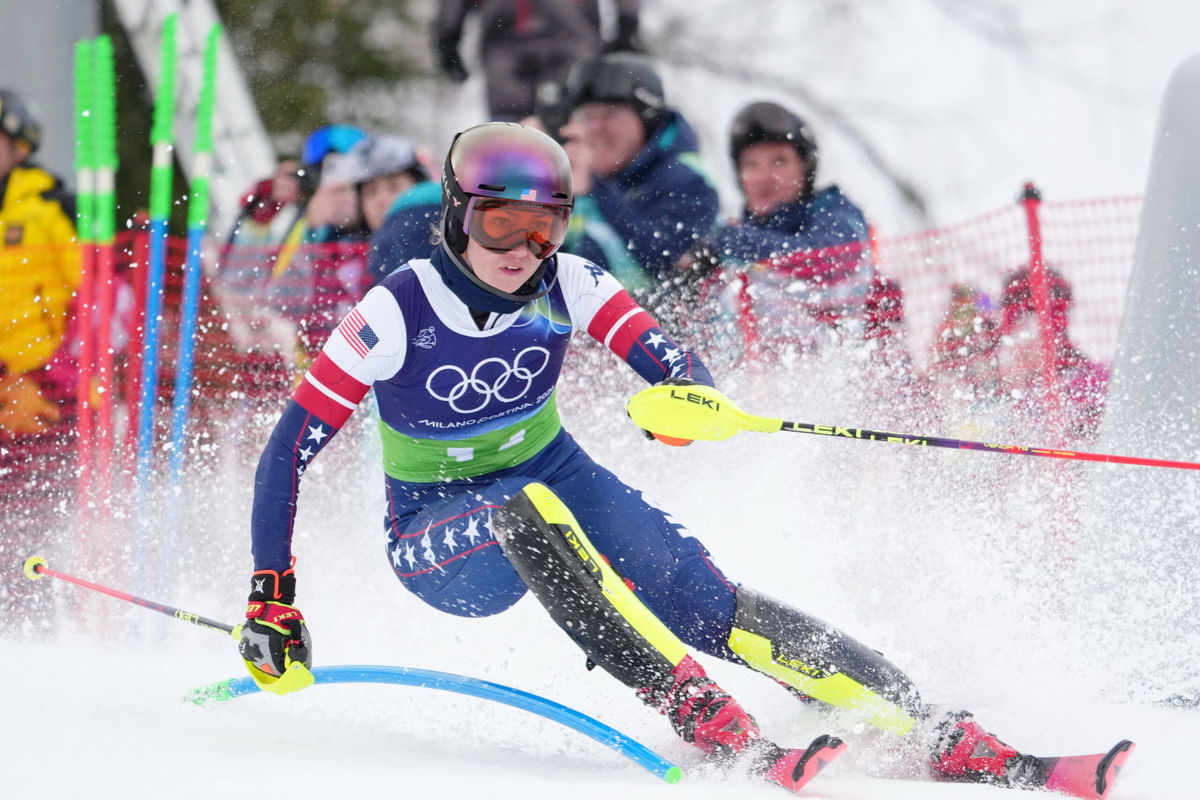
Olympics: Alpine Skiing-Womens Team Combined Feb 10, 2026 Cortina d Ampezzo, Italy Mikaela Shiffrin of the United States during alpine skiing women s team combined during the Milano Cortina 2026 Olympic Winter games, Winterspiele,Spiele, Summer games at Tofane Alpine Skiing Centre. Cortina d Ampezzo Tofane Alpine Skiing Centre Italy, EDITORIAL USE ONLY PUBLICATIONxINxGERxSUIxAUTxONLY Copyright: xEricxBoltex 20260210_jcd_bb5_0164
Imago
Olympics: Alpine Skiing-Womens Team Combined Feb 10, 2026 Cortina d Ampezzo, Italy Mikaela Shiffrin of the United States during alpine skiing women s team combined during the Milano Cortina 2026 Olympic Winter games, Winterspiele,Spiele, Summer games at Tofane Alpine Skiing Centre. Cortina d Ampezzo Tofane Alpine Skiing Centre Italy, EDITORIAL USE ONLY PUBLICATIONxINxGERxSUIxAUTxONLY Copyright: xEricxBoltex 20260210_jcd_bb5_0164
After missing out on the 2022 Beijing Olympics and finishing without a medal, Shiffrin is back in Milan with a goal in mind. Regarded as the greatest alpine skier of all time, Shiffrin holds three Olympic medals, of which two are gold. This time, she is looking forward to being the most decorated American Olympic alpine skier by another gold medal to her collection.


Today, Shiffrin made her debut in the Olympic premiere of the Team Combined event. She got paired with a recent gold medalist in the downhill event, Breezy Johnson. However, the road to redemption isn’t easy for Shiffrin. Before being in a place like this, the 30-year-old had encountered a different phase of her life. Let’s know more about it.
Watch What’s Trending Now!
A forgetful phase in Mikaela Shiffrin’s career? All to know about the downfall.
Mikaela Shiffrin had her moments when the world was falling apart for her. And that phase went on for quite some time. The 2022 Beijing Olympics were just the start of it, to be very honest. She recorded a Did Not Finish (DNF) in her two strongest events, the Giant Slalom and Slalom. She crashed out within seconds of starting her opening runs.
It was the first time in her Olympic career that Shiffrin competed in six events and failed to win a single medal. Some reasons for it lean on the outside factors. The made-up snow in Beijing was very hard and slick. In the Giant Slalom, she failed to hold the edge of her ski on the icy surface. That, in turn, caused her to fall on her left hip just five turns in.
In the Slalom, she slipped on the fourth gate and missed the fifth, ending her run in five seconds. But then came the mental toll. The timing of the Beijing Olympics fell right on her father, Jeff Shiffrin’s two-year death anniversary. She later admitted she was having a real bad time to help process the “unpredictable, nonlinear” grief while trying to “power through” the events.
Then, just weeks before the games even started, Shiffrin fell under the claws of COVID-19. It ruined her training and left her with painful physical restraints during competition. After so many setbacks, an athlete like her often loses the mental calmness required to fight adversity. So that’s why Shiffrin began working with a sports psychologist to process her grief and manage the “fear of disappointment” that had developed.
And there is a reason for this new development. Mikaela Shiffrin got hit with a major injury. During a World Cup Giant Slalom run in Killington, Vermont, Shiffrin lost her edge on a high-speed turn. She herself jumped into the safety netting, but her own ski, which had a sharp edge, sliced her abdomen. She suffered an abdominal puncture wound and severe internal bruising.
While it didn’t require major surgery, the nature of the injury was “intimate” and terrifying. After that incident, Shiffrin was shaken to the core. Almost every time, she got pre-race jitters that went on to become a hindrance to her career. For instance, when she needed to take a particular turn or regulate the speed that reminded her of that crash, Shiffrin used to freeze.
Her brain would send a signal to her muscles to “brace” or “back off” by a fraction of a second. Doctors and sports psychologists diagnosed her with a form of Post-Traumatic Stress Disorder (PTSD) specifically linked to the mechanics of downhill racing. But this problem didn’t stick with her for too long.
How did she overcome this? Inspiration, strength, and power behind her comeback
The road to recovery was indeed difficult, but Mikaela Shiffrin isn’t the one to lose hope. She met with a sports psychologist, who helped her recognize the diagnosis required for the issue, and Shiffrin worked on these thoroughly.
To “re-map” her brain, she used a step-by-step approach she called exposure therapy. She started on very flat, slow turns to prove to her nervous system that she was on a safe and familiar surface. And then gradually she increased the steepness and ice levels to make her brain adapt to high-speed turns.
“The last few days of training, I’ve been able to take on the speed and the tempo of a course a bit better,” Shiffrin said. “I’ve had some training days going really fast and I’ve had training days where I’m not so fast, but all within reason.”
Then there’s the Eye Movement Desensitization and Reprocessing (EMDR). Like many athletes dealing with issues like this, she utilized therapy methods designed to help the brain “file away” the memory of the crash as a past event. All these things took months before she could actually get ready. It wasn’t until the end of the 2024-25 season that she felt she had “reclaimed her body.” And the aftermath? Complete dominance!
On February 23, 2025, Shiffrin became the first alpine skier in history to reach 100 World Cup victories in Sestriere, Italy. She won over her fear by winning seven out of eight slalom races, bringing her career total to 108 victories before the 2026 Olympic Games began. Then last month, by winning her ninth Crystal Globe, she etched her name with a record for the most discipline titles won by any individual athlete.
Written by

Edited by

Aatreyi Sarkar