
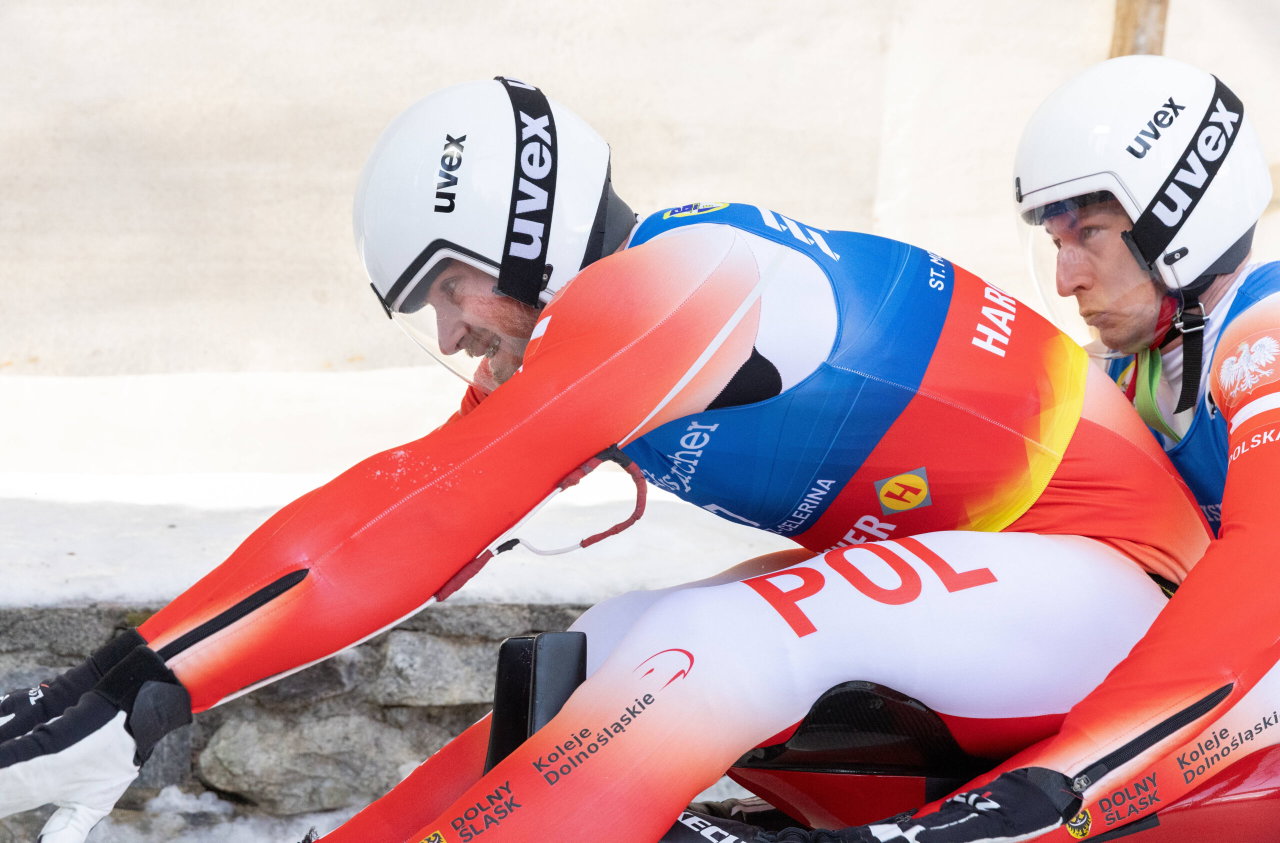
Poland’s once-proud luge program is facing another damaging setback. Instead of addressing athletes’ concerns over training conditions and equipment shortages, the national federation has suspended three Olympians and plans to seek the withdrawal of their stipends. The decision has raised fresh questions about the sport’s future.
Watch What’s Trending Now!
The latest controversy centers on Wojciech Chmielewski, Michał Gancarczyk, and Klaudia Domaradzka. Tomasz Kalemba, an experienced Polish sports journalist, criticized the decision. “Such news is very distressing. The Polish luge is slowly ceasing to exist. Following Sochowicz’s resignation, the national team members Chmielewski, Gancarczyk, and Domaradzka have now been suspended. Where is this sport heading, and why are its officials destroying it so thoroughly? And once we were a powerhouse,” he wrote on X.
His warning reflects a program struggling with funding and facilities. Poland has competed in Olympic luge since the sport’s debut at the 1964 Winter Games, but its athletes have never had a permanent ice track at home. They have relied on overseas venues, ice rinks, and start towers, while equipment shortages have compounded the problem.
The infrastructure crisis deepened when federation officials rejected a proposed training track in Karpacz, arguing investment should go elsewhere. Following the 2026 Winter Olympics, the Ministry of Sport announced support for the project, raising hopes of better facilities. Reports say federation officials criticized the coach for promoting the plan and argued that investment should go elsewhere.
Even Polish journalist Jakub Pobożniak reported that the Polish Luge Association (PZSSan) suspended the three after they wrote to the federation about safety concerns at a training camp in Lillehammer. It is also seeking to withdraw its scholarships.
The suspensions stemmed from a training camp dispute over missing equipment. According to reports, coach Dawid Kupczyk arrived without runners and metal components, required for track training. The athletes had only equipment for practicing starts, yet were reportedly pressured to carry out start training on the track, putting their safety at risk.
There was another concern. One person at the camp reportedly had a medical certificate declaring them unfit for sport, and the athletes intervened to prevent their participation.
The athletes eventually sent letters to the federation, describing what had happened and asking for a response. The association reportedly suspended them for refusing to participate in training activities and said it would ask the Sports Ministry to revoke their scholarships.
Polish athletes have continued to compete despite those limitations. The women’s doubles team finished sixth at the 2026 Games, while Domaradzka placed 23rd in the women’s singles and helped Poland finish eighth in the mixed team relay. The results underline the challenge of competing without the infrastructure available to many rivals. And these suspensions follow another setback.
A couple of months ago, Mateusz Sochowicz announced his retirement
Three-time Polish Olympian Mateusz Sochowicz retired at 30 after competing at the 2018, 2022, and 2026 Winter Games. In an Instagram message, he called luge the greatest love of his life and said he had devoted half his life to the sport. He treasured the friendships it brought him but admitted he had never managed to show his best form at the Olympics.
His departure alarmed supporters. Sportowy Rytm Dnia criticized the state of the federation and warned that Poland risked disappearing from the international luge map.
The three suspended athletes are now facing uncertainty of their own. Chmielewski has competed at three Olympics, Gancarczyk made his debut in 2026, and Domaradzka has represented Poland at the last two Winter Games.
There is a potential path forward. On September 30, 2026, the TOR NA MEDAL Foundation was launched at the Warsaw School of Economics. It aims to support the construction of Poland’s first modern, artificially refrigerated track for luge, bobsleigh, and skeleton at Mount Iwonka in Krynica-Zdrój. Its public fundraising campaign is seeking support from fans, businesses, local authorities, and the wider community.
International Luge Federation president Einars Fogelis welcomed the project, saying a track represents a promise to the next generation. A home facility could introduce children to sliding sports and give elite athletes a place to train domestically.
Yet infrastructure alone will not solve the crisis. Polish luge also needs dependable equipment, stable financial support, and a federation that takes athletes’ safety concerns seriously. The new foundation offers hope for the sport’s long-term future. Whether the current generation will receive the support it needs to remain part of that future is now the pressing question.