
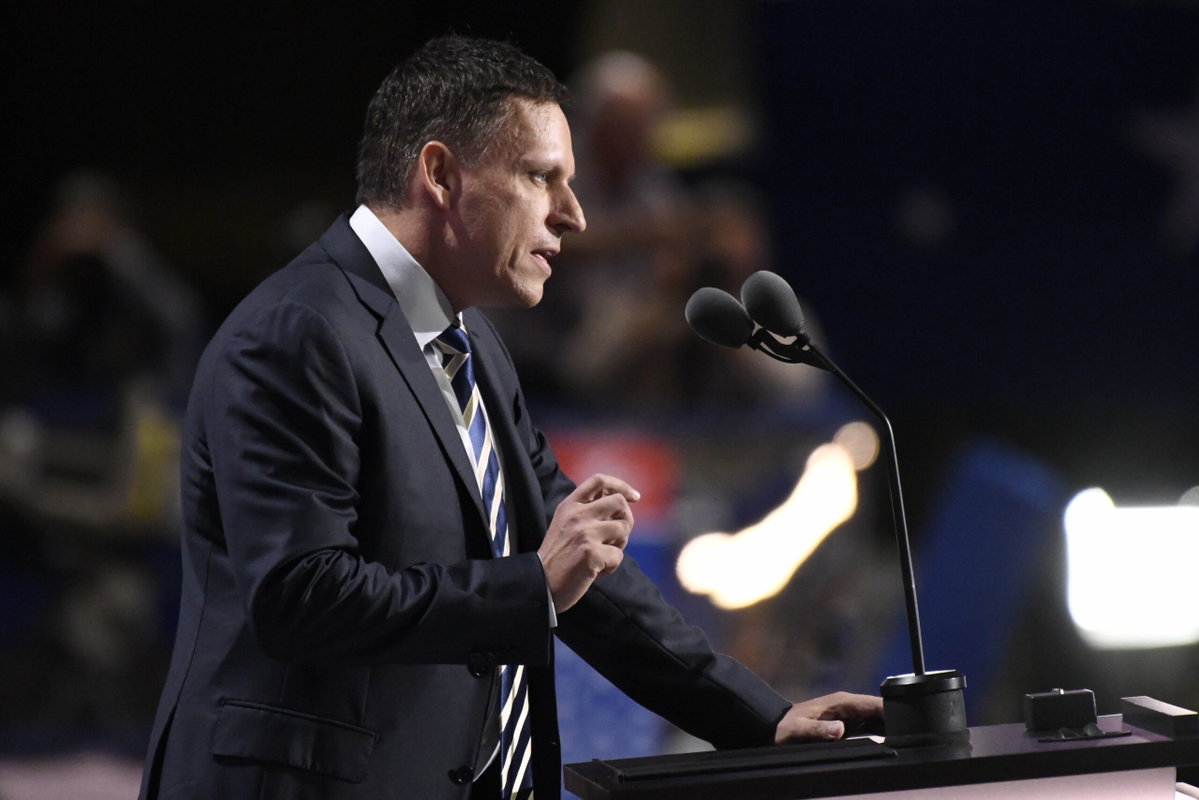
The Enhanced Games carried the vision of being the future of sport. To support that, it attracted major Silicon Valley investors such as Peter Thiel, Christian Angermayer, and Balaji Srinivasan in its funding rounds. In fact, it was rumored that the company had reached a valuation of around $1.2 billion before even staging its first full competition. However, when the event finally opened in Las Vegas, the futuristic vision did not last long.
Watch What’s Trending Now!
The Enhanced Games were streamed live on May 24 on YouTube, Roku, Twitch, Kick, and Rumble. The opening event, the women’s snatch, aired on the official YouTube channel and already had more than 34,000 viewers when it began. But then, things quickly went downhill. The first athlete of the Games, Beatriz Piron, attempted a 100 kg lift and came very close to setting a world record.
However, as soon as the competition began to gain traction, the livestream broke down, freezing after just one full attempt. Within seconds, the live chat descended into chaos. Viewers were confused, angry, and already joking about the situation. Many initially assumed it was a YouTube issue, but after checking multiple platforms, fans realized the stream appeared to be down almost everywhere. And one fan even commented, “I expected a better production team for this.”
Eventually, the broadcast displayed a message saying: “TECHNICAL DIFFICULTIES. STANDBY PLEASE.”
And unfortunately for the organizers, the timing could not have been worse, as this was not some random moment in the middle of the event.
WR for the longest snatch ever. She’s been like this for 5+ minutes. #EnhancedGames


Enhanced Games is frozen on Rumble. Sick.
This was the very first competition of the very first Enhanced Games. While the stream remained offline for roughly eight minutes, the women’s snatch event continued completely off-camera inside the arena.
By 6:46 ET, online frustration was already on the rise, with YouTube’s viewership falling below 23,000. But what made things even messier was the growing speculation that Maryam Usman may have broken a women’s snatch world record during the outage.
Finally, around 6:50 ET, the livestream returned. But fans quickly noticed another problem. The production did not replay the missed lifts. There was no major on-air apology either. Instead, the broadcast simply continued moving forward through the schedule before later shifting into the men’s events.
As the production team worked to get back on track, Kurt Mills Hanson was brought onto the desk to serve as the Enhanced Games’ swimming analyst, alongside Emmanuel Acho and Abby Labar. To the organizers’ credit, the audience eventually recovered. Around 6:59 ET, once the stream appeared stable again, YouTube viewership climbed back above 42,000 viewers. But the damage had already been done.
Internet roasts chaotic opening night of Enhanced Games
One fan wrote, “Love that the Enhanced Games feed went down before we even saw anyone ruin their body….” Another posted, “The Enhanced Games stream froze on YouTube,” while a third joked, “So far I have watched one almost accomplishment in the Enhanced Games and the livestream has already failed.”
The technical failure quickly became one of the biggest talking points surrounding the opening night of the controversial competition. For an event that spent months presenting itself as the future of sports entertainment, the production breakdown felt painfully ironic.
But the technical issues were not the only thing viewers noticed.
The venue itself was a custom-built multi-sport arena inside Resorts World Las Vegas, and once cameras began panning across the facility, many viewers pointed out the visibly empty seats scattered throughout the arena.
It is fair to say that the organizers had previously made a point of clarifying that the venue was never intended to resemble a packed Olympic-sized stadium. Instead, only around 2,500 people were expected to attend. The focus was always on digital broadcasting and livestream reach rather than filling a massive venue. However, the unfortunate gaffe was far from an ideal start for the first-ever Enhanced Games, which had already faced criticism for its stance on performance-enhancing dr-gs.
Another frustrated viewer wrote, “Enhanced Games has basically no volume, and their stream has been frozen for a few minutes. What a disaster.” One more added: “Enhanced Games is frozen on Rumble. Sick.”
However, the primary frustration that’s been raised about the Enhanced Games is far more serious than technical troubles. The core idea of the event has always been controversial. The use of certain performance enhancers is also open, as long as the athlete is under a doctor’s supervision, immediately drawing criticism from anti-doping officials, doctors, sports celebrities, and sports fans everywhere.
Well, the Games have been criticized for making dr-gs acceptable at the highest level of sport. In a public warning, the WADA emphasized that the competition could spur unsafe enhancement practices among young people and among professional athletes. USADA CEO Travis Tygart allegedly called the project a “dangerous clown show.”
Doctors have also raised doubts about the concept of safe enhancement itself.
“There’s simply no way to make the use of these dr-gs safe by medical monitoring in the short and long term,” Dr. Aaron Baggish, the professor of medicine, said.
However, on opening night, many online debates were not about sports ethics, science, or athletic performance. Instead, social media spent hours reacting to frozen livestreams, missed lifts, and the awkwardness of one of the world’s biggest sporting events, marketed as the future of sports, failing to broadcast itself online.