Imago
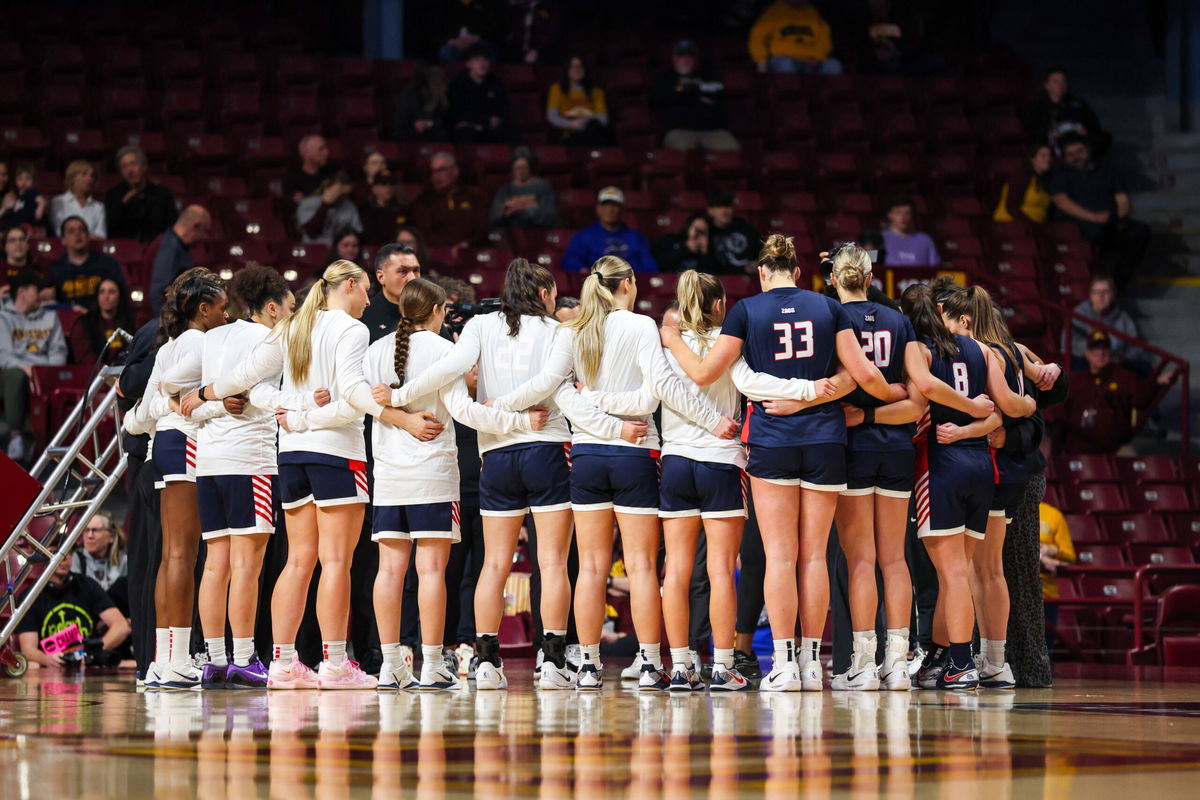
2026 NCAA, College League, USA Women s Basketball Tournament – First Round – Minneapolis The Gonzaga Bulldogs huddle before the first half of a first-round game of the 2026 NCAA Women s Basketball Tournament against the Ole Miss Rebels at Williams Arena in Minneapolis, Minnesota, on March 20, 2026. Minneapolis Minnesota USA PUBLICATIONxNOTxINxFRA Copyright: xStevenxGarciax originalFilename:garcia-2026ncaa260320_np9xe.jpg
Imago
2026 NCAA, College League, USA Women s Basketball Tournament – First Round – Minneapolis The Gonzaga Bulldogs huddle before the first half of a first-round game of the 2026 NCAA Women s Basketball Tournament against the Ole Miss Rebels at Williams Arena in Minneapolis, Minnesota, on March 20, 2026. Minneapolis Minnesota USA PUBLICATIONxNOTxINxFRA Copyright: xStevenxGarciax originalFilename:garcia-2026ncaa260320_np9xe.jpg
The International Olympic Committee (IOC) has shown it’s not backing down, especially with the LA 2028 Olympics just over two years away. Thus, to promote fairness and protect women’s events, the IOC announced that only athletes confirmed to be biological females will be allowed to compete in women’s events. That essentially bars transgender women from participating, and in light of that, several members of the NCAA have asked the governing body to do the same.


Leading that discussion is former NCAA athlete and co-founder of the Independent Council on Women’s Sports, Kim Jones, who encouraged the governing body to follow suit.
Watch What’s Trending Now!
“I absolutely call upon the NCAA to follow suit,” former NCAA athlete Kim Jones said, as per the NY Post.
“Women and girls’ sports need to be protected at every level. I’m just very hopeful that this [IOC decision] will have a trickle-down effect to protect women and girls at all ages and levels. We all deserve this.”
“The NCAA policy as it stands right now is not effective by itself. It actually does not define sex,” she added. “It alludes to protecting women on the basis of birth certificates. That still grants men access to women’s teams, to women’s scholarships, and to being part of those environments — training, coaching, everything.”
At the moment, the NCAA bans transgender women, i.e., athletes assigned male at birth, from competing in women’s sports. However, under NCAA rules, transgender athletes may practise with women’s teams and use the benefits available to them. This includes scholarships, training, and coaching as well as access to women’s teams.
Imago
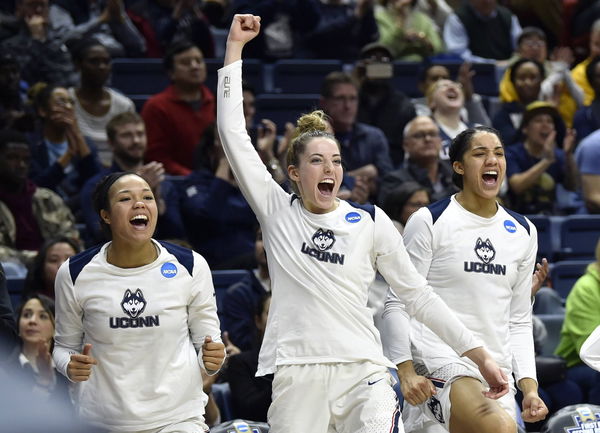
March 17, 2018 – Storrs, CT, USA – From left, Connecticut s Napheesa Collier, Katie Lou Samuelson and Gabby Williams celebrate from the bench in the first round of the NCAA College League USA Tournament against St. Francis (PA) at Gampel Pavilion in Storrs, Conn., on Saturday, March 17, 2018. UConn advanced, 140-52. NCAA Tournament: St. Francis at Connecticut – ZUMAm67_ 20180317_zaf_m67_003 Copyright: xBradxHorriganx
The same doesn’t apply to men, as it remains open to athletes regardless of gender identity. Riley Gaines, a college-level swimmer, and others have sued the NCAA in the past over an old policy that allowed transgender athletes to compete.
But despite the change in policy, more and more athletes want the governing body to take accountability. That is especially in light of the NCAA shifting the onus onto individual schools, as Marshi Smith attested.
“The NCAA has shifted oversight to individual schools, effectively avoiding responsibility,” Smith said, as per the NY Post. “The women harmed by the NCAA’s breach of federal law need to see justice; there must be real consequences and a price paid.”
“Schools like SJSU, Swarthmore, and RIT, among others, have already shown they will prioritize male athletes in women’s sports over the rights of their female athletes. Leaving enforcement to individual institutions with this track record is unacceptable.”
A former NCAA & PAC-10 Champion swimmer, Smith runs the Independent Council on Women’s Sports alongside Jones. That is an advocacy group for current and former college and professional women athletes, intending to protect their events. As per the NY Post, the group opposes the inclusion of transgender athletes in women’s sports as their aim is “to promote and protect women’s sports”.
The two former NCAA athletes aren’t the only ones advocating for the governing body to make the change, as current athletes have joined the queue as well. Among them is Kaylie Ray, an NCAA volleyball player, who was happy with the IOC’s decision and hopes the NCAA can do the same.
NCAA athlete Kaylie Ray echoes Jones’ request to the NCAA
Echoing that sentiment, Ray also praised the IOC’s decision, though it applies only to the Olympics, not to grassroots or other divisions. Thus, while the NCAA has a policy in place, some athletes remain unhappy that the governing body did not adopt it sooner, especially given how many times others have sued it.
That didn’t go down well with Kaylie Ray, who urged the NCAA to follow suit in their own attempt to protect and serve their women athletes.
“An organization is finally standing up to say that women matter — their hopes and dreams, their ability to push themselves and pursue excellence on a safe and level playing field — it matters. Now is the time for the NCAA to stand up and say the same,” Kaylie Ray, an NCAA volleyball player, told the Post.
“For the young women who work endlessly to reach the Olympic level, their protection matters too. For the girls who strive to compete at the collegiate level, their opportunities cannot be taken by men anymore.”
Thus, for now, the NCAA’s current policy remains in place, but growing calls from athletes and advocacy groups are mounting pressure on the governing body to follow the IOC’s lead.
Written by

Edited by

Firdows Matheen