
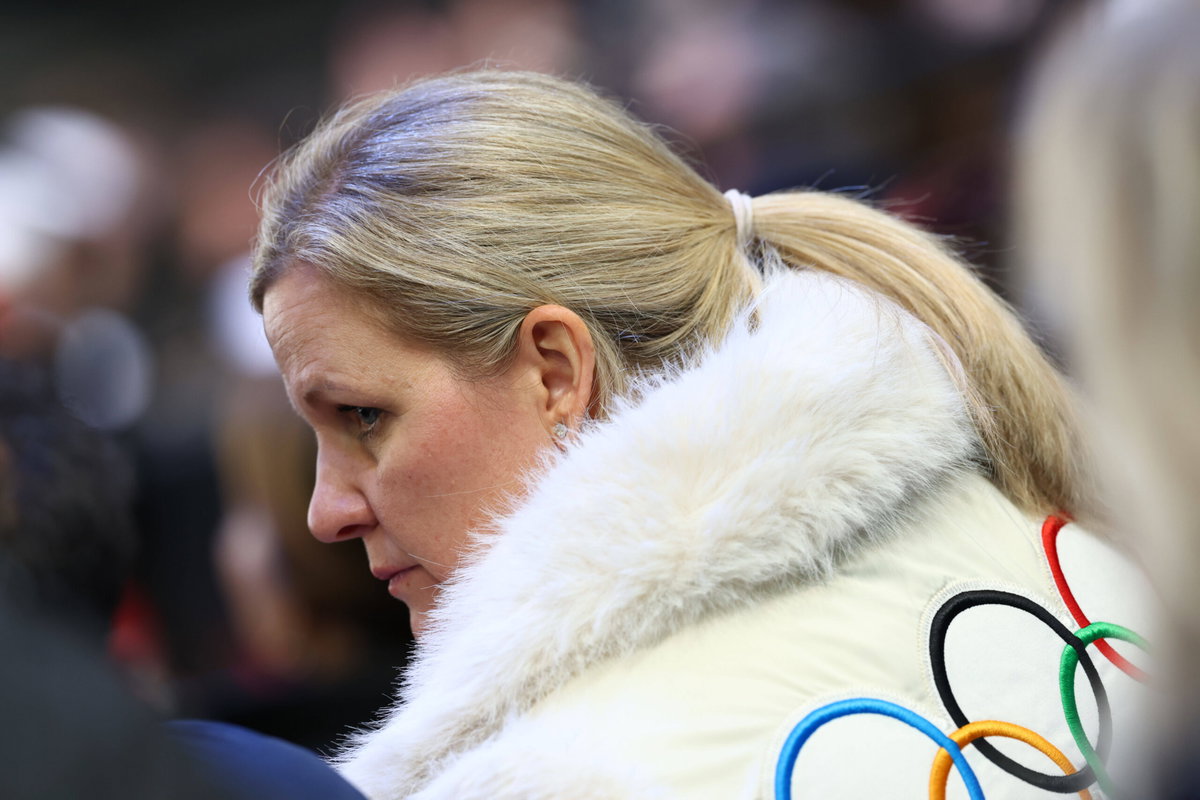
Kirsty Coventry is reshaping the International Olympic Committee, and her latest decision will change how some of its most sensitive issues are handled. With the Los Angeles 2028 Olympics approaching, the IOC president has announced the closure of 12 permanent committees, including those dealing with human rights and gender equality, in favor of smaller expert groups formed when needed.
Watch What’s Trending Now!
The move marks another significant shift under Coventry, who has increasingly turned to targeted working groups rather than relying on established commissions. However, with the changes affecting areas central to the Olympic Movement, the decision also raises questions about how the organization will address these issues going forward.
The IOC announced on October 16 that it would reduce its permanent committees from 31 to 19. The organization described the restructuring as a streamlining measure, explaining that ad hoc working groups would allow it to focus on specific priorities and policy decisions.
Previously, these commissions typically brought together between 10 and 30 members for annual meetings in Lausanne, Switzerland. Under the new approach, the IOC will assemble experts when a particular issue requires attention rather than maintain a permanent commission for every area.
Several prominent bodies will disappear under the changes. These include the Gender Equality, Diversity and Inclusion Commission and the Advisory Committee on Human Rights, which was chaired by former South African deputy president Phumzile Mlambo-Ngcuka. Commissions covering sustainability, technology, athletes’ entourage, and digital engagement will also be discontinued.
The restructuring does not mean these subjects will automatically disappear from the IOC’s agenda. Instead, Coventry’s organization intends to address them through smaller, issue-specific groups. How consistently those groups will engage with the affected areas remains an important question as the Olympic Movement prepares for its next major chapter.
Kirsty Coventry’s bold calls continue to reshape the IOC
Since taking charge, Coventry has shown a willingness to make consequential decisions rather than simply preserve existing structures. One of the clearest examples came in March 2026, when the IOC announced its new policy on eligibility for the female category at Olympic events.
The policy, which applies from the LA28 Games onward, limits eligibility for the female category to biological females, using one-time SRY gene screening as the primary method of determining eligibility, subject to specified exceptions. Coventry said the policy was designed to protect fairness and safety while emphasizing that athletes must be treated with dignity and respect.
The process surrounding that policy is particularly relevant to the latest restructuring. Rather than assigning the review to its existing Gender Equality, Diversity, and Inclusion Commission, the IOC used a separate expert panel whose membership was not made public. That commission is now among the 12 bodies being closed.
The sequence highlights Coventry’s preference for smaller groups when tackling major policy questions. However, it also makes the commission’s closure particularly notable: an established body responsible for gender-related matters was bypassed for a significant review before being included in the broader overhaul.
Coventry’s changes also fit into her wider push to adapt the Olympic Movement to a changing sporting landscape. At the SportAccord Forum in Lausanne on October 5, she called on international federations and other stakeholders to work together to implement the IOC’s Fit for the Future strategy, adopted in June 2026.
The strategy places emphasis on supporting athletes throughout their careers, protecting the distinct identity of the Olympic Games and clarifying responsibilities across the Olympic Movement. Coventry has also stressed the need to keep the Games sustainable for future hosts while preserving their appeal to athletes and fans.
That vision requires more than administrative changes. International federations, national Olympic committees, and other stakeholders will have a role in translating the IOC’s priorities into practical decisions. Coventry has made clear that the organization cannot achieve its objectives alone.
Her approach has also extended to the question of athlete compensation. While the IOC redistributes revenue through federations, organizing committees and development programs rather than directly paying Olympic athletes for participation or medals, Coventry has advocated finding more ways to support athletes throughout their journeys.
Together, these positions suggest a president focused on changing how the Olympic Movement operates, even when that means reconsidering established practices.
With LA28 drawing closer, the closure of 12 committees represents a substantial organizational change. Coventry is betting that smaller, targeted groups can help the IOC make decisions more efficiently. Whether that structure can deliver the necessary expertise and sustained attention on issues such as human rights and gender equality will be a key test of her leadership.