
The longstanding feud between the World Anti-Doping Agency and the US Anti-Doping Agency has come to the fore again as preparations continue for the LA28 Olympics. The incident over the Chinese swimmers’ doping case in 2024 has escalated to a political and governance tussle between U.S. lawmakers, the White House, and the IOC. Now, with WADA considering major reforms to the global anti-doping system, the debate has reached the Olympic movement itself.
Watch What’s Trending Now!
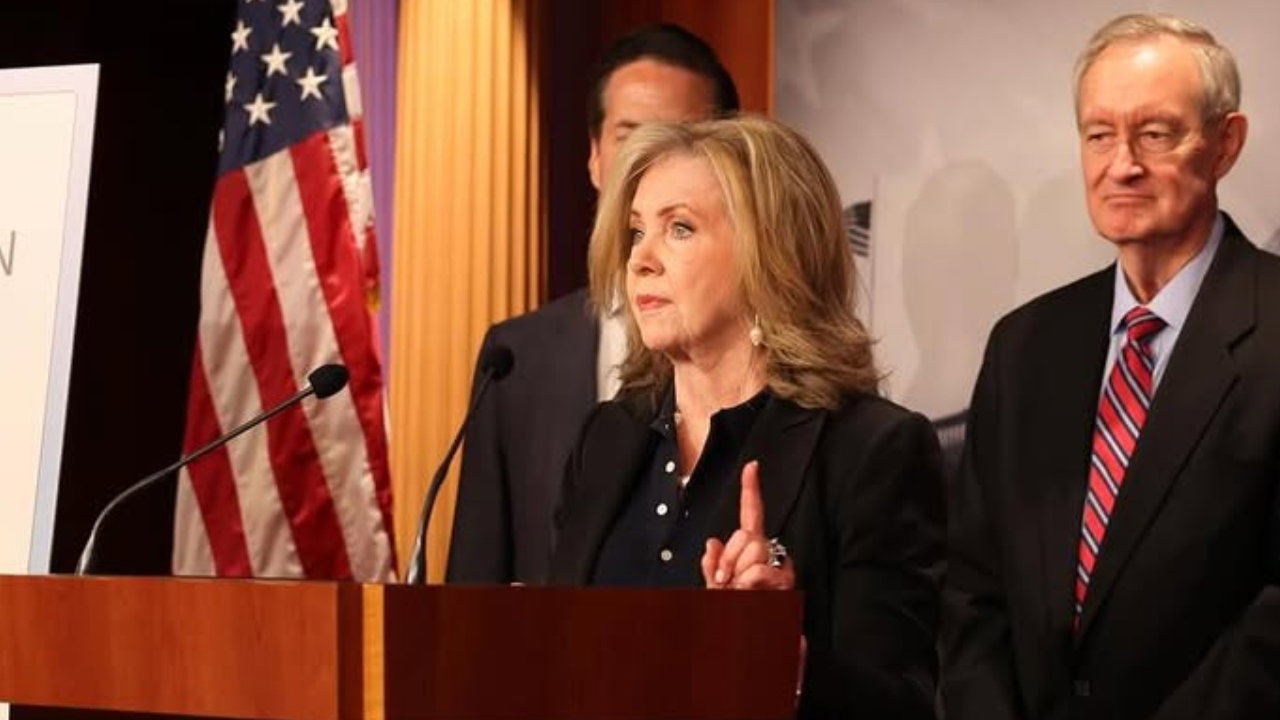
On July 28, Republican Senator Marsha Blackburn of Tennessee sent a letter to IOC President Kirsty Coventry requesting the organization’s support for the proposed changes to WADA. In the letter, Blackburn warned that the recommendations “could weaken the authority and effectiveness” of independent national antidoping organizations such as the USADA.
She also argued that the Olympic movement should focus on addressing anti-doping systems that “lack genuine independence from government authorities, national Olympic committees, or sport governing bodies,” rather than reducing the role of independent agencies.
The disagreement lies in 19 recommendations that WADA is considering for adoption in 2027. One of the proposals is to remove host national anti-doping agencies from the distribution of the Olympic tests, the selection of athletes to be tested, and the processing of the results of the tests at the major sporting events.
Blackburn argued that those ideas would take the opposite approach, especially as the U.S. will host the 2028 Olympics in Los Angeles. In her letter, she said that the integrity of global anti-doping is “most threatened when organizations responsible for testing and enforcement are subject to political influence or institutional conflicts of interest.” But Blackburn’s letter is not an isolated action.
In June, Sara Carter, director of the White House Office of National Drug Control Policy, also sent an open letter criticizing WADA’s proposed reforms, saying the United States rejected any effort to “diminish the role of operationally independent NADOs” in the global anti-doping system.
She cautioned against such diminishment, suggesting it “would undermine confidence in that system for Athletes and Governments.” Carter’s comments came as part of a general discontent in the United States over WADA’s handling of its investigations in the past, including the one that first brought the two organizations into conflict.
Dispute dates back to the Chinese swimmers case
This dispute between WADA and USADA heated up in April 2024, when 23 Chinese athletes tested positive for a banned substance, trimetazidine, before the Tokyo Olympics. At that time, the Chinese authorities said the positive tests were due to contamination, and WADA had accepted this without question. USADA’s chief executive, Travis Tygart, strongly condemned the change, stating that WADA had let down in protecting clean athletes.
Soon, the debate went beyond the sphere of sport. Earlier this year, President Donald Trump signed legislation continuing to withhold the United States’ annual contribution of approximately $3.6 million to WADA until governance reforms are made. Congressional leadership has also been pressing for more oversight of WADA’s work with the world anti-doping body; meanwhile, WADA has been fighting to uphold its own defense of the way that it handled the Chinese swimmers’ situation and its proposed governance changes.
In response to the criticism of the newly proposed recommendations, WADA told ESPN that the recommendations will aim to ‘strengthen overall anti-doping systems’, to increase athlete and stakeholder confidence and to “mitigate the risks arising from perceptions of bias and conflicts of interest.” The organization is gathering input from various sporting organizations and governments ahead of its Executive Committee meeting in Serbia in September, during which it will look at the proposals.
With LA28 becoming the center of the debate, the final decision on these reforms could shape how Olympic anti-doping operations are handled for years to come.