Imago
Credits via Facebook, @Ukraine Breaking News
Imago
Credits via Facebook, @Ukraine Breaking News
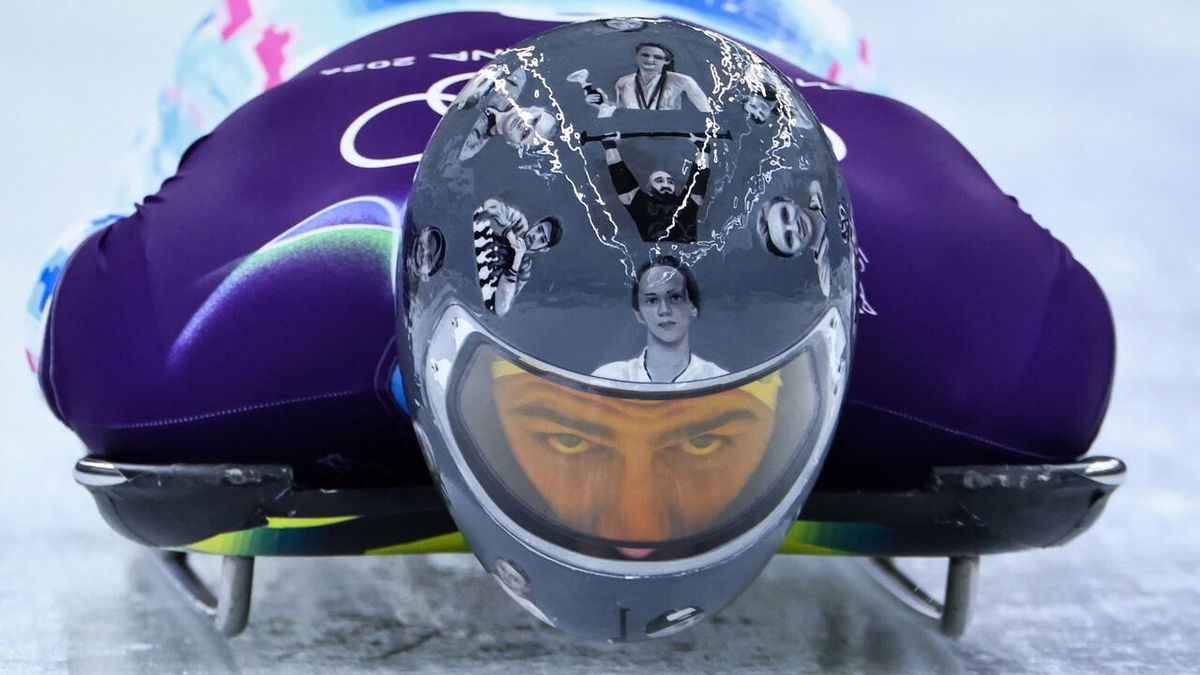
At his third Winter Olympics, Vladyslav Heraskevych arrived in Milano Cortina hoping to build on his progress in skeleton. Instead, minutes before his event, the Ukrainian athlete was disqualified under Rule 50 after declining to remove a helmet commemorating athletes from his home country, despite alternative options offered by the IOC. In the weeks since, Heraskevych has had time to reflect.
Watch What’s Trending Now!
For Vladyslav Heraskevych, this was not just another Olympic appearance. It felt like his moment. Speaking on The Ariel Helwani Show, he said, “It was really like a feeling that it’s my Olympics. I was really fast on the training days.”
That confidence carried onto the track. During official training runs at the Olympic venue, he wore the same helmet for several days and continued to post strong times. In one session, he clocked a best run of 56.40 seconds, placing fourth among 25 athletes, a clear sign he was among the top contenders. But when competition day arrived, performance mattered less than the rule.
Vladyslav Heraskevych’s path to this stage had already been a long one. As one of the first athletes to take up skeleton in Ukraine, he helped build the sport in the country from the ground up.
“When we start skeleton in Ukraine… I’m the first athlete who started in Ukraine,” he said. “So we found a really huge way to be in this position.”
That steady progress fostered real belief within his team. “Our goal was to be in a medal fight… we could be there, like we could win a medal… At the same time, we shouldn’t be okay with violation of our rights,” he said. “I believe I did the right thing.”
Ukrainian skeleton racer @heraskevych reflects on whether he ever thought about giving in to the IOC’s demands so he could compete in the Olympics — and why he chose not to:
“I believe I did the right thing, so I should stand and defend my rights. I should defend the honor of… pic.twitter.com/yAMmxG9W1e
— Ariel Helwani (@arielhelwani) March 31, 2026
The helmet at the center of the controversy carried faces and memories of the fallen athletes. For Vladyslav Heraskevych, it was about remembering people who could no longer speak for themselves.
“I should stand and defend my rights,” he said. “I should defend the honor of these athletes. When, firstly, like this helmet was appearing on a TV like on the news, it was such a great support for our families,” he said.
At the time, Heraskevych argued that his helmet was just like the photograph American figure skater Maxim Naumov showed of his parents, who passed away in a plane crash. He had said it was simply a way to honor his peers and remember them at the Games. But the IOC stayed firm, suggesting he instead wear a black armband. The slider refused to give in, and that emotional weight made the choice feel impossible to undo.
“I couldn’t forgive myself if I say ‘Okay, I’m not using it,’” he added. “I’m betraying these athletes.” So the thought of stepping back stayed with him.
“I would feel very guilty… in terms of these families and in terms of the memory of these people,” Vladyslav Heraskevych said. “It’s not right.” At the same time, Heraskevych made it clear he is not against rules. What he questioned was the lack of explanation. “If I had a proper explanation why it’s a rule violation, then it’s another story. We are not barbarians.”
Even IOC president Kristy Coventry flew to Cortina to meet Heraskevych and his father, Mykhailo. She had said she understood and respected his wish to honor his peers. Ukrainians at the Cortina Sliding Center that weekend echoed their president, backing him as the debate over the helmet rippled through the venue.
Vladyslav Heraskevych added that athletes follow rules, but in this case, he felt there was no clear reason strong enough to justify removing something so personal.
“If they cannot give us any explanation, then I should wear it, and it should be okay,” he said.
But his concern was not just about justification, but also about consistency, and why other expressions seemed to be treated differently.
Vladyslav Heraskevych calls out unfair treatment after rejecting IOC options
Before the disqualification, Vladyslav Heraskevych was given multiple options by the International Olympic Committee. He was asked to remove the helmet for the competition. And was offered alternatives like a black armband or ribbon. Later, he was even told he could wear the helmet only at the start or finish, but not during the race. But he refused all of them.
In a final attempt to resolve the situation, IOC President Kirsty Coventry met him privately just hours before his event. The meeting, as he later described, was tense and emotional. “Her hands were shaking, and she was so nervous, and I couldn’t understand why,” he said. “We were sitting together, just the two of us.”
Speaking later on The Ariel Helwani Show, Heraskevych explained why he could not accept any of the alternatives. For him, it was not just about a helmet, but about fairness and what he felt was unequal treatment.
“It like double standards,” Vladyslav Heraskevych said. “They’re not proposing this band to U.S. athletes, they don’t propose this band to Canadian athletes. Why was it proposed…?” He tied that feeling directly to the situation in his country.
“As a country, we are being attacked… and I don’t understand why we are guilty in that,” he said. “We are not attacking anyone. We are defending our country, and these people were defending their country.”
Vladyslav Heraskevych also cited what he said was an inconsistency in the way the rules were enforced. Similar to Roland Fischnaller, who wore a helmet at the Milano Cortina Games with the Russian tricolor among other flags, but was not disqualified.
That, Heraskevych said, further reinforced his view that he was being discriminated against. Ultimately, after a series of lengthy discussions and a last-minute attempt at compromise, he did not change his stance.