Imago
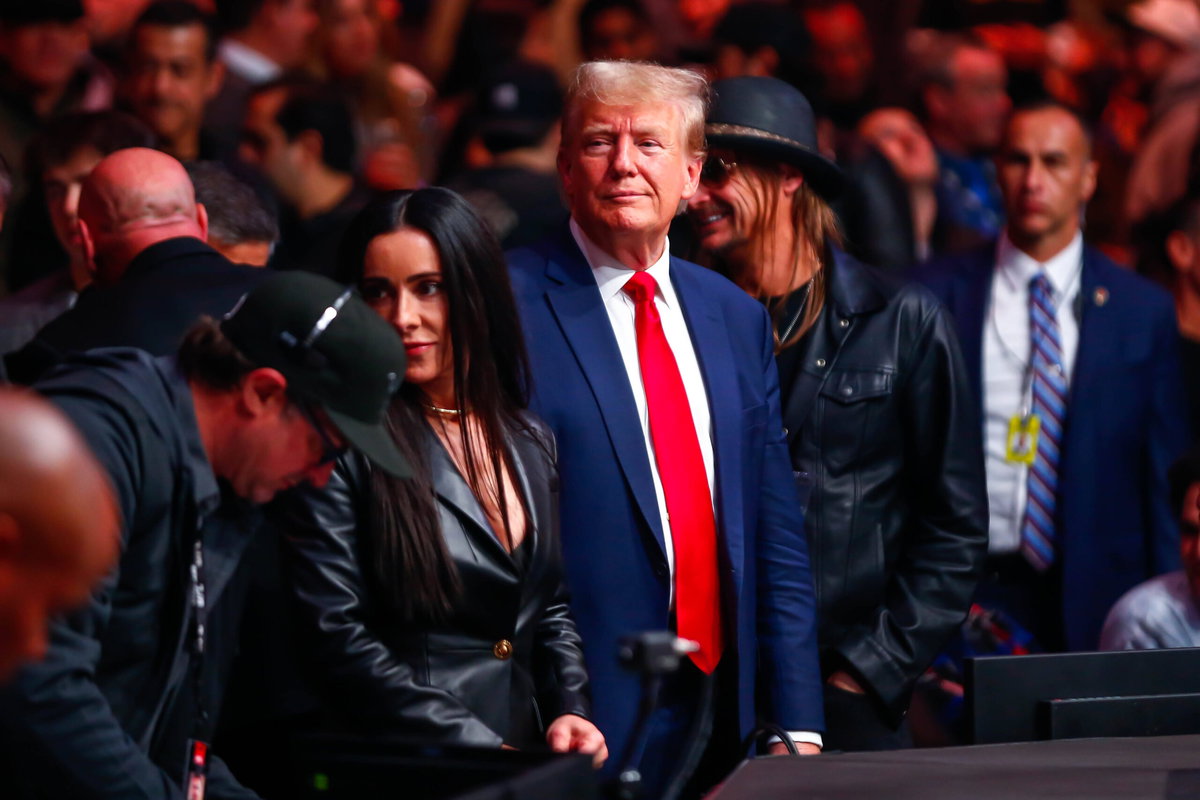
November 11, 2023, New York City, NY, USA: Former U.S. President Donald Trump is seen during the UFC 295 event at Madison Square Garden on November 11, 2023 in New York City. New York City USA – ZUMAc233 20231111_zsp_c233_009 Copyright: xVanessaxCarvalhox
Imago
November 11, 2023, New York City, NY, USA: Former U.S. President Donald Trump is seen during the UFC 295 event at Madison Square Garden on November 11, 2023 in New York City. New York City USA – ZUMAc233 20231111_zsp_c233_009 Copyright: xVanessaxCarvalhox
2021 changed everything for the NCAA. A Supreme Court decision ensured that the NCAA would start allowing college athletes to be paid. Also, since then, players were allowed to become immediately available after transferring schools, which led to mixed results and what many called chaos. But now, President Donald Trump has stepped in, signing an executive order to make serious changes that will tighten eligibility and transfer rules in the NCAA.
The White House announced that President Trump has issued an executive order to improve and strengthen college sports, protect colleges, and restore financial stability.
“Today, President Donald J. Trump signed an Executive Order to preserve the unique American institution of college athletics by restoring order, fairness, and stability,” read the statement.
“The Order directs Federal agencies to bolster the effectiveness of key college-sports rules on transferring, eligibility, and pay-for-play by evaluating whether violations of such rules render a university unfit for Federal grants and contracts.”
The executive order, if passed, would mean student-athletes will be able to transfer just once without the penalty of a redshirt season. A second transfer would mean they sit out for one season. The order would also limit collegiate playing careers to a five-year window and transform funding requirements for women’s and Olympic sports.
Next, the order also seeks to introduce federal regulations for the multimillion-dollar NIL collectives. Not only that, but the order also seeks to penalise any schools that fail to comply and could lose their federal funding.
This comes to light after President Trump had said last month, “Why can’t the industry go back to the old system? I’d like to go exactly back to what we had and ram it through a court,” Trump had hinted.
Imago
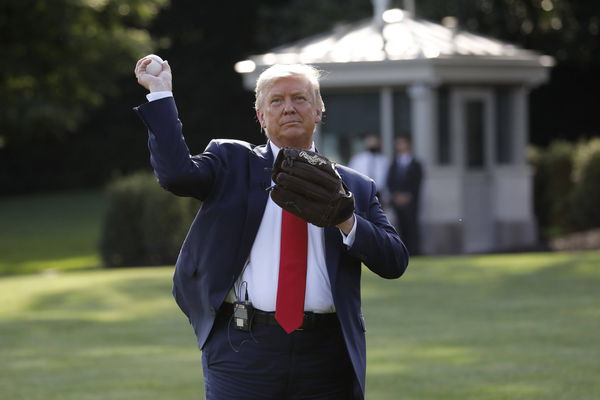
Donald Trump plays catch – Washington United States President Donald J. Trump plays catch with Mariano Rivera, the MLB Hall of Fame Closer from the Yankees, to mark the Opening Day of the Major League Baseball Season on the South Lawn of the White House in Washington on July 23, 2020. Credit: Yuri Gripas / Pool via CNP Washington District of Columbia United States of America EDITORIAL USE ONLY Copyright: xx 36_T0A9672 YurixGripasx cnpphotos177494
NCAA’s president Charlie Baker reacted to the Executive order by saying, “This action is a significant step forward, and we appreciate the Administration’s interest and attention to these issues.”
Moreover, President Trump’s executive order comes amid several complaints from coaches, including former Alabama coach Nick Saban.
“Players need to get compensated, no doubt,” Saban said, as per SI. “But it has to be done in a way where, you know, in some kind of way, have competitive balance, you know, and that every school has the same thing.
“One school can’t spend $30 million for players while another schools spending $3 million. All I’m saying? The people out there need to know this model is unsustainable. It’s not good for players.”
While Saban’s voice may be the loudest, the former Alabama Crimson Tide head coach’s voice echoes what many coaches, directors, and universities have been saying across the NCAA.
University of Louisville Flags Financial Deficit Amid NCAA Turmoil
That includes the University of Louisville, which released a statement about operating in a deficit despite earning $1.28 billion a year. And Louisville isn’t the only college. The letter, released by the university’s board of trustees, detailed just how bad the situation was for not just them but for the entire landscape.
As per the letter, Louisville athletics currently earns around $155 million a year but spends $167 million a year, with that figure set to rise further after the House v. NCAA settlement, which will add $20.5 million in expenses.
It has forced the university to rely on a line of credit and by increasing their student athletic fees, and they aren’t the only ones. The letter went on to cite Ohio State as an example, whose director acknowledged that they went a little chaotic to chase a title. It saw the college program lose $37.7 million the same year it won a national title.
Another example cited was Penn State, the university that is burdened with over half a billion dollars in athletics-related debt.
The letter went on to describe the state of the NCAA and hoped for reforms that would help colleges simply survive in the changing landscape.
That eventually led to President Trump’s executive order. However, his order, if approved, could spark a new discussion.
Written by

Edited by

Tanveen Kaur Lamba