
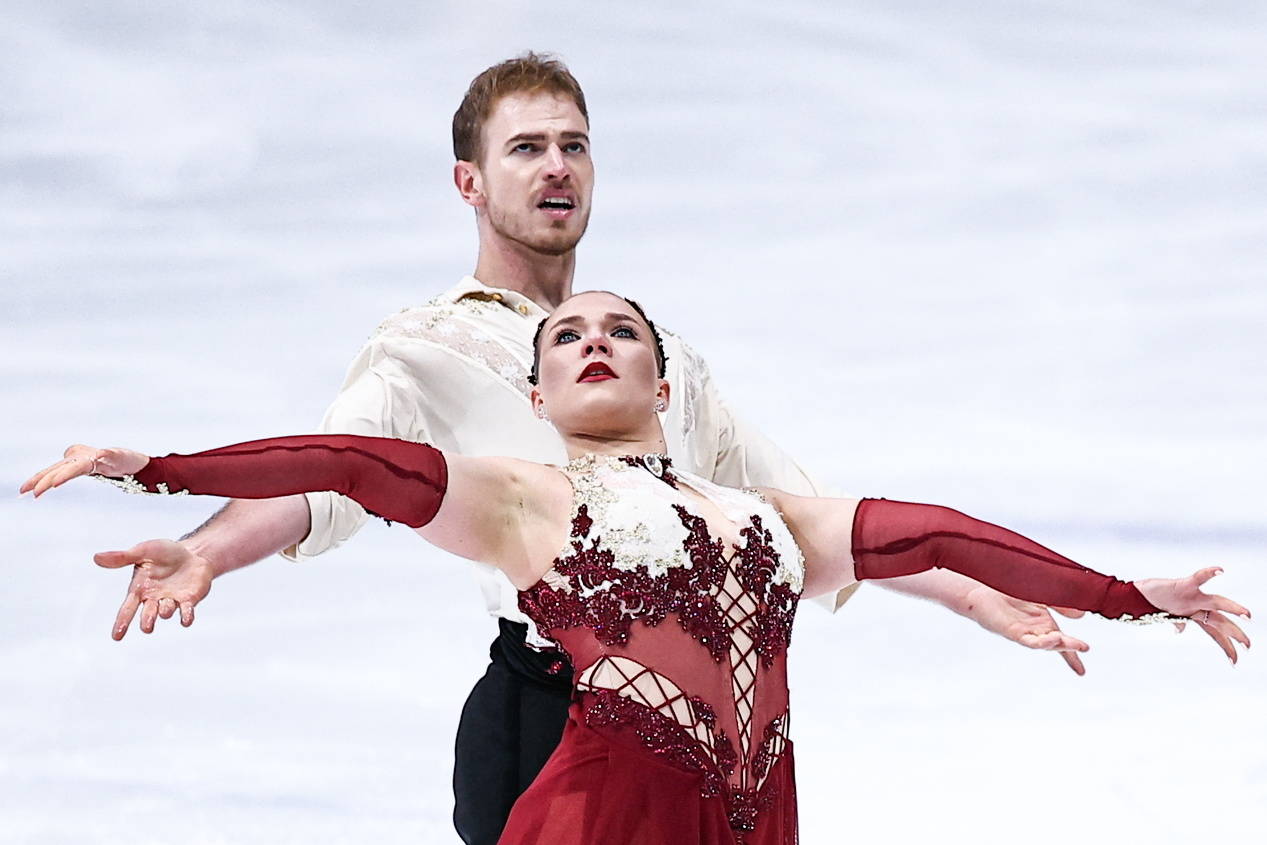
Success in sports often comes with sacrifices, but for Czech ice dancers Filip Taschler and Natálie Taschlerová, the cost was far greater than the demands of competition. Under the guidance of coach Matteo Zanni, the siblings represented the Czech Republic at two Winter Olympics and finished sixth at the 2023 European Championships. After spending more than 5 years training with Zanni’s team, they parted ways with him in 2025 without publicly disclosing the reasons for their departure. Now, a year later, Filip is speaking out about the alleged psychological abuse and emotional distress he and his sister experienced while working with their former coach.
Watch What’s Trending Now!
In an episode of the Czech podcast Seď a breč! (“Sit Down and Cry!”) on October 9, Filip described what he said was a deeply distressing training environment. “It was psychological abuse every day,” he said, explaining how the siblings lived under constant supervision. “We were not allowed to have friends.” According to Filip, their coach monitored whom they spoke to, what they ate, and whether they could have a boyfriend or girlfriend. He said the pressure became so familiar that they began to believe living that way was normal.
The impact, he explained, extended far beyond the rink, affecting both siblings’ mental and physical health. “Eating disorders, anorexia, losing our sense of identity, panic attacks. We woke up depressed every day and thought that was normal,” Taschler said, describing the toll the experience took on them.
One incident that stayed with Filip involved his sister’s hair. He recalled that Natálie trimmed the ends of her hair without permission, prompting an angry reaction from their coach. “He started shouting that it was unacceptable and that short hair made the legs look shorter on the ice,” Filip recalled.
After more than five years working with Zanni’s coaching team, the siblings decided to leave and move to Helsinki, Finland, in 2025. They began working with Italian coach Maurizio Margaglio, and Filip has spoken positively about the change. “He is an amazing person. He is the father of four boys, so he knows how to give affection,” Filip said of Margaglio. He added that the difference between the two coaching environments had been striking.
“We have been together for more than a year, and it feels as though we have experienced a hundred times more than we did during the previous five years,” he said. The siblings have continued competing internationally since the move. They represented the Czech Republic at the 2026 Winter Olympics in Milan-Cortina, finishing 15th in ice dance. In October 2026, they also won the Budapest Trophy, continuing their careers under their new coaching team.
However, the Taschlers are not the only figure skaters to have spoken out about alleged abuse within the sport.
Liam Dougherty reveals the lasting toll of alleged abuse
Liam Dougherty, a former Canadian national-level ice dancer, also came forward with an account of years of alleged verbal and emotional abuse by his former coach, Paul Wirtz. In an interview published on June 25, 2026, Dougherty described how the treatment began when he was a young skater training in Montreal and continued to affect him long after his competitive career ended.
Dougherty recalled how Wirtz would publicly criticise skaters’ bodies, abilities, and appearances, sometimes lining them up at the rink to point out their perceived flaws. He said the insults included remarks such as “You’re fat” and “You’re ugly,” leaving athletes exposed to repeated humiliation.
He also described Wirtz’s angry outbursts, alleging that the coach frequently yelled at skaters, threatened them, and threw objects, including water bottles and skate guards. Dougherty said the behaviour left him feeling intimidated and uncertain about how the coach might react. The pressure, he explained, extended beyond training sessions.
Dougherty recalled being made to feel that quitting would mean letting down not only himself but also his family and wider community. He said such messages shaped how he viewed his responsibilities as an athlete and made it harder to walk away from the sport. According to Dougherty, the effects lasted well beyond his skating career.
He spoke about struggling with depression and anxiety, experiencing s**cidal thoughts, and later receiving a diagnosis of post-traumatic stress disorder. Even after leaving competitive skating, he said the emotional toll did not simply disappear.