
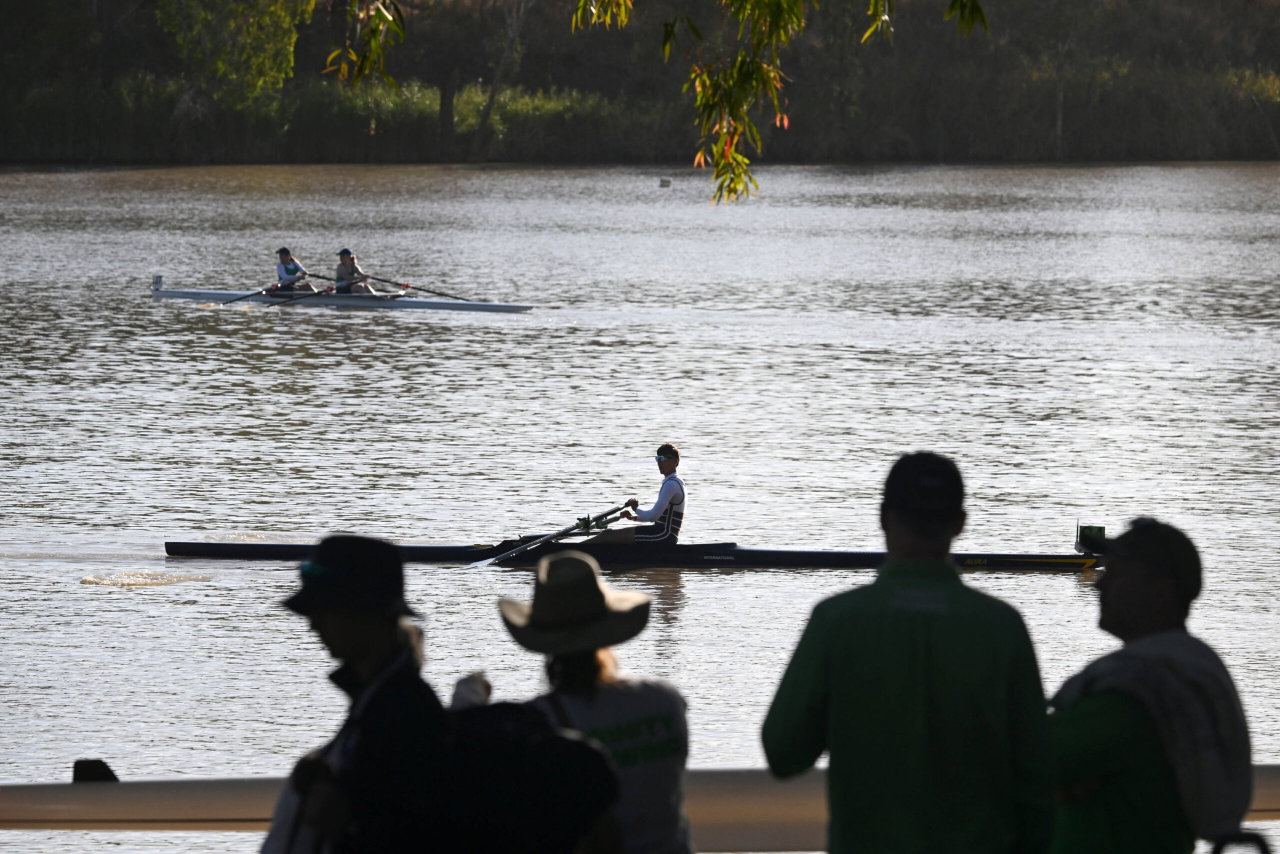
The Fitzroy River has cleared one Olympic hurdle. Now, the crocodiles are back at the center of the conversation.
Watch What’s Trending Now!
Rockhampton’s river has been approved as the rowing and canoe sprint venue for the 2032 Brisbane Olympic and Paralympic Games after an independent technical assessment. World Rowing and Paddle Worldwide also endorsed the site, saying it can provide a “safe, fair, and consistent field of play.”
But the approval has not ended the debate. The Fitzroy remains crocodile country, and calls to remove the reptiles from the section used for sporting events have resurfaced, with Koorana Crocodile Farm founder John Lever among those pushing for an active removal zone.
Lever has argued that the Queensland government should treat the Olympic stretch more like designated areas around Cairns and Townsville. His proposal would allow authorities to regularly survey, trap, and remove crocodiles from the recreational section of the river rather than waiting for a particular animal to be classified as a problem.
The idea is not necessarily about eliminating crocodiles from the entire Fitzroy. Lever has repeatedly stressed that the river’s broader crocodile population would remain intact, with the proposed removal focused on the stretch used by rowers and other recreational athletes.
That distinction matters because the crocodiles are not the only issue surrounding Rockhampton. The technical assessment examined the river’s flow, weather patterns, water levels, and flood risks to determine whether athletes could compete under consistent conditions. World Rowing president Jean-Christophe Rolland said the analysis showed the Fitzroy could provide fair competition during the Games.
And yet, the reptiles remain impossible to ignore.
The Fitzroy is a recognized crocodile habitat, and local authorities warn that no natural waterway in crocodile country can ever be guaranteed crocodile-free. At the same time, government records spanning more than four decades show no recorded crocodile attack on a person in the river. Existing events already operate with safety procedures that include stopping races and bringing competitors back to shore if a crocodile is spotted.
There is also an important number correction. Early reports repeatedly described the Fitzroy as home to around 500 saltwater crocodiles. The BBC later corrected that figure, saying Queensland government estimates put the population at roughly 100.
So while the headline number changed, the underlying debate did not.
For Lever, the answer is proactive management. He has previously argued that declaring the relevant stretch an active removal zone would allow authorities to survey the river and remove crocodiles before major events take place.
The discussion has also reached athletes who know exactly what it means to compete at the highest level.
Olympic rowing star shares his thoughts on the decision
Three-time Olympic rowing gold medalist Drew Ginn has admitted that crocodiles are on the list of concerns, although he does not consider them the biggest issue facing the venue.
“I’m sure I’d row faster, I’m sure all the athletes would row faster,” Ginn told the BBC, before adding that relocating crocodiles raises a serious question about whether international rowing should put athletes in that situation.
Ginn has also raised questions about flooding, fairness, and the integrity of competition on the natural river course. Those concerns have featured prominently in the wider debate, alongside questions about the Olympic experience for athletes and spectators.
Brisbane 2032 president Andrew Liveris, meanwhile, previously compared the crocodile concern with other natural risks in sport.
“There’s sharks in the ocean, right? And we still do sailing and surfing,” he said when defending the regional venue.
The controversy even spilled into international media coverage. The BBC recently corrected footage used in a social-media post about the venue after criticism that the crocodile footage came from Western Australia’s Fitzroy River, roughly 3,500 kilometers away from Rockhampton. The broadcaster acknowledged the error and replaced the footage.
For now, the Fitzroy River has its Olympic green light. The next chapter will be about how Queensland manages the waterway and whether its crocodile plan can satisfy athletes, organizers, and the wider community before the Games arrive.