
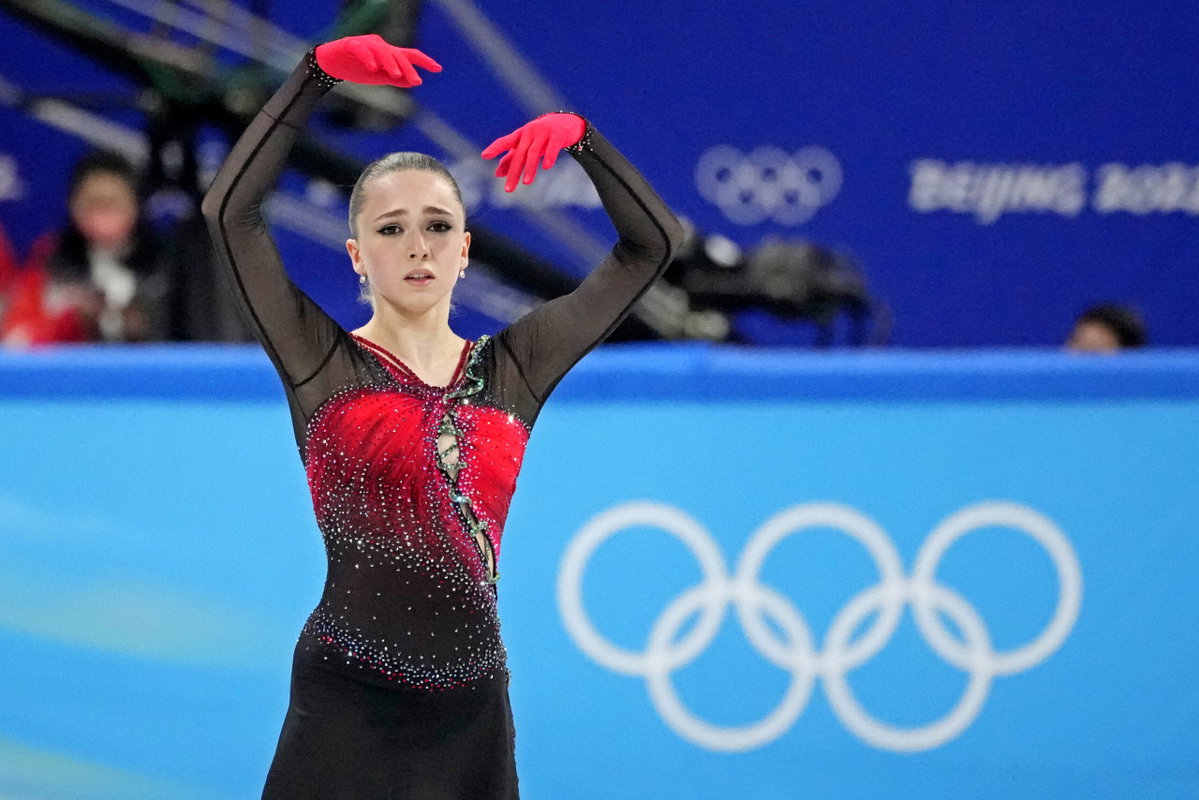
The International Skating Union (ISU) has decided to lift its ban on both Russian and Belarusian figure skaters. This allows the athletes to compete in the 2026-27 season as Individual Neutral Athletes (AIN). However, their return won’t be smooth, as the ISU has imposed several restrictions, including a new World Anti-Doping Agency-backed program.
Watch What’s Trending Now!
Neutral athletes will be subject to rigorous anti-doping tests. ISU’s new program—developed with the International Testing Agency (ITA)—mandates whereabouts tracking, biological passport monitoring, and additional testing. Furthermore, all athletes under the AIN banner will go through individual review. The final list of approved AIN athletes will be released as the World Championships approach. With the strict imposition of checks, the ISU hopes to deter athletes and organizations from engaging in the unacceptable practice of doping. The re-introduction of Russian figure skaters demands such scrutiny in the eyes of the ISU. No one wants a repeat of the Kamila Valieva incident.
Russian figure skating’s reputation faced intense criticism when 15-year-old Kamila Valieva was handed a 4-year ban in 2024, backdated to 2021. Valieva had failed an anti-doping test during the Russian Figure Skating Championships in December 2021. Valieva was informed of the matter after her performance at the 2022 Olympic Winter Games in Beijing. The ISU hasn’t forgotten, making sure the Russian athletes must jump through multiple hoops to qualify again.
The Valieva controversy explains ISU’s new rigor. In Valieva’s case, the Court for Arbitration of Sport (CAS) took two years to reach a verdict. Russia ultimately lost an Olympic gold medal. However, what really cut was that Valieva competed in Beijing even after a positive test.
The collateral damage hit dozens of athletes, with the ISU deciding not to award medals for the team figure skating competition. It also saw WADA issue a strong statement against Russia, with them particularly unhappy about “the doping of children”.
Before the 2026 Winter Olympics, Russian figure skaters haven’t competed at any Olympics or World Championships since the ban. This was also due to the ban following the Russia-Ukraine conflict. They competed as Individual Neutral Athletes for the 2026 Winter Olympics. Thus, the 2026/27 season will mark the first time since February 2022 that Russian and Belarusian figure skaters will be a part of the World Championships and Grand Prix events.
Following ISU’s example, other Olympic federations are similarly reopening doors to Russian and Belarusian athletes under conditions.
World Aquatics follows ISU by lifting the ban on Russian athletes
For the first time in four years, Russian and Belarusian athletes were allowed to compete at the 2026 Winter Olympics. Six Russians competed in Milan, including figure skaters Adeliia Petrosian and Petr Gumennik, amongst others. However, they did so only as neutral athletes under no flag or national anthem. Then the 2026 Paralympic Games set the tone by allowing Russian and Belarusian athletes to compete under their own flag.
The decision came under fire with several nations boycotting the opening ceremony as a result. However, in the months since, the International Olympic Committee (IOC) has been asking for a change, and World Aquatics soon followed. In April 2026, the swimming body allowed Russian and Belarusian athletes to compete again under their own flags. The World Aquatics Communication Department stated the same on April 13, 2026.
“Following a decision of the World Aquatics Bureau, and in consultation with the Aquatics Integrity Unit (AQIU) and the World Aquatics Athletes’ Committee, the Guidelines for Athlete Participation in Aquatics Events During a Period of Political Conflict will no longer apply to senior athletes with Belarusian or Russian sport nationality.”
“Senior athletes with Belarusian or Russian sport nationality will be permitted to compete in World Aquatics events in the same way as their counterparts representing other sport nationalities, with their respective uniforms, flags and anthems.”
The news, however, hasn’t gone down well with fans even if it does follow judo’s decision to do the same in 2025. This also came after the IOC recommended removing the restrictions in place in December 2025. While that hasn’t happened yet, ISU’s neutral status for the athletes has been granted, indicating that steps are being taken to reintroduce Russian athletes to mainstream competition.