Imago
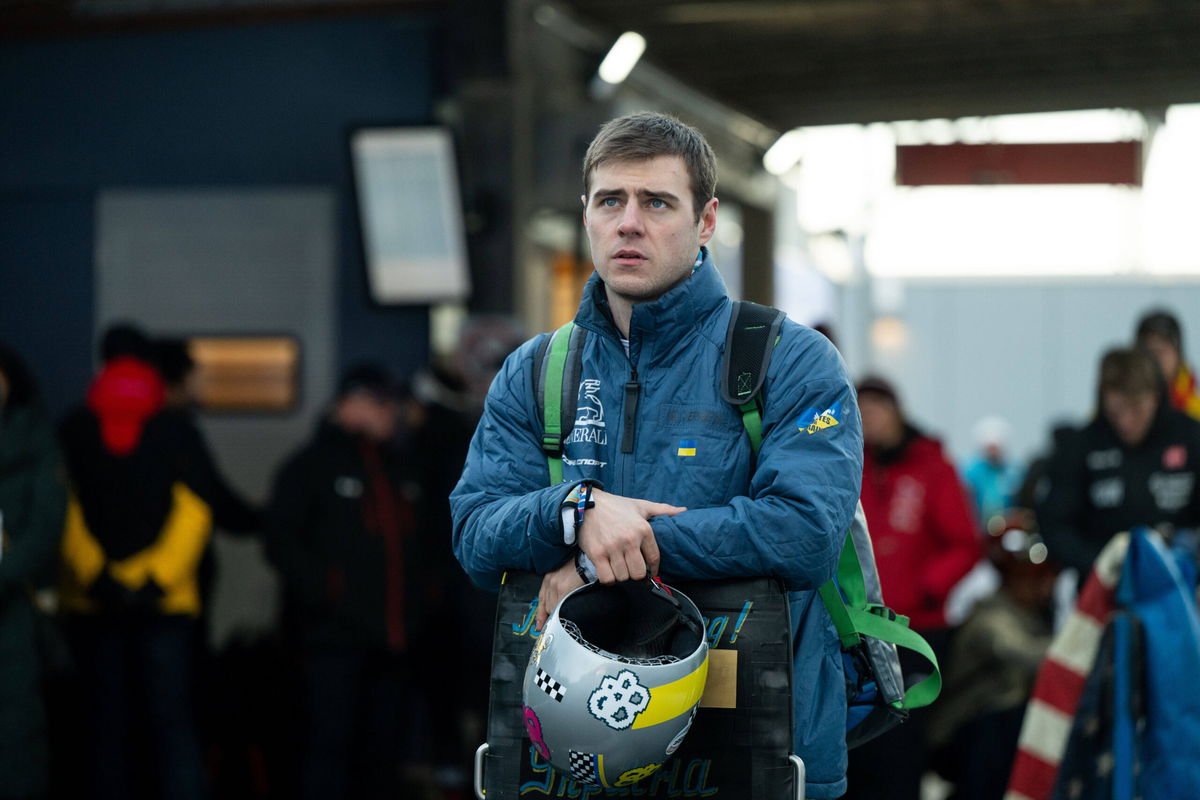
HERASKEVYCH Vladyslav Ukraine im Ziel, GER, IBSF Skeleton Weltcup Altenberg, Herren, Saison 2025/2026, 16.01.2026 GER, IBSF Skeleton Weltcup Altenberg, Herren, Saison 2025/2026, 16.01.2026 Altenberg *** HERASKEVYCH Vladyslav Ukraine at the finish, GER, IBSF Skeleton World Cup Altenberg, Men, 2025 2026 season, 16 01 2026 GER, IBSF Skeleton World Cup Altenberg, Men, 2025 2026 season, 16 01 2026 Altenberg Copyright: xEibner-Pressefoto/Memmlerx EP_MMR
Imago
HERASKEVYCH Vladyslav Ukraine im Ziel, GER, IBSF Skeleton Weltcup Altenberg, Herren, Saison 2025/2026, 16.01.2026 GER, IBSF Skeleton Weltcup Altenberg, Herren, Saison 2025/2026, 16.01.2026 Altenberg *** HERASKEVYCH Vladyslav Ukraine at the finish, GER, IBSF Skeleton World Cup Altenberg, Men, 2025 2026 season, 16 01 2026 GER, IBSF Skeleton World Cup Altenberg, Men, 2025 2026 season, 16 01 2026 Altenberg Copyright: xEibner-Pressefoto/Memmlerx EP_MMR
When Vladyslav Heraskevych entered the Milan Winter Olympics he had two goals: to win a gold medal and pay honor to the fallen athletes with his “helmet of remembrance”, which had the faces of Ukrainians who died after the Russian invasion. Interestingly, the helmet was eligible in training sessions but the IOC ruled that the helmet can not be used in competition.


Just minutes before his skeleton run, Heraskevych was disqualified. Before the ruling, IOC President Kirsty Coventry personally met with him in a private room, attempting to persuade him to race without the helmet or accept a compromise. A month later, Heraskevych revealed the emotional intensity of that encounter.
Watch What’s Trending Now!
“Her hands were shaking, and she was like so nervous, and I couldn’t understand why,” he recalled. “Meeting was on a race day with Mrs. Coventry. I was invited to talk with her in this container… she told her team to go out, and we were sitting together, just the two of us.”
During the meeting, he challenged the IOC’s reasoning. “I told her straight…you try to evaluate my rules, but at the same time you have Russian flags which are not allowed on the Olympic Games. So why is this allowed to do it and I’m not? I didn’t get any response.”
So, here he was pointing out about the Italian snowboarder Roland Fischnaller, who competed at the Milano‑Cortina Games with a helmet showing the Russian tricolor among other country flags. But the IOC did not take disciplinary action against him for that helmet design.
Olympian Makes the Power-Elite Shake:
Ukrainian Olympian @heraskevych shared the disturbing behind-the-scenes behavior of International Olympic Committee chief Kirsty Coventry—when she was urging him to give up his “Memory Helmet.”
On Jonathan Fink’s @CurtainSilicon podcast,… pic.twitter.com/4o4jIc5n3T
— JP Lindsley | Journalist (@JPLindsley) March 17, 2026
Later, Vladyslav Heraskevych’s father joined, and Coventry suggested compromises, letting him wear the helmet at the start or finish but Heraskevych refused. “But why should I change the helmet for race day? Technically it’s also a problem… I will lose some time on the finish.So, it violates my rights as an athlete.”
Despite her emotional appeal, Coventry ultimately upheld the decision. “Meeting it was really a weird feeling because she was shaking, so her hands were shaking, and she was like so nervous, and I couldn’t understand why.”
But the IOC disqualified him just 30 to 45 minutes before his skeleton race was set to start. Heraskevych, however, refused to back down.
Vladyslav Heraskevych’s CAS appeal
Following the disqualification, Vladyslav Heraskevych appealed to the Court of Arbitration. Vladyslav Heraskevych argued that the decision was “disproportionate, unsupported by any technical or safety violation and causes irreparable sporting harm.” He also emphasized that the helmet was a sign of honor to the memory of the colleagues who were killed on the war.
The appeal was submitted by Heraskevych on the same day, 12 February, to have the decision of the International Bobsleigh and Skeleton Federation overruled or at least have a supervised run. But CAS urgently handled the case since Olympic appeals are normally handled within hours.
In the end, the appeal was denied. The arbitrator ruled in favor of the IOC and the federation and said that the images on the helmet were against the Olympic Charter and the Guidelines on Athlete Expression, which limit the appearance of visible messages on the grounds. Athletes were also allowed to wear the helmet outside the track, but the boundaries in the field of play were considered reasonable.
Because the CAS ruling came after the competition had already begun Vladyslav Heraskevych had no chance to race even if the appeal had succeeded. Despite this he returned home honored by Ukrainian leadership for his courage and stand.